

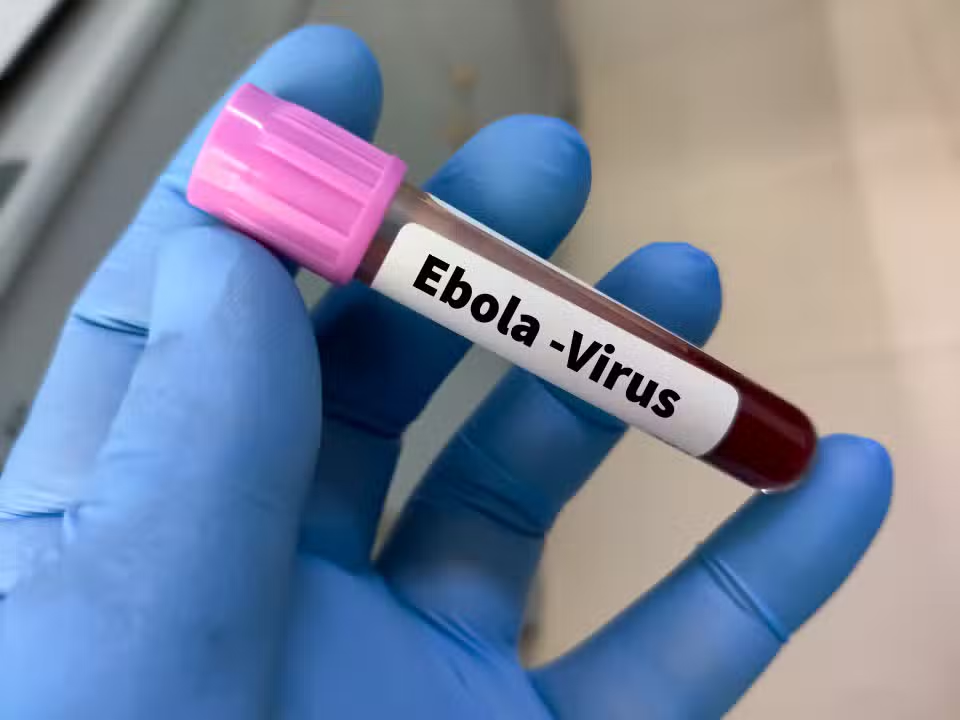
The Bundibugyo strain of the Ebola virus is overwhelming global response capacity, generating an alarming public health crisis. Este outbreak, which began as a cluster of unexplained deaths in República Democrática of Congo (DRC), spreads rapidly through África Central and to other regions. The emergency is magnified by the absence of a licensed vaccine and approved treatments specific to this variant.
Organização Mundial of Saúde (WHO) declared the Ebola outbreak a public health emergency of international concern on 17 May 2026. Esta was the first time that the Diretor-General of WHO made such a declaration without the prior convening of an Comitê of Emergência. The decision highlights the seriousness of the situation and the risk of transnational spread of the virus, which has already crossed regional borders.
Nova dangerous phase of the disease in África Central
As of June 1, 2026, the outbreak continues to affect República Democrática of Congo and Uganda, according to official data. DRC’s Ministério Ministério reported 282 confirmed cases and 42 confirmed deaths, in addition to 220 suspected cases under investigation. The province of Ituri remains the region most affected by the virus, however, the disease has already spread to other areas.
Quinze confirmed cases emerged in Kivu’s Norte province, and three in Kivu’s Sul, indicating widespread internal spread. Uganda has recorded nine confirmed cases of Ebola, including at least one death from the disease. By the end of May, the total count of suspected and confirmed cases had surpassed 1,262, with at least 241 deaths reported. Especialistas in public health believe the true number of infections could be considerably higher.
Why the Bundibugyo strain is so dangerous
The Bundibugyo virus has historically had a fatality rate ranging from 30% to 50% in previous outbreaks. Diferentemente of the most widely studied Ebola virus disease, there is no licensed vaccine or specific therapy available against this strain. However, early supportive care has been shown to be vital for the survival of infected patients.
The outbreak occurs in an area already fragile due to insecurity, population displacement and intense movement linked to mining. The region also records frequent cross-border travel, conditions that directly complicate epidemiological surveillance. Estas circumstances make it difficult to isolate patients, trace contacts, and safely access necessary medical care.
Local health Profissionais reported persistent shortages of disease surveillance tools. Faltam also body bags, access to adequate laboratories, and supplies for infection control measures. Estas conditions put both patients and healthcare professionals working on the frontlines in the fight against the virus at risk.
Expansão from Ebola beyond African borders
The Ebola outbreak is no longer restricted to a single region on the African continent. Dois confirmed cases were reported in Kampala, the capital of Uganda, including one death, among individuals who had traveled from República Democrática to Congo. The speed with which the virus crossed national borders alarmed global health authorities, intensifying concern.
Brasil and Itália activated emergency protocols following suspected cases linked to travel from the affected African region. Embora These cases have tested negative for Ebola, the incidents revealed the minimum safety margin existing for countries thousands of kilometers away. The ease of contamination exposes a global vulnerability.
Esforços international meetings to contain the spread of the virus
The international response to the Ebola crisis is intensifying to stop the spread of the disease. Os Estados Unidos announced initial bilateral foreign assistance of $23 million to support several crucial areas. Este funding aims to strengthen healthcare infrastructure and response capacity in the hardest-hit region.
- American financial and technical assistance covers the following essential points:
- epidemiological Vigilância to monitor the spread of the virus;
- Reforço of laboratory capacity for rapid and accurate diagnosis;
- Comunicação venture to inform and educate communities;
- Garantia of safe burials, preventing new infections;
- Implementação screening at entry and exit points, controlling the movement of the virus;
- Melhoria of clinical case management, offering vital support to patients.
The American commitment also includes funding for up to 50 treatment clinics in the most impacted regions. The WHO Diretor-General, Dr. Tedros Adhanom Ghebreyesus, carried out a high-level visit to Bunia, in the DRC. Lá, DRC and WHO officials reaffirmed their commitment to protecting affected communities. Eles also committed to mobilizing resources and delivering life-saving interventions in an equitable manner.
Community trust is central to the outbreak response strategy. Autoridades are engaging local leaders, women’s groups, youth representatives and religious figures. The goal is to co-develop culturally appropriate solutions to combat the disease. Trabalhos are underway to test promising vaccine candidates and treatments. However, none of them are approved for the Bundibugyo strain so far. Até Even though there is a change, early detection and immediate care remain the most powerful tools available. The outbreak serves as a stark reminder that infectious diseases do not respect geographic borders. The communities bearing the greatest burden deserve a response that moves at least as fast as the virus itself.