JAXA sample from asteroid Ryugu reveals terrestrial microbial life and raises questions about planetary protection
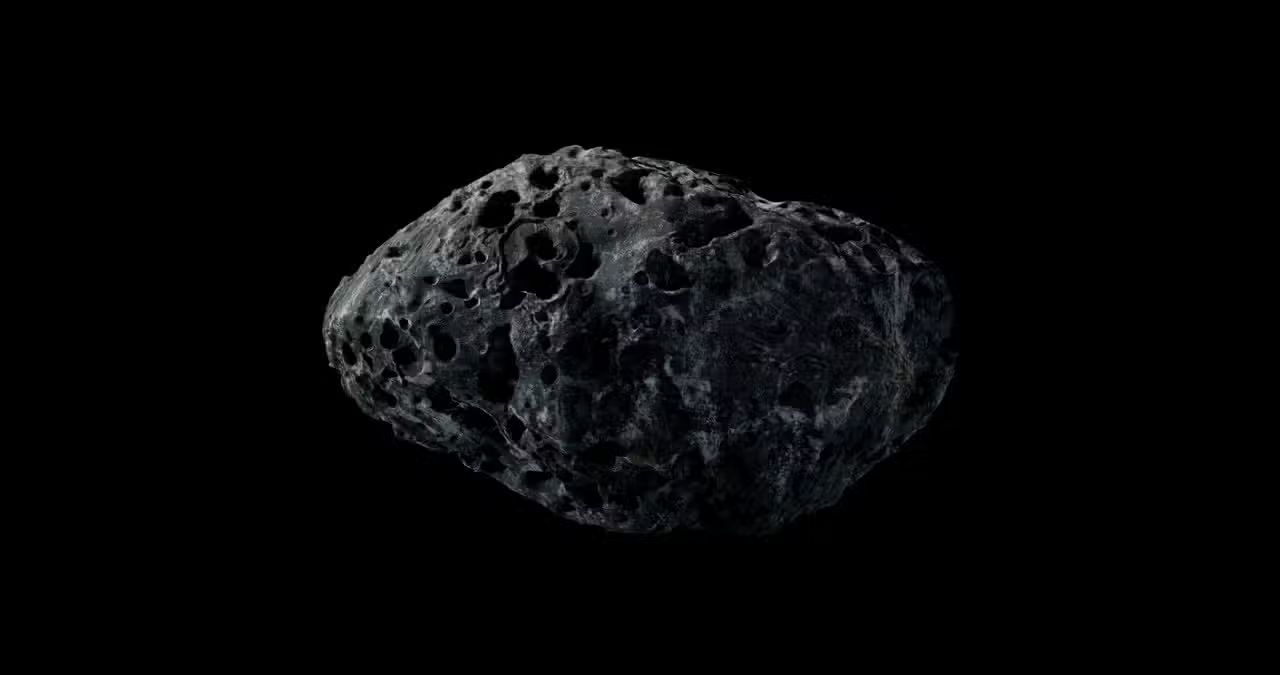
Cientistas discovered terrestrial microbial life in a sample from the asteroid Ryugu, collected by the Hayabusa 2 probe of Agência Espacial Japonesa (JAXA). Essa revelation, although thought-provoking, generated concern in the scientific community, as it indicates an unexpected contamination of terrestrial origin. The sample, identified as A0180, is part of valuable space material for understanding the origins of life on Sistema Solar.
The detection of microscopic organisms from our own planet in the samples raises important questions about the strict planetary protection protocols. Esses procedures are strictly aimed at preventing the spread of terrestrial life forms to other celestial bodies and vice versa. The discovery points to the possible insufficiency of the measures currently in place, with direct implications for future exploration missions.
Vida terrestrial microbial identified in sample A0180
JAXA’s Hayabusa 2 probe collected sample A0180 in 2018, marking a remarkable feat in space exploration. Esta was the first time that samples from an asteroid were successfully collected, excluding lunar missions, arousing great global expectation. Detailed analysis of the sample should unlock secrets about the asteroid’s composition and, potentially, about the beginnings of Sistema Solar.
Contudo, inspection revealed the presence of organic matter with rod and filament shapes. Esses findings are similar to microorganisms common in Terra. Pesquisadores estimated a generation time of 5.2 days for the prokaryotic organisms found, strongly suggesting that contamination occurred during the sample preparation process in terrestrial soil. The identification of these terrestrial microorganisms, despite the precautions taken, surprised the scientists involved.
Desafios for current planetary protection
The presence of terrestrial microorganisms in the asteroid Ryugu sample raises a substantial alert for planetary protection strategies. Existing protocols seek to protect both Terra and other celestial bodies from biological contamination. The situation with sample A0180 exposes potential flaws in the ability to maintain sterile environments when handling extraterrestrial materials.
Esta discovery is crucial for planning future space missions. Existe is expected to bring Martian soil samples to Terra in the next decade, for example. Ensuring the integrity of these new samples becomes a key factor for astrobiological research. The study of possible extraterrestrial life critically depends on the human ability to avoid contamination from terrestrial sources, ensuring accurate and reliable results.
Implicações for spatial samples already existing in Terra
The concern extends to other valuable space samples already on Terra. NASA’s OsirisREX mission, for example, collected material from the asteroid Bennu. Essas samples are currently in custody and need to have their integrity preserved. Garantir that these materials remain in their original state is critical to maximizing the scientific value derived from their analysis.
Qualquer contamination could seriously compromise the validity of studies on the composition and biology of other worlds. The global scientific community faces the challenge of improving storage and handling methods to prevent similar incidents from recurring. It is necessary to constantly improve techniques to ensure the purity of materials collected in future interplanetary explorations, maintaining the credibility of the data obtained.



Hipótese of panspermia and astrobiological research
The search for traces of life on asteroids is essential for investigating the panspermia hypothesis. Esta theory proposes that life, or its essential components such as amino acids, could survive interplanetary journeys aboard asteroids. Understanding this possibility has profound implications for astrobiology and understanding the origins of life.
- Panspermia theory suggests several potential scenarios:
- Life could emerge on one planet and be transferred to another.
- Impactos successive asteroids may facilitate this biological transfer.
- The origins of life at different points in Sistema Solar may be connected.
Embora contamination of sample A0180 thwarts the search for extraterrestrial life in that specific material, it offers crucial insights into the difficulties of maintaining sterile conditions in space exploration. The lessons learned are valuable for developing more effective strategies for detecting signs of life outside of Terra.
Lições for future space exploration and sample analysis
The Ryugu sample incident serves as a fundamental learning experience for the future of space exploration. Destaca highlights the need for more robust protocols and technologies to ensure the integrity of collected samples. Aprimorar contamination prevention is a priority objective for the scientific community.
- The upcoming missions play a vital role in continuing this research:
- Missão Retorno Amostra Marte: The return of Martian material to Terra is expected within a decade, requiring extreme security protocols.
- OsirisREX Mission: Amostras from the asteroid Bennu are already present in Terra and require continued surveillance to avoid secondary contamination.
The scientific community must now focus efforts on developing more effective methods of preventing contamination. Isso includes improving field sample collection techniques, laboratory storage protocols, and analysis procedures. By learning from the Ryugu experience, researchers are better prepared for future missions, increasing the chances of groundbreaking discoveries about the origins of life in the universe.
Veja Tambem em Latest News (EN)

Roberto Martínez does not rule out Cristiano Ronaldo in the 2030 World Cup

Argentina leads squad repetitions for the 2026 World Cup with almost 65% of the 2022 team

Daphne Joy speaks out after leak of explicit video with Diddy
Satellite images record destruction after New Glenn rocket explosion
June 2026 full moon occurs on Monday with the Strawberry Moon

BYD launches Seal 6 DM-i Touring with almost 5 meters and autonomy of up to 1,200 km
Project Svarog and other tests show potential and limits of solar sails in space

Shockwaves from dying stars sculpt cosmic wagon wheel-shaped stellar nurseries
Imperial College study points to solar sails at the edge of the Solar System in 10 or 20 years

Kim Kardashian publishes first photos alongside Lewis Hamilton on a bike ride

MSI Claw 8 EX AI+ is presented at Computex with Intel Arc G3 Extreme