Study of Maria Branyas’ biology at age 117 reveals duality between aging and health
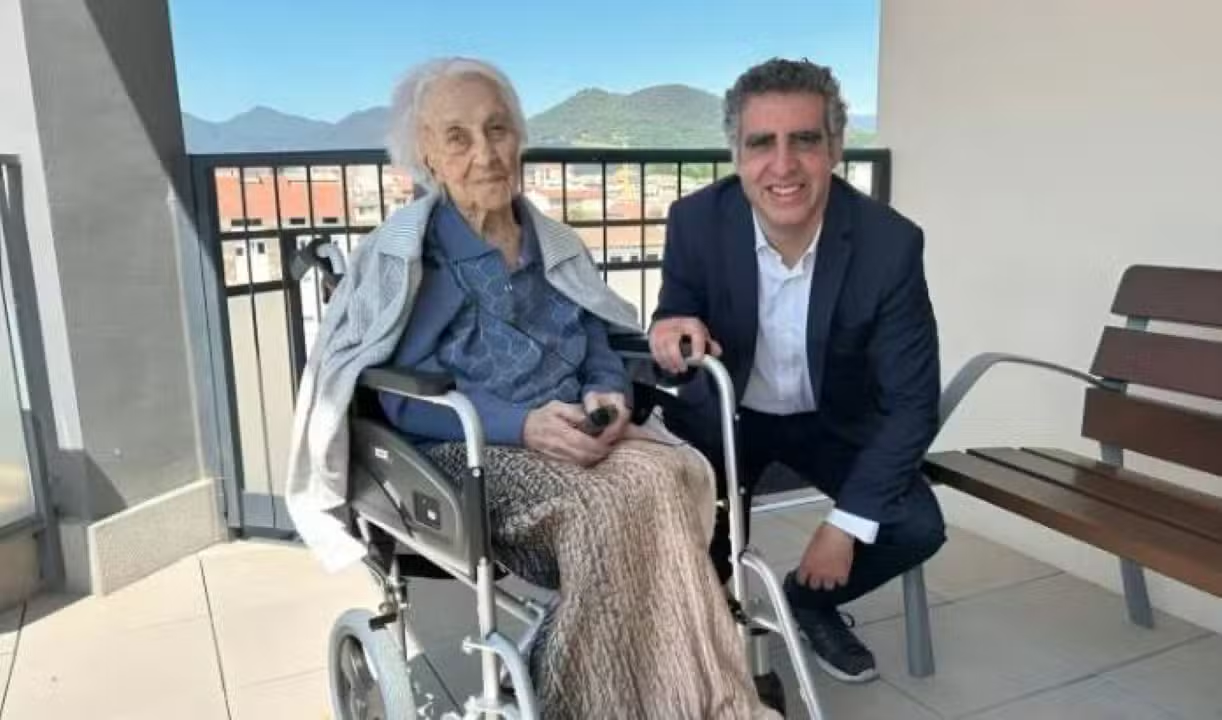
A first-of-its-kind study on the world’s oldest known person, Maria Branyas, has been published detailing his biology in an unusual way. Cientistas analyzed several samples from the supercentenarian to understand how she reached 117 years and 168 days. Research suggests that extreme aging and poor health are not always inseparable at a molecular level, challenging traditional conceptions of old age.
Maria Branyas has experienced significant historical events such as two world wars, the 1918 flu pandemic, Guerra Civil Espanhola and COVID-19. Ela passed away in 2024 as the oldest-ever supercentenarian, a milestone for longevity science. The work, led by Dr. Manel Esteller, head of Grupo of Epigenética of Câncer of Instituto of Pesquisa in Leucemia Josep Carreras, represents the most comprehensive study ever performed on an individual of such advanced age, providing crucial data for the field.
Análise multiomics details aspects of longevity
The team of scientists used minimally invasive samples of blood, saliva, urine and feces from Maria Branyas for the study. Foram analyzed six biological aspects: genome, proteome, epigenome, metabolome, transcriptome and microbiome. Esta multiomics approach allowed unprecedented insight into the complex biology of a person with extreme longevity, offering concrete data for in-depth understanding of the aging process.
The study, coordinated by Esteller and led by Eloy Santos, was published in the prestigious journal Cell Reports Medicine, reaching the global scientific community. Sua’s main discovery pointed to a “fascinating duality” in Branyas’s biology, as Dr stated. Manel Esteller. Ela showed signs of extreme aging and, at the same time, characteristics of healthy longevity, a rare combination. Essa coexistence challenges previous conceptions about the inevitable decline of health in old age, proposing that resilience mechanisms can operate simultaneously with senescence processes.
The research provides a solid foundation for future investigations into the molecular mechanisms of human longevity. The depth of the analysis allowed us to identify biomarkers and patterns that may be crucial for developing strategies for healthier and more active aging. Isso includes the possibility of new therapies or interventions that aim to replicate the protective characteristics observed, contributing to increasing quality life expectancy.
Sinais Advanced Aging and Resilience
Maria Branyas displayed very short telomeres, protective structures at the ends of chromosomes often associated with cellular aging. Seu immune system showed pro-inflammatory features, a common marker in advanced ages. Além Additionally, an aging population of B lymphocytes and clonal hematopoiesis have been identified, age-related conditions in which blood stem cells acquire mutations. Essas alterations are often associated with increased risks of leukemia, myelodysplastic syndromes, cardiovascular diseases and other serious pathologies, indicating pronounced biological aging.
Contudo, despite these clear markers of advanced age, Maria Branyas did not develop cancer, dementia or serious cardiovascular disease. Este’s striking contrast suggests that aging and the manifestation of serious diseases can sometimes be dissociated at the molecular level, offering a new perspective. The researchers highlight this dissociation as one of the study’s most significant messages, underlining the body’s ability to mitigate or avoid the most deleterious consequences of aging.
The analyzes revealed that, despite the markers of advanced age, his body had internal protective mechanisms. Esses mechanisms may have conferred exceptional resilience against the common pathologies of old age, allowing him to live with a surprising quality of life for his age. Understanding these protective factors is essential to advance research on healthy aging and the search for interventions that can extend life to its fullest.
Protective biological Características and the role of diet
Cientistas identified rare genetic variants in the Maria Branyas genome. Essas variants were linked to immune health, brain health and heart protection. Elas were also associated with efficient mitochondrial function, crucial components for cellular and systemic vitality.
Branyas’s blood profile indicated exceptionally efficient lipid metabolism. Foram observed very low levels of VLDL cholesterol and triglycerides, indicators of cardiovascular risk. Seus levels of HDL cholesterol, known as “good” cholesterol, were elevated, a protective factor.



The supercentenarian also had exceptionally low levels of inflammation in her body. Chronic inflammation is widely considered a determining factor in several age-related diseases, from heart problems to neurodegenerative diseases.
- Branyas’s gut microbiome revealed high levels of the beneficial bacteria Bifidobacterium.
- Bifidobacterium is associated with anti-inflammatory effects and healthy metabolism.
- Essas bacteria generally decline with age, but were found in high levels in some centenarians and supercentenarians studied.
- Maria Branyas consumed approximately three yogurts per day for the last 20 years of his life.
- Este eating habit may have contributed to the remarkable health of his intestinal microbiota, although the study cannot prove a direct cause-and-effect relationship.
Idade biological inferior to chronological surprises scientists
The study’s most surprising result came from the in-depth analysis of Branyas’s epigenome. The epigenome is a chemical layer that helps regulate gene activity by influencing how DNA is expressed. Relógios epigenetics utilize DNA methylation patterns to estimate a person’s biological age, which often differs from their chronological age.
In various tissues and using various biological clock analysis methods, Maria Branyas’s biological age appeared to be significantly younger than its chronological age. One specific analysis found a difference of more than 23 years, a remarkable finding for science. Isso suggests that their cells “felt” or “behaved” like younger cells than expected for their actual age, as pointed out by the study authors.
Essa’s discovery reinforces the idea that chronological age does not completely define an individual’s health and aging status. The research opens new avenues for understanding how certain people can maintain cellular vitality and organic functionality for longer. The epigenome emerges as a promising field for identifying the mechanisms that promote healthy aging, with potential for the development of therapeutic interventions.
Implicações and future longevity research
Researchers warn that a single person’s biology cannot offer a universal formula for living past 110 years. Extreme longevity likely depends on a rare and complex combination of genetic factors, lifestyle choices, environment and pure chance. However, Maria Branyas offers an exceptionally clear example of a body that, despite showing the marks of extreme aging, managed to avoid many of its most damaging consequences, serving as a study model.
The study’s findings suggest new biomarkers for healthy aging that can be identified and monitored in other individuals. Elas also point to potential strategies and molecular targets to increase quality human life expectancy. The study is an important step in understanding the complex biology of aging, published as “The Multiomics Model of the Individual with the Most Extreme Life Expectancy” by Eloy Santos-Pujol and others on September 24, 2025, in Cell Reports Medicine.
The research not only documents an exceptional case, but also establishes a basis for identifying mechanisms underlying resilience in old age. Futuros studies could deepen these findings, exploring interventions that could replicate some of these protective characteristics in other individuals, aiming for a longer and higher quality life. Multi-omics analysis of supercentenarians offers a unique window into the secrets of extreme longevity.
Veja Tambem em Latest News (EN)

Passenger tries to enter cockpit and forces diversion of United Airlines flight to Madison

Astronomer explains white light recorded after meteor falls near volcano in Philippines

Comedian Sakamoto-chan reveals type 2 diabetes remission after lifestyle changes

Avi Loeb says discovery of alien intelligence can unite humanity amid global crises

Police investigate death of Hilde Ann Lynn Helphenstein in room at Rosewood São Paulo

Avi Loeb suggests that dark comet 1998 KY26 could be Soviet probe Phobos 1

Typhoon Chan-mi approaches Okinawa and Amami with strong winds this Tuesday

Bad smell in children’s feet has specific causes and can be controlled by parents

Google releases Android 17 Beta 4.1 for Pixel devices

Avi Loeb explains meteor explosion that shook Massachusetts with 2% energy from the Hiroshima bomb

Courtney Clenney’s defense inspects murder knives at Florida hearing