

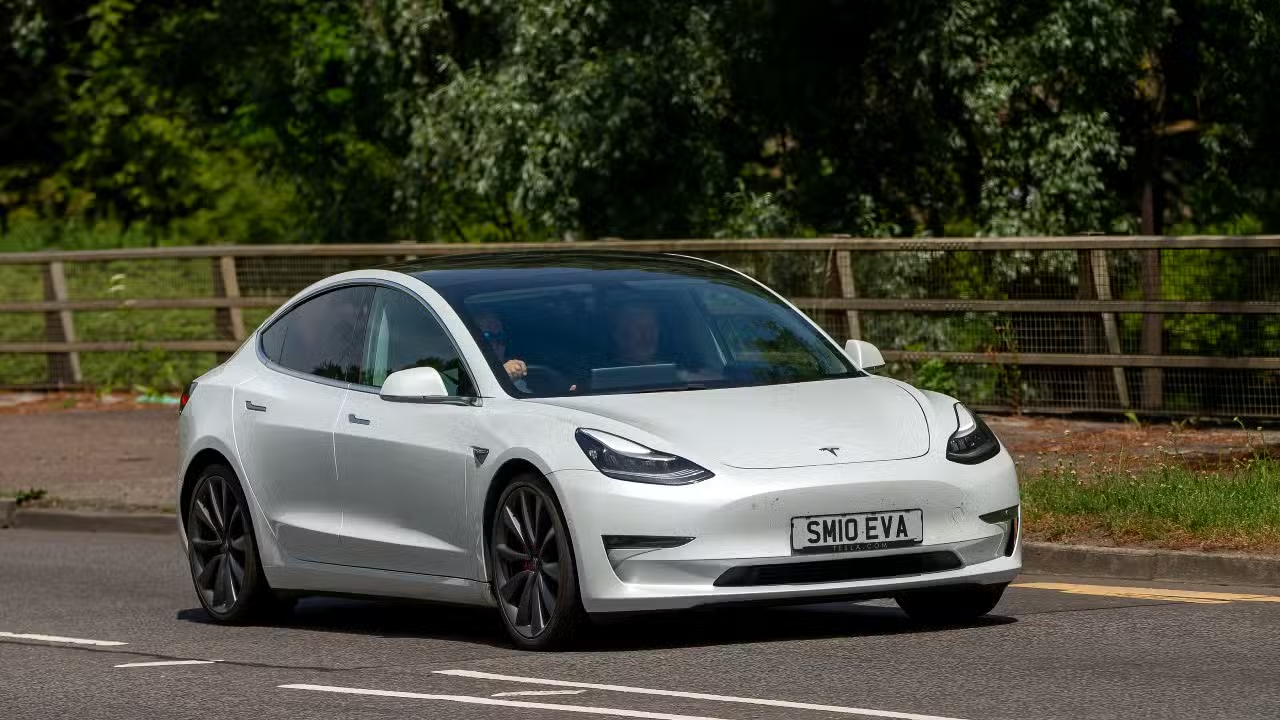
Tesla internally considered the possibility of developing an Model 3 with a triple engine configuration, popularly known as the Plaid version. Contudo, the company’s current priority for high-performance hardware focuses on the development of Roadster. Esta internal discussion reveals the automaker’s potential to expand its line of high-performance vehicles.
Tesla’s vice president of vehicle engineering, Lars Moravy, mentioned during his participation in the Ride The Lightning podcast that he thinks “all the time” about adapting the Plaid propulsion system for the Model 3. The observation suggests a technical inclination for the project, despite the company’s strategic directions pointing to other products in the short term.
Considerações techniques for a Model 3 Plaid
Moravy detailed the complexity of a possible Model 3 Plaid, indicating that it would not just be about adding an extra engine. The architecture requires a robust propulsion system, with rotors wrapped in carbon fiber sleeves. Estas sleeves allow permanent magnet motors to reach higher rpm, optimizing power delivery. Tais specifications indicate an engineering challenge that goes beyond mere superficial adaptations to the current model.
Creating an Model 3 Plaid would involve significant “work for reward” decisions. Isso means that Tesla would evaluate not only the technical feasibility of building a faster Model 3, but also the engineering time and associated costs. The complexity of the Plaid powertrain, with its permanent magnet motors and carbon sleeves, raises the bar for design and manufacturing requirements. The integration of a third engine would require a complete review of several systems, including thermal management and the vehicle’s structural capacity.

Desafios engineering and braking
An Plaid version of Model 3 would require significant improvements to crucial components to support the extreme increase in power. Melhorias in brake and cooling systems are indispensable, as indicated by Tesla’s own past experiences. The current vehicle, the Model 3 Performance, already delivers acceleration from 0 to 96 km/h in 2.9 seconds in the version for the Estados Unidos. An Plaid model would represent an even greater leap in performance.
Tesla engineers would face substantial challenges when sizing these components. The high energy demand and maximum speed require a braking system capable of dissipating large amounts of heat quickly. Um Model 3 Plaid would require:
- Upgrades on brakes:Implementação of larger brakes, possibly carbon ceramic, to guarantee effective stops at high speeds.
- Melhorias on cooldown:Otimização of cooling systems to manage the heat generated by the three engines and the battery, preventing overheating.
- Reforços structural:Adaptações into the chassis structure to withstand the additional forces of intense acceleration and braking.
- Novos tires:Desenvolvimento or selection of high-performance tires specific to the vehicle’s power and grip level.
Moravy recalled early testing of the Plaid when prototypes suffered from carbon-ceramic brakes igniting after a single lap at high intensity. Isso demonstrates the importance of a robust and adequate braking system.
Roadster as the focus of Tesla’s high performance
Lars Moravy directs the conversation to Roadster as the natural destination for Tesla’s most advanced and powerful engines. The vehicle is conceived as the company’s first product where the focus is purely on performance. Esta approach allows the engineering team to explore the limits of technology without the constraints of efficiency. The Roadster represents the technological showcase of the Tesla in terms of speed and acceleration.
The engineer stated that, although it is difficult for the team to completely detach themselves from the search for efficiency, Roadster offers a platform to prioritize maximum performance. Este strategic targeting ensures that the most sophisticated engineering resources are allocated where they can generate the greatest impact in terms of extreme capabilities. The Tesla aims to push the limits of what is possible in a production electric vehicle.
Histórico powertrain Plaid
The Plaid powertrain, which became a milestone for the Tesla, was originally designed for the 2017 Roadster prototype. The decision to repurpose this technology for the Model S came after the Porsche set a record at the Nürburgring circuit with the Taycan. Este event motivated Tesla to develop the Model S Plaid to compete in the high-performance luxury sedan segment, showcasing the company’s engineering flexibility.
The change of plans highlighted the importance of adequate support hardware to keep up with the power of the Plaid engines. The initial production Model S Plaid arrived without carbon-ceramic brakes, which exposed a mismatch between its acceleration and braking ability in heavy track use. Tesla later offered upgraded brake kits, including carbon-ceramic options that cost $20,000.
Perspectivas Futures and Engineering Vision
Apesar from an Model 3 Plaid seems like a natural evolution for the Tesla, considering the existence of the Plaid seal and the engines, Moravy remains reserved regarding its production. Ele recognizes the engineering challenge as tempting. However, the company’s current priorities are clearly set for other projects.
Um Model 3 Plaid, being a considerably lighter vehicle than the Model S, would have an advantage in braking. Even if the Embora required larger brakes than those of the current Performance version, its reduced mass would facilitate deceleration at high speeds. The possibility of an Model and Plaid is also mentioned as something that would generate excitement among consumers and brand enthusiasts.