

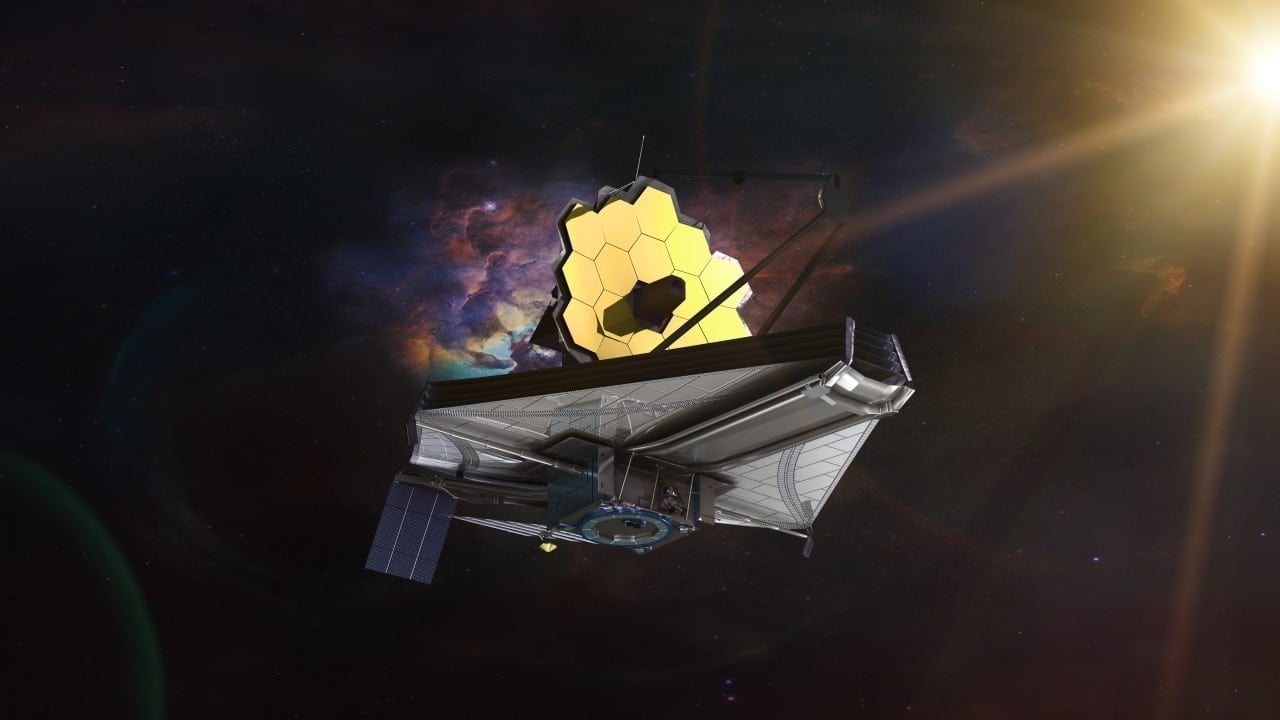
Telescópio Espacial James Webb detected methane on the interstellar comet 3I/ATLAS. The observation marks the first direct detection of this gas in an interstellar visitor. The comet traveled from another planetary system to ours.
Astrônomos used the mid-infrared MIRI instrument to map the chemical composition around the object’s core. The analysis revealed water vapor, carbon dioxide and methane. Cada gas showed a distinct spatial pattern. Methane appeared only after the closest passage of Sol.
Webb maps gas distribution on comet 3I/ATLAS
James Webb Space Telescope targeted MIRI for 3I/ATLAS in late December. The comet was already moving away from Sistema Solar. The telescope’s ability to separate infrared light allowed it to identify the three main chemical components. The water vapor spread more widely. Dióxido carbon and methane became more concentrated near the core.
On the same topic: Methane tracks on comet 3I/ATLAS deepen knowledge about an object older than the Sun
Essa distribution offers clues about the comet’s internal structure. The highly volatile methane sublimated only when solar heat reached deeper layers. Antes In addition, the gas remained protected beneath the surface.
- Water vapor largely comes from ice grains in the coma
- Dióxido of carbon and methane are concentrated near the nucleus
- Spatial Padrões varies depending on the distance from Sol
- Metano appeared in recent observations, not in previous data
Composição chemistry differs from comets from Sistema Solar
3I/ATLAS exhibits a different chemistry than that observed in comets originating in our system. The proportion of methane in relation to water was higher than expected. Essa characteristic suggests formation in a radically different environment.
Cientistas compare data with known objects. The methane sublimed late, indicating that it was buried. The heat from the perihelion passage released the gas from internal layers. Tal behavior helps understand how interstellar comets preserve materials from other systems.
The decline in gas production also attracted attention. Conforme o 3I/ATLAS moved away from Sol, activity decreased. Water reacted more strongly than other components. Essa variation reinforces the complexity of object composition.
More on this story: James Webb reveals unusual methane and CO2 in comet 3I/ATLAS, reinforcing origin outside the Solar System
Instrumento MIRI reveals unprecedented details of the comet
The Mid-Infrared Instrument captured chemical fingerprints in infrared. The observations took place in December, when the comet was at specific distances from Sol. Espectros showed clear bands of water, carbon dioxide, methane and even nickel.
Astrônomos noticed a significant reduction in gas release between two observation periods, separated by about 12 days. Methane, in particular, has shown up robustly in the most recent measurements. Essa detection opens new window to study objects arriving from outside the Sistema Solar.
Learn more: James Webb Telescope identifies unprecedented methane in interstellar comet 3I/ATLAS after perihelion
3I/ATLAS has been observed by other instruments before. Dados prior to Hubble and Webb itself did not record methane. The current detection confirms the importance of following the comet at different stages of its passage.
Implicações for origin of interstellar comets
The presence of methane in high proportions points to unique formation conditions. Cometas from Sistema Solar typically show more uniform compositions. 3I/ATLAS brings evidence of processes occurring in another planetary system.
Pesquisadores continues to analyze the complete spectra. Material preserved on the comet may contain information about the chemistry of distant systems. Future Observações will help refine models for how these objects form and migrate through interstellar space.
Learn more: NASA reveals detection of organic molecules in interstellar comet 3I/ATLAS during solar trajectory
The discovery reinforces the role of James Webb as an essential tool for studying comets. The telescope delivers data that complement previous images and measurements.
Detalhes observation technicians
MIRI operated in spectroscopy mode to dissect the comet’s light. Imagens combined with contours showed the exact location of the gases. The 3I/ATLAS core released materials heterogeneously.
Astrônomos plan further analysis of the raw data. The international team involves institutions such as NASA, ESA and CSA. Preliminary Resultados have already been published in scientific publications.