
Methane tracks on comet 3I/ATLAS deepen knowledge about an object older than the Sun

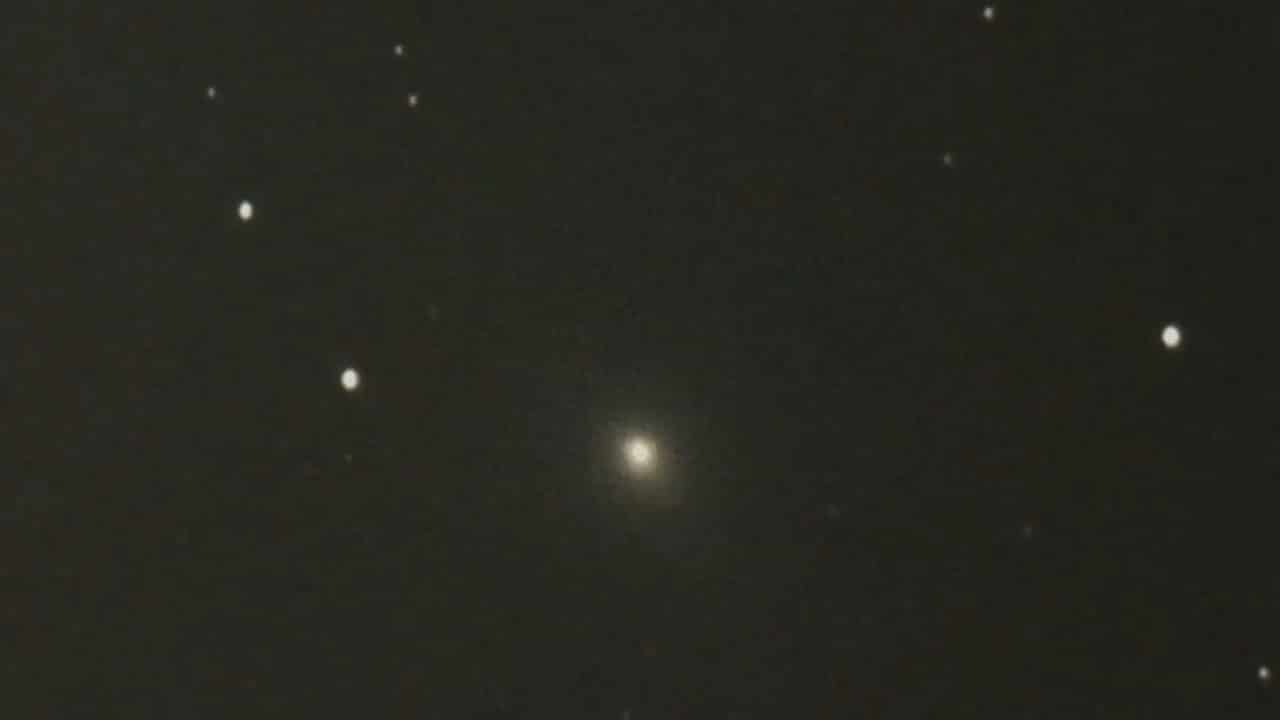
Important new information about one of the oldest celestial bodies to visit Earth’s vicinity has been revealed. Scientists have detected an increasing release of methane from the interstellar comet 3I/ATLAS as it moves away from the Solar System, offering an unprecedented look beneath the object’s ancient surface, composed of materials that may have formed billions of years before the existence of our star, the Sun.
Through observations carried out with NASA’s James Webb Space Telescope (JWST), researchers noticed that the comet began to expel significantly larger volumes of methane after completing its solar orbit. This indicates that the outer layer of the star, already quite worn, would have been eroded, revealing an untouched inner ice that remained practically intact during its extensive journey through interstellar space.
The findings, which were published in The Astrophysical Journal Letters, come at a time when independent studies indicate that the comet could be between 10 and 12 billion years old. Such an estimate would potentially position it as an object that predates the formation of the Sun and Solar System by several billion years.
The revelation caused great excitement among the astronomical community, as 3I/ATLAS is only the third interstellar object whose passage through the Solar System has been confirmed, following ‘Oumuamua, in 2017, and 2I/Borisov, in 2019.
Unlike its predecessors, comet 3I/ATLAS is bright enough to allow detailed observations, enabling scientists to analyze the chemical composition of a planetary component that originated around another star. With the comet rapidly returning to interstellar space, researchers warn that the window of opportunity for its study is rapidly shrinking.
How Fresh Methane Reveals a Rare View of an Ancient Surface
Discovered in July 2025 by the Asteroid Terrestrial Impact Final Warning System (ATLAS), a program funded by NASA and located in Chile, asteroid 3I/ATLAS passed approximately 1.5 astronomical units from the Sun in October of that year, before beginning its trajectory out of the Solar System. Currently, it is already beyond the orbit of Jupiter and will never return.
Researchers at the California Institute of Technology used JWST’s powerful infrared instruments to examine the comet’s chemical signature as it approached and then moved away from the Sun. Their observations indicated an unexpected increase in methane emissions after the comet passed the star.
Scientists consider this discovery to reflect a natural process, not a sudden chemical change.
During its journey through the galaxy over billions of years, the comet’s surface was constantly bombarded by high-energy cosmic rays. This process created a weathered outer crust where highly volatile compounds such as methane were depleted. As solar heating gradually removed this irradiated layer, the ice inside, which had never been exposed to space, began to vaporize, releasing methane in greater quantities.
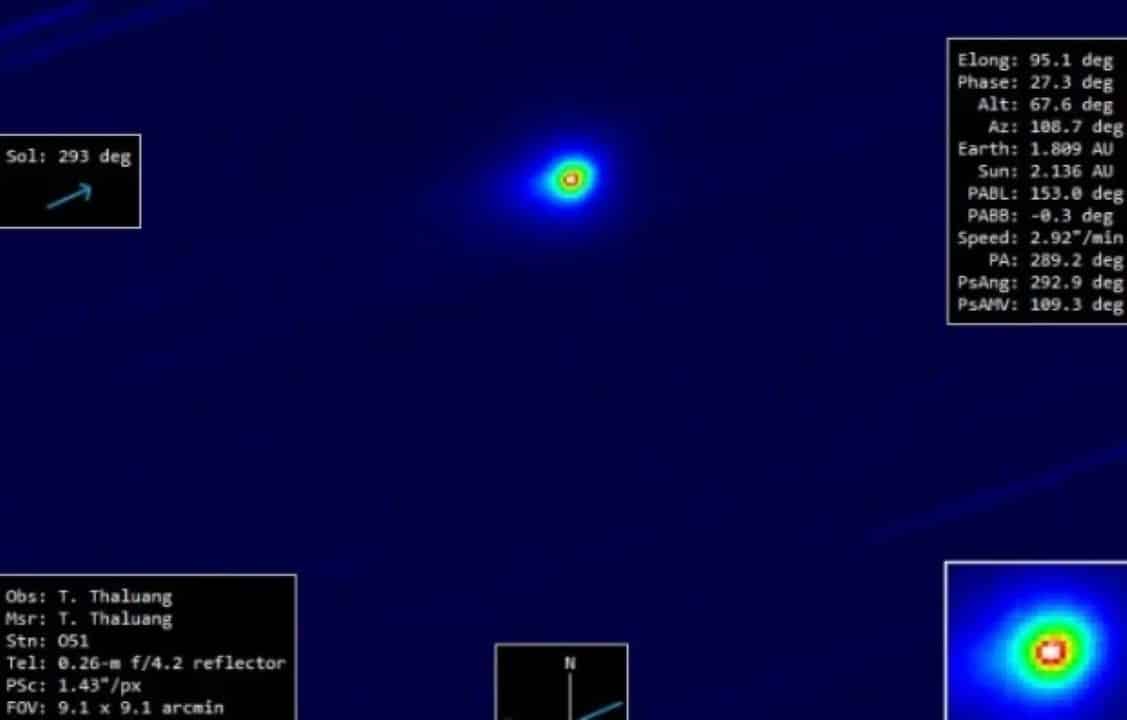
“The high speed at which it passed us provided only a small window of time to study it,” Matthew Belyakov, a Caltech graduate student and lead author of the study, said in a statement.
This discovery means that astronomers are no longer just observing the comet’s ancient outer layer, but rather examining material preserved inside since the object’s formation around another star.
Characteristics of an object potentially older than the Sun
The discovery of methane gains even more relevance when combined with other analyzes of the comet’s chemical composition.
According to recent observations reported by researchers using JWST, isotopic measurements indicate that 3I/ATLAS formed approximately 10 to 12 billion years ago. If this estimate is confirmed, it would potentially be more than twice the age of the Sun, which is 4.6 billion years old.
Scientists arrived at this estimate using several chemical signatures. Notable among them are an exceptionally high deuterium-to-hydrogen ratio and carbon isotope measurements, which suggest the comet likely formed in an extremely cold environment, below 30 Kelvin (equivalent to minus 243 degrees Celsius).
If confirmed, the discoveries would transform 3I/ATLAS into one of the oldest objects ever directly studied by astronomers, preserving material from a planetary system that existed long before the formation of the Earth or even the Sun itself.
Unlike asteroids and comets that originate in our Solar System, interstellar objects keep chemical records from completely different stellar nurseries. By comparing the composition of 3I/ATLAS with that of local comets, researchers hope to improve understanding of how planets and planetary systems form throughout the Milky Way.
Belyakov said JWST will perform one last observation of the comet before it becomes too distant for any meaningful study.
Theories about extraterrestrial life and what scientists have really discovered
The comet’s unusual chemical composition also instigated public speculation.
Harvard astronomer Avi Loeb, who has previously argued that some interstellar objects deserve further analysis, publicly raised the question of whether unusually high levels of methane could justify investigations into possible microbial activity or other unconventional explanations.
These comments quickly reignited online discussions about whether 3I/ATLAS represents alien technology or an artificial object.
However, the scientific consensus remains firmly in favor that it is a natural comet.
The researchers say the elevated level of methane is consistent with thermal release, a process in which sunlight heats icy material beneath the comet’s surface, causing the frozen gases to escape into space. The new observations support this explanation, rather than any biological or artificial origin.
Scientists have also looked for direct evidence of technology.
A joint campaign by the SETI Institute and Breakthrough Listen, using the Allen Telescope Array, analyzed nearly 74 million radio signals coming from the comet. Of the 211 signals that initially appeared to merit further investigation, all were ultimately attributed to radio interference caused by humans or satellites. The study did not find any technological radio signatures that would suggest an artificial origin.
For astronomers, this result reinforces the view that 3I/ATLAS is a naturally formed interstellar comet, which contains valuable clues about planetary formation, and not evidence of extraterrestrial technology.
A visitor who leaves forever
Although 3I/ATLAS is already beyond Jupiter and rapidly disappearing from view, scientists hope its scientific legacy will endure for many years to come.
Its exceptional brightness allowed astronomers to collect far more detailed observations than was possible for ‘Oumuamua or 2I/Borisov, providing an unprecedented opportunity to study material originating around another star.
Researchers are also analyzing the composition of the comet’s dust, and additional studies are expected to reveal even more about the environment in which it formed billions of years ago.
As 3I/ATLAS disappears into interstellar space, it takes with it secrets that have not yet been fully revealed. However, data captured by JWST and other observatories could offer scientists one of the clearest windows into the chemistry of distant planetary systems, enriching our understanding of the universe on July 8, 2026.





