
James Webb Telescope identifies unprecedented methane in interstellar comet 3I/ATLAS after perihelion

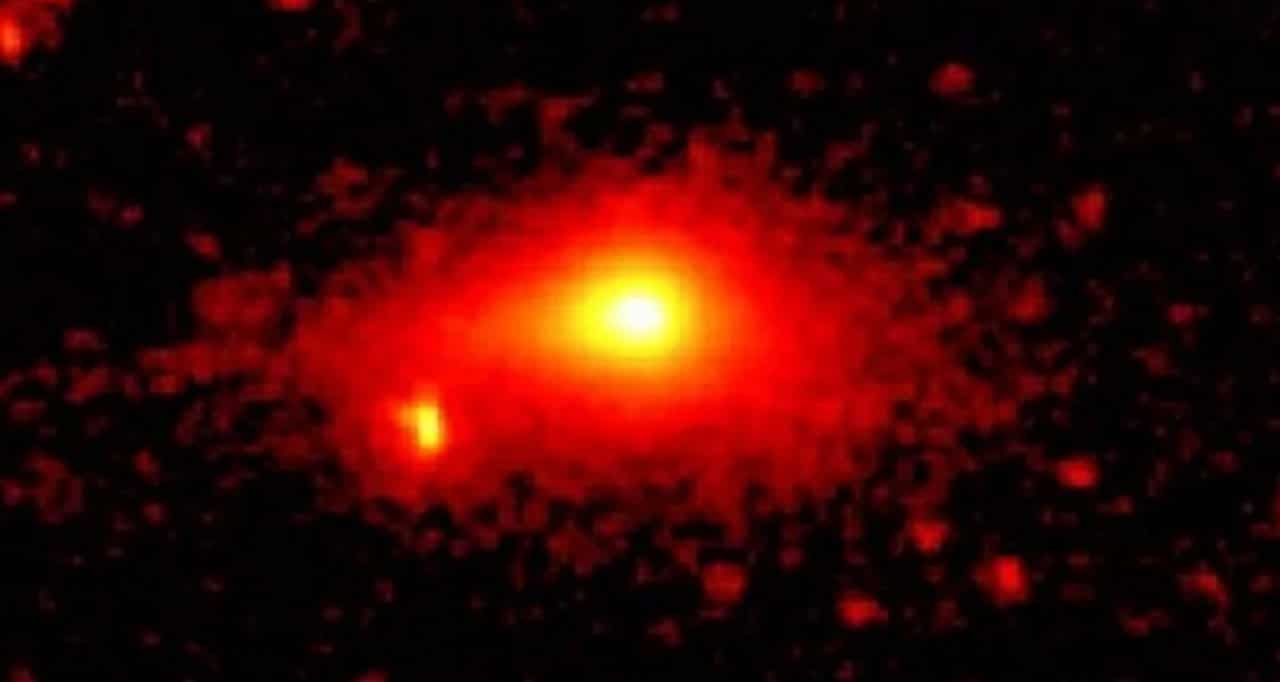
Telescópio Espacial James Webb achieved an unprecedented feat by detecting methane on the interstellar comet 3I/ATLAS. The observation occurred in the post-perihelion phase. The celestial body was already moving away from Sol when the sensors captured the chemical signature. Este is the first confirmed record of the gas in a visiting object originating from outside our planetary system. Data were obtained using the MIRI instrument. The equipment has high sensitivity to identify specific compounds in the mid-infrared spectrum region.
Astrônomos conducted detailed analysis of the information during the month of December 2025. The measurements revealed significant changes in gas production as the object traveled to cooler regions further away from the central star. The identification of methane revealed striking differences in the structural composition of the visitor. The chemical behavior diverges considerably from the patterns observed in comets that formed and inhabit our own cosmic neighborhood.
Monitoramento millions of kilometers away reveals gas dynamics
The team responsible for James Webb directed the MIRI instrument to 3I/ATLAS between December 15th and 16th, 2025. The comet was at a distance of 330 million kilometers from Sol at that time. Problemas technical specifications that occurred in two of the initial observations required the programming of new captures. The scientists repeated the procedure on December 27th. The celestial body had already traveled a considerable distance and was 380 million kilometers from the star.
The new imaging and spectroscopy have proven to be fundamental to the research. The records took place less than two months after the comet’s perihelion. The closest approach to Sol occurred on October 29, 2025. The extreme heating generated by solar radiation caused a drastic increase in the release of materials from the core. The sublimation process, however, already showed clear signs of decreasing during the December observations.
The high-precision equipment detected the presence of water vapor reaching great distances from the rocky, icy core. Grãos of ice present in the comet’s coma quickly vaporized under the residual influence of heat. Water vapor production recorded a sharp drop in the period between December 16th and 27th. The 3I/ATLAS crossed the so-called snow line. The region marks the thermal limit where temperatures drop enough to allow water ice to refreeze in space.
Composição Deep Chemistry Surprises Caltech Scientists
The presence of methane became evident only after the comet passed through the closest point to Sol. The behavior differs radically from the two interstellar objects previously discovered by astronomers. Visitors 1I/’Oumuamua and 2I/Borisov did not show detectable release of this specific gas during their trajectories through our system. Late detection indicates a complex internal architecture. The methane was buried in much deeper layers of the cometary nucleus.
The heat radiated by Sol needed time to penetrate the outer crust and reach the internal reserves. Apenas after reaching these deep layers, the thermal energy was enough to sublimate the methane and force its expulsion into space. Pesquisadores, led by scientist Matthew Belyakov, from Caltech, were responsible for processing the data and publishing the results of the discovery. The team noticed an unusual pattern of behavior in the release of volatile compounds.
Methane showed delayed production, a characteristic shared with carbon monoxide. Analysis showed that carbon monoxide emission increased 40 times relative to carbon dioxide during the December observations. The abundance of methane compared to the amount of water surprised experts. The same phenomenon of disproportion occurred with the carbon dioxide levels measured by the telescope’s sensors.
- Water vapor production suffered an abrupt drop with solar distancing.
- Carbon dioxide maintained constant activity due to its lower vapor pressure.
- Methane emerged only when heat reached the deepest layers of the core.
The chemical proportions found completely deviate from the typical pattern established for Sistema Solar comets. The anomaly strongly suggests that 3I/ATLAS formed in a distinct stellar environment. The physical and chemical conditions of its place of origin shaped a unique internal structure, preserved during its long journey through interstellar space.
Infrared Mapeamento exposes structure of interstellar core
The MIRI instrument not only identified the gases, but produced detailed maps of the chemical signatures around the celestial body. The composite images generated by the telescope show the distribution of water, carbon dioxide and methane in different spatial positions. The water spreads more widely and diffusely across the comet’s coma. Methane and carbon dioxide, on the other hand, are concentrated in a region much closer to the solid core.
Measurements and estimates indicate that the comet’s nucleus has a diameter of less than one kilometer. The high-resolution images show intense activity in the coma, characterized by the simultaneous release of several chemical compounds. The sensors also recorded the presence of nickel in a vapor state. The metal detection aligns with previous observations made by other ground-based and space-based observatories.
The results obtained reinforce the technical capacity of state-of-the-art telescopes such as the James Webb. The equipment provides detailed views that would be impossible to capture with previous technologies. The comet functions as a moving time capsule. Ele offers scientists a direct observation window into the physical and chemical processes that have shaped other planetary systems spread across the galaxy.
Primordial Origem and implications for planetary formation
Comet 3I/ATLAS holds the title of third interstellar object confirmed to cross our cosmic neighborhood. The celestial body has already passed its perihelion and is now following an outward trajectory towards deep space outside Sistema Solar. Observations conducted by JWST indicate that the visitor transports intact primordial material from its system of origin. Estimativas suggest that the formation of this material may have occurred 11 or 12 billion years ago.
The delayed release of methane provides crucial clues about the object’s evolutionary history. The dynamics suggest that the comet lost its outer layers while still in its home star system. A previous warming event completely depleted surface methane. Apenas, the deepest and most protected reservoir, remained intact, only activating when our Sol approached.
The behavior mirrors the dynamics observed with carbon monoxide. Ambas chemicals have a low vapor pressure. The physical characteristic allows them to remain active and continue the sublimation process even at much greater distances in relation to the solar heat source.
The data collected by astronomers helps refine theoretical models about the formation and behavior of interstellar comets. The findings show that not all celestial bodies follow the patterns established by observations made in our cosmic backyard. Continuous monitoring of 3I/ATLAS as it moves away could reveal additional details about its internal composition, contributing to understanding the diversity in the formation of stellar systems.





