Fully renewed Nissan Kicks with exclusive hybrid drive in Japan seeks to boost sales and economy By Beatriz
3 min read
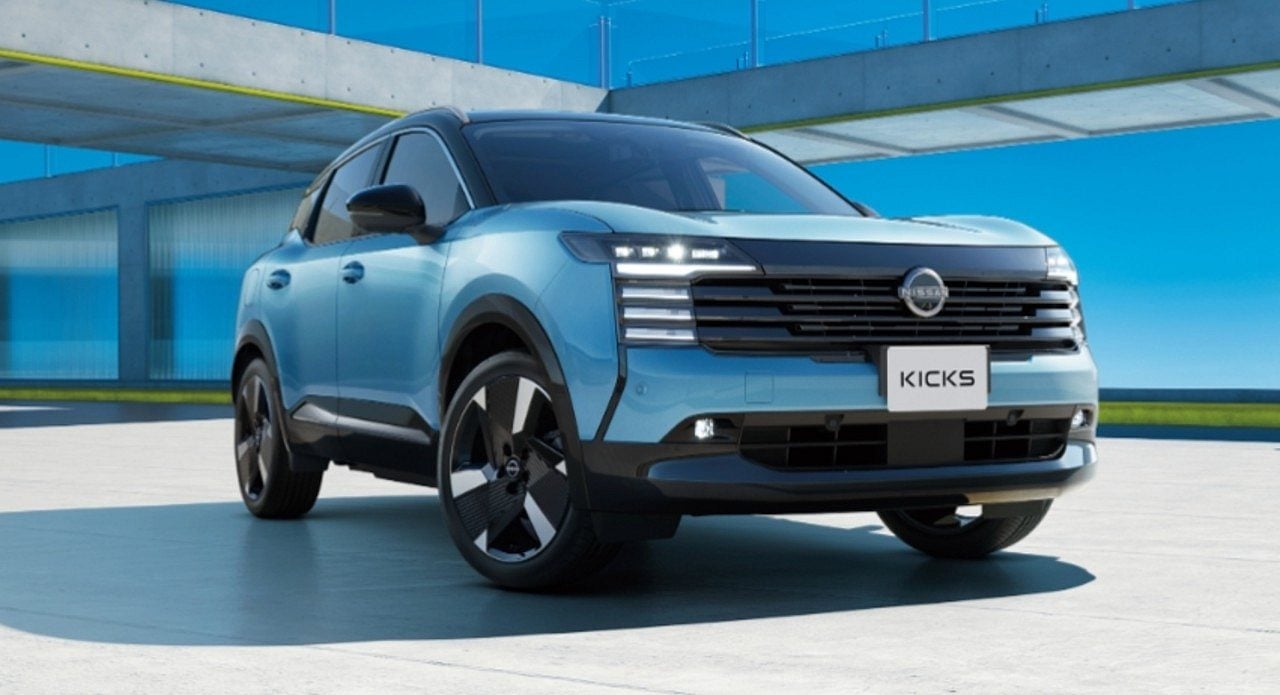 |
Nissan Motor unveiled the new version of the Kicks, its compact SUV, on July 18, marking the vehicle’s first complete redesign in six years. With a starting price of approximately 2.99 million yen, including taxes, the model is designed to carry five passengers in comfort. The automaker, which has faced strong competition in the compact sports utility vehicle segment in the Japanese market, is betting on this launch to revitalize its sales, promising a 10% improvement in fuel efficiency with the exclusively hybrid version of the Kicks.
Renewal Details and Official Launch
After a six-year hiatus since its last substantial update, the renewed Nissan Kicks arrives on the Japanese market with significant innovations. This launch is seen as a crucial point for Nissan, especially in a scenario where demand for more efficient and sustainable vehicles is growing. The expectation is that the new design and technological improvements will attract a public that seeks a balance between urban performance and economy in everyday life.
The pricing of the new generation Kicks, with its starting value at around 2.99 million yen, positions the SUV strategically in the segment. This price range is competitive and aims to capture a portion of the market that considers both the acquisition cost and long-term benefits, such as fuel consumption. The focus on the model with capacity for five occupants reinforces the focus on families and consumers who value space and versatility in their vehicles.
Hybrid Strategy and Fierce Competition in Japan
The decision to launch the new Kicks with an exclusively hybrid engine demonstrates Nissan’s clear strategy to align with the growing demands for more environmentally conscious vehicles with lower consumption. This movement is fundamental for the automaker in a market as competitive as Japan, where compact SUVs represent one of the most dynamic and competitive segments, with numerous manufacturers seeking consumer preference.
The quest for a 10% improvement in fuel efficiency aims to bring the Kicks closer to direct rivals, such as the Honda Vezel (known as the HR-V in other markets). The Vezel, for example, currently has consumption that is seven times higher in some metrics, setting a high standard. For Nissan, improving the Kicks’ fuel performance is essential not only to compete on an equal footing, but also to reinforce its image of innovation and sustainability on the global and local automotive scene.
Consumer Perception and Decisive Factors
An initial survey, which collected the expectations and concerns of potential buyers, revealed the main factors that influence consumer decisions regarding the new Nissan Kicks. This data is crucial for Nissan to adjust its marketing and sales strategies, ensuring that the most valued attributes are properly communicated to the public. Understanding these perceptions allows the automaker to directly address future owners’ points of interest and questions.
The main aspects highlighted by interviewees include:
- The design of the vehicle, which was the most mentioned factor, with 36.5% of preferences, highlighting the importance of aesthetics for the market.
- Uncertainty about the specifications and performance of the new model, recording 30.8% of responses, indicating the need for more clear information.
- The Kicks’ sales price, highlighted as crucial by 17.3% of participants, reinforces the market’s sensitivity to cost.
- Performance and experience while driving, chosen by 13.5% of respondents, highlighting the search for pleasure when driving.
This launch of the Kicks therefore represents a strategic moment for Nissan. With a renewed design, hybrid powertrain focused on efficiency and a clear intention to compete more aggressively in the Japanese market, the compact SUV seeks to reaffirm its position and contribute significantly to the automaker’s results in the region.