Fin species, the second largest whale on the planet, is spotted with unusual thinness on the coast of Ilhabela and raises concern

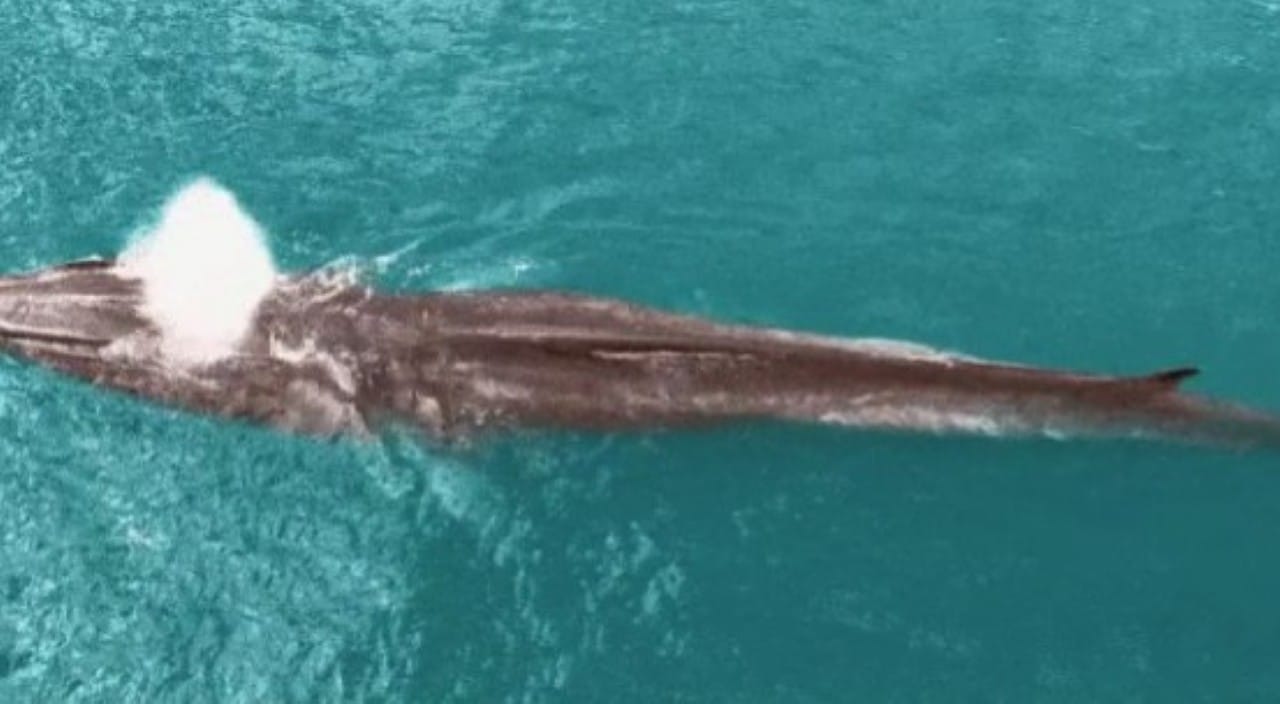
A businessman from the nautical sector in Ilhabela documented the passage of a fin whale, the second largest species on the planet, through the waters of the North Coast of São Paulo. The visual recording of the marine mammal, made with a drone, took place on Sunday (14).
The sighting of the animal took place specifically in the channel close to the north of the island city, as reported by Marcos Cará, the whale watcher. These majestic cetaceans can easily exceed 20 meters in length, being recognized as the second largest whale in existence.
Details about the impressive size were shared by oceanographer Hugo Gallo Neto, from the Argonauta Institute. He reported that the fin whale is capable of reaching more than 25 meters and weighing approximately 70 tons.
This type of whale has a global distribution, being present in all oceans, although its preference is for oceanic environments and deeper waters. Its diet is primarily made up of small fish, squid and crustaceans, obtained by filtering the water with its fins.
Regarding the specimen observed in Ilhabela, Hugo Gallo Neto highlighted a point of concern: its physical condition. The animal showed visible signs of thinness, an aspect that raised alarm among observers.
The relevance of the sighting lies not only in the presence of the fin whale on the Brazilian coast, where it is already known, but mainly in the unusual behavior it demonstrated. The animal’s compromised appearance, with its notable thinness, is a crucial factor for the studies.
In fact, the presence and presence of an animal of this species in a coastal strip such as Ilhabela is classified as an unusual event.
This occurrence offers a valuable chance to deepen research into the ecology of the fin whale and its migratory movements. Monitoring your behavior in atypical locations can provide essential data.
Faced with the presence of large whales, such as fin whales, the oceanographer emphasized the importance of following safety guidelines. These include maintaining a minimum distance of 100 meters from the animal, reducing the speed of the vessel and avoiding sudden movements. It is crucial to never corner, chase or touch these animals.
Still on precautions, it is recommended to avoid quick maneuvers and loud noises, keeping the vessel’s engine in neutral when within the safe observation perimeter.
For Hugo Gallo Neto, the practice of conscious observation is fundamental, as it reduces the impact on marine life and ensures the integrity of both animals and observers.
Considering that it is a large cetacean in its natural habitat, the expert pointed out that rescue or rehabilitation options, common for smaller marine animals, are unfeasible. The action of specialized teams is restricted to the technical analysis of the event, data collection and, if authorized, specific interventions, such as removing tangled networks.