
How erectile dysfunction acts as a warning sign for heart attack, stroke and dementia in men

Erectile dysfunction can be seen as a silent and widespread health issue, affecting more than half of men over the age of 40, according to several investigations. Despite the high incidence, few feel comfortable openly discussing the topic with their loved ones.
Often, the topic is brought up in conversation in a humorous way, rather than being recognized as an early indication of other medical conditions. However, a growing body of research indicates that the male sex organ may serve as a vital marker for men’s overall health. Erection difficulty, specifically, can be among the first signs of serious illnesses, such as diabetes, heart attack, stroke and even dementia.
Sexologist Emmanuele Jannini, from the University of Rome Tor Vergata, in Italy, highlights that erectile dysfunction often precedes other health problems. Jannini curated a recent academic book that compiles scientific evidence about this link. For the specialist, a more thorough assessment of erectile dysfunction could help doctors identify serious conditions before they progress.
However, the hesitancy of many men to discuss their sexual health means that these important opportunities for early diagnosis are missed in clinical practice.
Blood circulation problems in the male body
The exact incidence of erectile dysfunction varies considerably, as it depends on the definition and measurement methodology. Therefore, studies present broad estimates, with the global prevalence among male adults ranging between 3% and 76.5%.
One of the most comprehensive and detailed analyses, which evaluated nearly 1,200 men using extensive questionnaires, revealed that 39% of men at age 40 experienced some degree of sexual impotence on a regular basis. This proportion rose to 67% at age 70.
In essence, erectile dysfunction is closely linked to a problem with blood circulation.
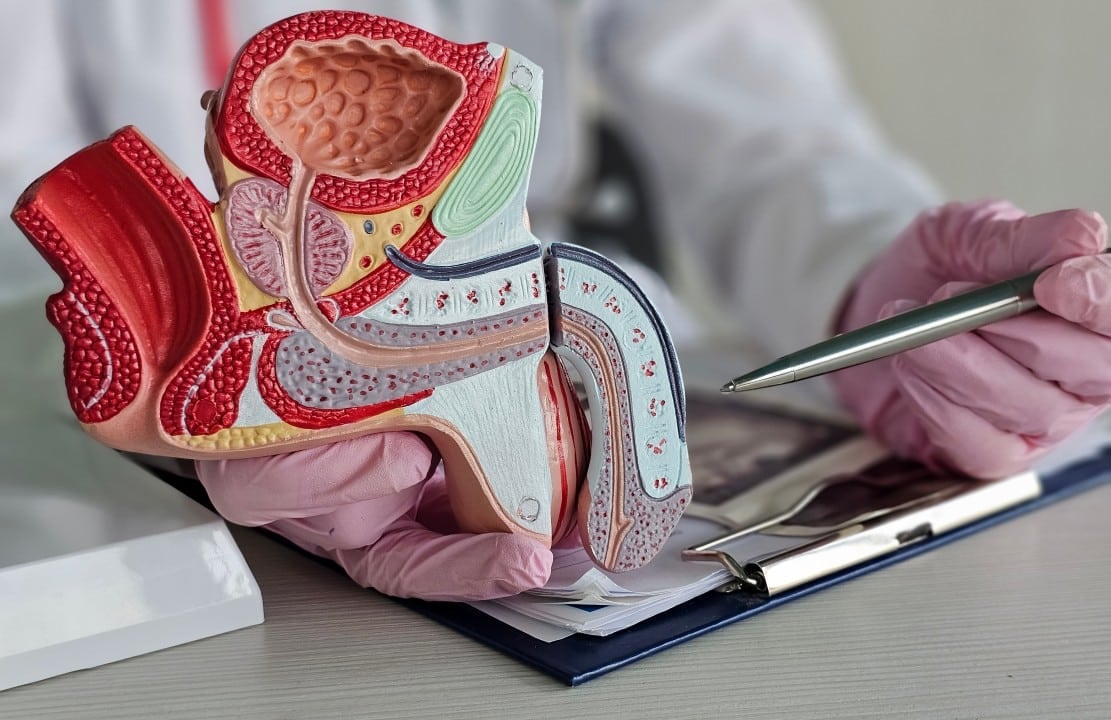
The penis is made up of two corpora cavernosa, spongy structures that normally remain in a flaccid state. When there is sexual excitement, the brain sends impulses that intensify blood flow to this region. As these bodies fill with blood, they compress the veins responsible for drainage, keeping the blood in the organ and generating an erection.
Just like a balloon that inflates, the penis expands its volume and becomes rigid. Any element that compromises blood flow to the organ can make it difficult to both obtain and maintain an erection.
In many cases, the origin of the problem is psychological. The reaction to stress, which involves the release of hormones such as adrenaline and cortisol, can induce blood vessels to contract, preventing the corpora cavernosa from hardening. High levels of stress can also affect testosterone production, which in turn decreases libido and sexual arousal. It is important to note that individuals with certain hormonal conditions, such as hypogonadism, also produce less testosterone, which can worsen the situation.
Additionally, stress is often accompanied by mental overload, making it difficult to concentrate during sexual activity.
From an evolutionary perspective, this dynamic likely served a purpose: If stress disrupts sexual arousal, the organism conserves energy to deal with threats. Jannini explains that “if the environment poses risks, it is important not to reproduce.”
However, in contemporary society, many sources of stress do not represent an imminent danger to survival. As a result, this self-protection mechanism may activate more frequently than necessary.
Impacts of erectile dysfunction on heart and brain health
In several situations, difficulty with an erection can also signal broader health problems in the body. One of the common causes is atherosclerosis, a condition that hardens and narrows blood vessels, substantially increasing the risk of cardiovascular disease. As the arteries in the penis are some of the narrowest in the body, they are often the first to manifest such problems. In this way, erectile dysfunction can act as an early sign of heart disease.
A recent analysis of data covering 154,794 individuals demonstrated that men with erectile dysfunction were 59% more likely to develop coronary artery disease and a 34% higher risk of having a stroke.
“Having a good erection is a good indicator of blood vessel health,” says Michael Carroll, an expert in reproductive science at Manchester Metropolitan University in the United Kingdom. Carroll is the author of the book “Your Nuts: The Science of How They Work and What It Means For Your Fertility”, scheduled for release this year.
There is also evidence that problems in penile health can serve as a warning for cognitive decline. A study conducted in Taiwan found that men diagnosed with erectile dysfunction were 68% more likely to develop dementia over a seven-year follow-up period. Just like the penis, the brain depends on adequate blood flow to receive essential nutrients and eliminate harmful substances.

The link between diabetes and erection difficulties
Monitoring erectile dysfunction is particularly relevant for individuals predisposed to diabetes, a disease that affects both the circulatory and nervous systems through multiple mechanisms. Blood glucose spikes, which are common when the condition is not well controlled, can lead to excessive sugar buildup in the proteins in the walls of blood vessels. This phenomenon, known as glycation, reduces the elasticity of vessels and compromises circulation.
Similar to what occurs in atherosclerosis, the decrease in blood flow primarily impacts the most delicate vessels in the body, including those in the penis.
“The connection between diabetes and erectile dysfunction is extremely strong,” says Bogdan Vlacho, a researcher at the Sant Pau Research Institute in Barcelona, Spain. “Men with type 2 diabetes are approximately three times more likely to develop erectile dysfunction than those without diabetes.”
In a recent review of scientific evidence, Vlacho further concluded that people with diabetes and erectile dysfunction have a significantly higher risk of developing “peripheral neuropathy” — which is damage to the nerves in the hands and feet — compared to diabetic patients without erectile dysfunction. They are also more vulnerable to retinopathy, a condition that can lead to blindness, and difficulty in wound healing, which in some cases can result in amputations.
Despite all this evidence, the routine investigation of erectile dysfunction among diabetic patients has not yet become a standard practice. “There are indications that health professionals do not discuss this topic with patients”, comments Santiago Martinez, an endocrinologist at the University of Barcelona, in Spain, and co-author of the study review.
Approaches and benefits of possible treatments for the dysfunction
A survey conducted by The Urology Foundation in the United Kingdom revealed that more than half of men experiencing erectile dysfunction avoid seeking medical help due to the shame or anxiety associated with the problem. Around 20% of those interviewed stated that they would rather go a month without drinking beer than consult a health professional.
However, according to Carroll, from Manchester Metropolitan University, in the United Kingdom, all men experiencing erection problems should seek medical advice. In addition to alleviating a significant source of suffering and stress, this action can open a crucial conversation about the patient’s overall health, a conversation that, in some scenarios, can be vital.
“It is essential to treat the problem in its early stages,” says Carroll.
After all, erectile dysfunction is not a condition without solutions. Medications such as Viagra (sildenafil) work by promoting the dilation of blood vessels in the penis. There are also observational reports that suggest that patients who use these medications to improve their sex lives have better cardiovascular outcomes, including a reduced risk of heart failure, although this remains to be confirmed by robust clinical trials.
It’s important to remember that Viagra was originally designed as a cardiovascular treatment for patients with hypertension, before researchers identified its best-known effect.
Some studies also indicate that these medications may lower the risk of dementia. Research that analyzed more than 885,000 patients concluded that the use of these drugs was correlated with a two-fold reduction in the risk of developing Alzheimer’s disease.
Even if no specific treatment is recommended, reporting erectile dysfunction to your doctor allows you to investigate common risk factors for cardiovascular disease, such as hypertension and atherosclerosis, as well as identify conditions such as obesity, which may be compromising vascular health.
Additionally, talking to a health professional about erection difficulties makes it possible to investigate common risk factors for heart problems, such as hypertension and atherosclerosis, and recognize issues such as obesity, which can harm cardiovascular health.
In certain situations, simple measures, such as dietary adjustments and the inclusion of physical activity, can be beneficial. For individuals with diabetes, strict control of blood glucose levels is of paramount importance.
Still, Martinez and Vlacho emphasize that research into the impacts of these treatments on erectile dysfunction and the prevention of other complications is in its early stages.
At the same time, identifying the causes of erectile dysfunction may require further investigation, as the problem may also be linked to habits such as compulsive pornography consumption and mental health issues that affect sexual desire.
“When a man has diabetes or a cardiovascular disease, it is usually more direct to make the connection and recommend treatment,” explains Carroll. “However, when lifestyle factors, such as alcohol and tobacco consumption, combine with psychological or behavioral aspects, such as excessive pornography use, the situation can be more challenging to address. Often, these men are reluctant to talk about their habits.”
The intriguing evolutionary loss of the penile bone in humans
In addition to the relevance of these discoveries to current medicine, Jannini has reflected on the possible evolutionary implications of the fact that the penis serves as such a sensitive indicator of the organism’s general health.
In this context, human beings present a particularity. Our ability to achieve a firm erection depends solely on blood flow. Most other primates, including our closest relatives the chimpanzees, have a retractable bone known as the baculum, or penile bone. During sexual arousal, this bone helps to sustain the erection and keep the organ rigid. Consequently, the sexual life of these animals is not as directly linked to their general health status as that of humans.
Why, then, would men have evolved to lose their baculum and thus become more susceptible to erectile dysfunction? This is a question that has intrigued evolutionary biologists for many decades.
Jannini hypothesizes that the loss of the penile bone may have helped the ancestral women of the human species to identify more robust partners with greater reproductive potential.
“It’s quite peculiar that we have lost the most fundamental bone for reproduction, since our sexual response is remarkably unpredictable,” notes Jannini. “However, this also makes it the ideal biomarker for chronic diseases.”




