
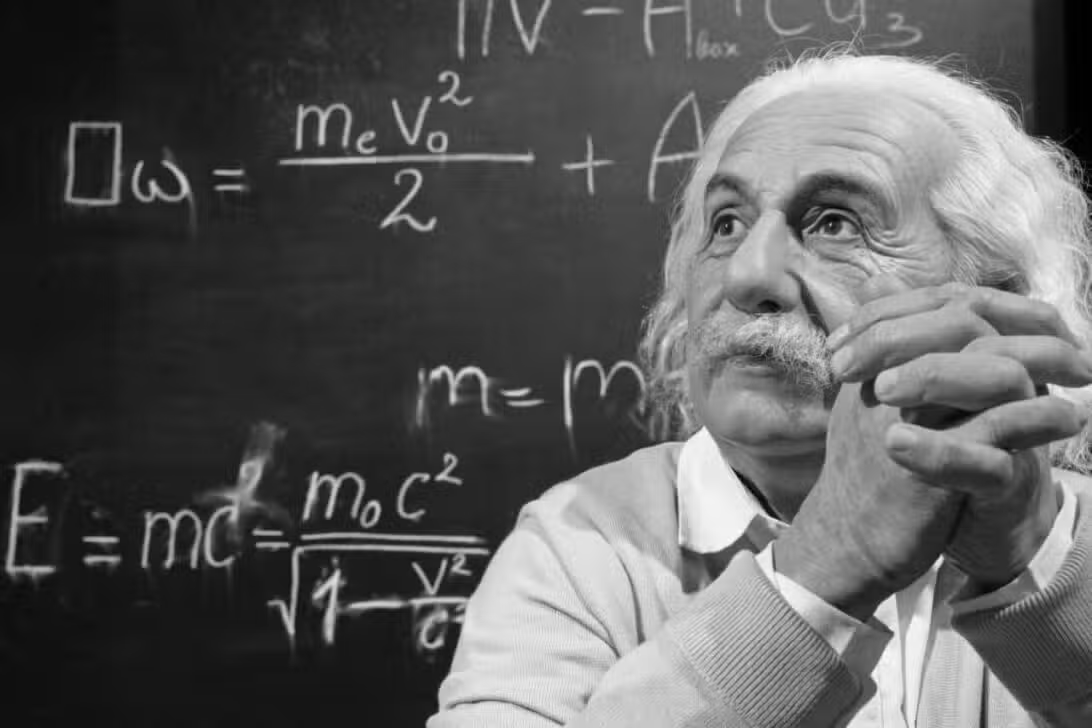
An impactful phrase, “An intelligent person solves a problem; a wise person avoids it”, has been spread over the years, appearing on various platforms such as social networks, self-help publications and even in reports. This quote, at first glance, seems to fit perfectly with the renowned physicist’s thoughtful style, as if it were one of his many teachings left alongside his revolutionary theories.
However, there is no type of documentation, whether in interviews, lectures, correspondence or books, where this statement has been recorded. For this reason, historians and scholars of Albert Einstein’s life suggest that this is an apocryphal statement, similar to several others that the internet and common sense ended up crediting to notable figures. This tendency occurs because highly reputable names give immediate credibility to a message, especially when it resonates with the general perception of these personalities’ thoughts.
Fake quotes rarely spread by chance or for no reason. To a large extent, they gain strength by encapsulating a universal truth and by aligning themselves with the image that the public has constructed of a certain figure. In the case of Albert Einstein, the collective associates him not only with one of the most brilliant minds in history, but also with a reflective and engaged human being, with the ability to transform complex concepts into easy-to-understand sentences.
For this reason, it becomes understandable that a meditation on the nuances between intelligence and wisdom could, in theory, have been given by him. The phrase in question establishes a relevant distinction: while intelligence would be linked to the ability to solve difficulties when they arise, wisdom would reside in the ability to act in advance, preventing such challenges from materializing.
It is interesting to note that, although he never uttered the exact words of the quote, Einstein actually advocated similar principles. He dedicated a significant part of his life to reflecting on the ramifications of human choices. After his indirect contribution to the advancement of nuclear energy and witnessing the catastrophic effects of the Second World War, the scientist began to highlight the fundamental importance of preventing major catastrophes, ethical responsibility and international collaboration, and not just everyday problems. This genuine concern for predicting and avoiding large-scale conflicts is, in fact, part of his legacy and documented thinking.
Perhaps the persistence and relevance of this quote has less to do directly with Einstein and more to do with the way in which it resonates with the complexities of the present. After all, the essence of the idea remains valid for both individual challenges and global issues.
The essence of the message suggests that true mastery lies in identifying potential risks before they evolve into concrete problems. In the professional environment, for example, it is common to value those who can resolve highly complex crises. However, the silent merit often belongs to those who organized processes effectively, preventing the crisis from even occurring. The same reasoning applies to different areas of life, such as personal finances, preventative health and maintaining relationships.
Prevention, in general, does not receive the same recognition and emphasis as solving already established problems. Possibly for this reason, the message remains so timely: it reminds us of a crucial aspect that is often overlooked – the fundamental distinction between simply reacting to a situation and anticipating it.