
Asteroid (152637) 1997 NC1, measuring up to 1,650 meters, approaches Earth on Saturday without risk of impact


A large celestial body will pass close to our planet this Saturday, without any threat of collision, and can be observed with the help of smaller telescopes or high-powered binoculars, the European Space Agency (ESA) announced last Wednesday (24).
Such close approaches to celestial bodies of such size are rare, happening every few years, as pointed out by Juan Luis Cano, from the European agency’s Planetary Defense Office. He, however, warned that the Moon, which will be bright and in a close phase, could make observation difficult at the exact moment of the closest proximity to the asteroid.
Identified in 1997 and cataloged as (152637) 1997 NC1, this rocky object has an estimated size of between 750 and 1,650 meters, a calculation obtained from the amount of sunlight it reflects back into space.
However, other analyzes suggest that the asteroid may be slightly smaller in size than initially estimated, as highlighted by ESA.
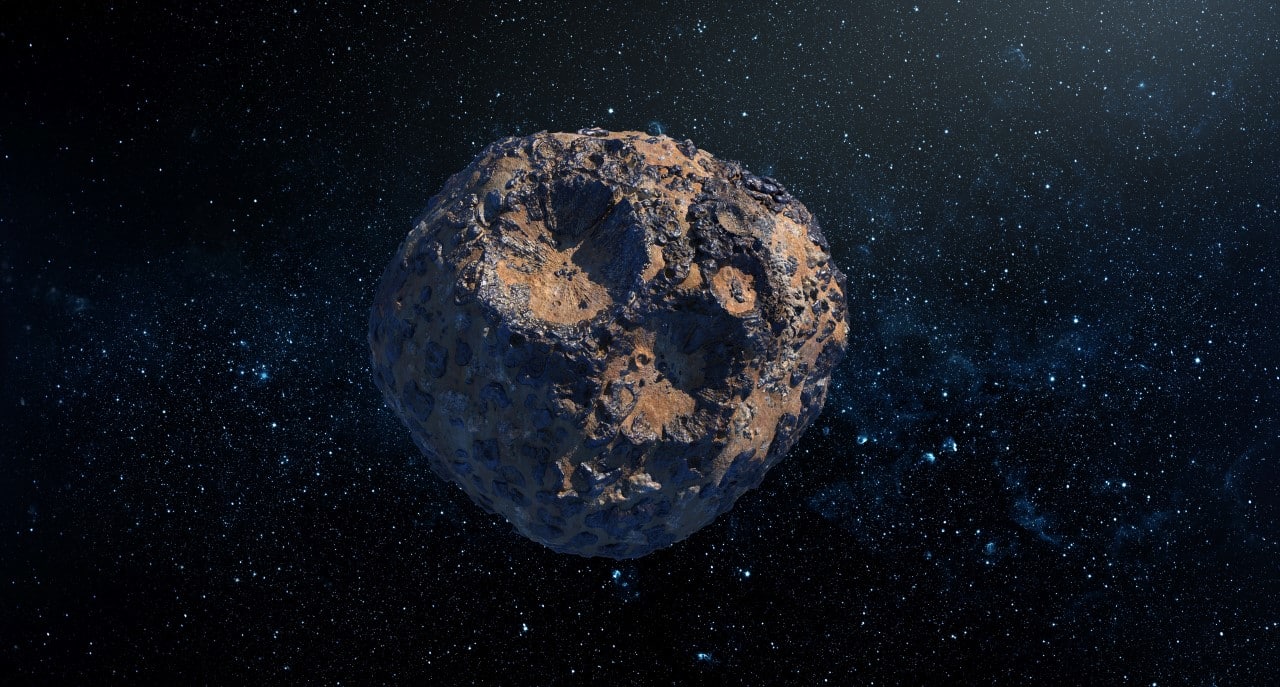
The asteroid’s closest point to Earth will be reached on Saturday, precisely at 11:14 am GMT time, which corresponds to 8:14 am Brasília time, with the object traveling at a speed of 8.9 kilometers per second.
At that moment, the celestial body will be exactly 2,559,461 kilometers away from our planet. This distance, equivalent to more than six times the lunar distance (6.66 times), ensures the total absence of risk to Earth, ruling out any likelihood of impact.
The asteroid will be visible in different parts of the globe. During its approach phase, it will be observable in the Northern Hemisphere; at its closest point, it can be seen practically everywhere in the world; and as it moves away, it will only be accessible to observers in the Southern Hemisphere.
In places around the world where night coincides with the passage, it will be theoretically possible to see the asteroid using small telescopes or even robust binoculars, according to information released by ESA.





