
China’s Tianwen-2 probe prepares for historic mission to Earth’s ‘mini-moon’ and seeks valuable samples


One of the most unique asteroid exploration missions in history is about to be launched by China. In early July, the Tianwen-2 spacecraft is scheduled to arrive at a near-Earth asteroid, which is about the size of the Statue of Liberty and is often referred to as our planet’s “mini-moon.” If the landing occurs uneventfully, the probe will collect material and send it back to Earth inside a specialized capsule.
Discovery and characteristics of Earth’s “mini-moon”
Initially identified in 2016 and also known by the designation 2016 HO3, asteroid 469219 Kamoʻoalewa is one of the few objects classified as quasi-satellites already cataloged by science.
With a diameter that varies between 40 and 100 meters – approximately equivalent to the height of the Statue of Liberty – this celestial body could become the smallest asteroid ever closely investigated by a spacecraft.
The term Kamoʻoalewa has Hawaiian origins and means “an oscillating celestial object”. Although its main orbit is around the Sun, it maintains gravitational synchrony with the Earth, creating the impression that it orbits our planet for long periods, in a similar way to our Moon.
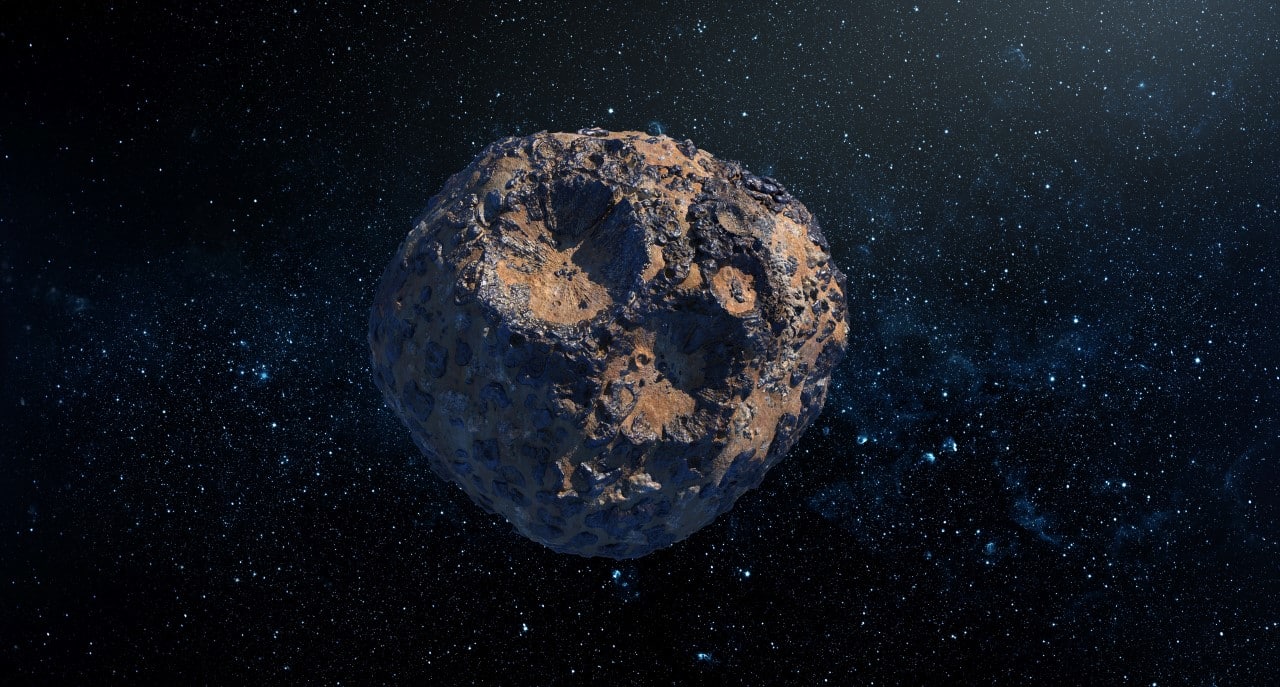
Hypothesis on the lunar origin of Kamoʻoalewa
Kamoʻoalewa attracts the attention of planetary researchers for its unique composition, which distinguishes it from a typical asteroid. Analysis of the light it reflects reveals striking similarities to lunar rock samples obtained during the Apollo missions. This peculiarity leads some experts to theorize that the object could be a piece of the Moon, and its analysis could provide crucial evidence about large impacts that shaped the early solar system millions of years ago.
If this hypothesis is confirmed, Tianwen-2 would be visiting a remaining fragment of the Earth’s natural satellite.
Tianwen-2 mission procedures on the asteroid
Launched on May 28, 2025, Tianwen-2 represents the first Chinese mission dedicated to returning asteroid samples, integrating the Asian country’s ambitious deep space exploration program. After its arrival at Kamoʻoalewa, the spacecraft will dedicate several months to carrying out remote sensing observations, mapping the asteroid and identifying the most suitable locations for collecting material. Mission planners plan to employ a combination of touch-and-go maneuvers, along with a more complex docking system equipped with drills, to collect an estimated amount of between 20 and 100 grams of samples.
Extended route: probe journey to a comet
The Tianwen-2 mission is scheduled to leave Kamoʻoalewa in April 2027 and return to Earth with its sample capsule later that year. Landing is scheduled for November 2027, which will allow scientists to analyze fragments that could offer insights into the beginning of the solar system. After releasing the capsule, Tianwen-2 will use Earth’s gravity to redirect itself towards a second objective: comet 311P/PanSTARRS, also known as P/2013 P5 (PanSTARRS), which was photographed by NASA’s Hubble Space Telescope in 2013. Tianwen-2 is expected to reach this comet around 2035.
Exploration potential: quasi-satellites and mining
Unlike most asteroids, Earth’s quasi-satellites remain in close proximity to our planet for long periods. This characteristic makes them relatively accessible targets for visits. Kamoʻoalewa, for example, orbits the Sun in a 1:1 orbital resonance with the Earth, completing one orbit for each Earth revolution. This not only creates the illusion that it orbits Earth, but also establishes it as a promising target for future robotic missions, including mining asteroids for resources such as water ice and platinum group metals.
According to research published in 2025 by Spherical Insights & Consulting, the global space and asteroid mining market could reach a value of US$16 billion by the year 2035.





