
Major earthquakes in Venezuela cause collapse of housing complex built during Chávez’s administration

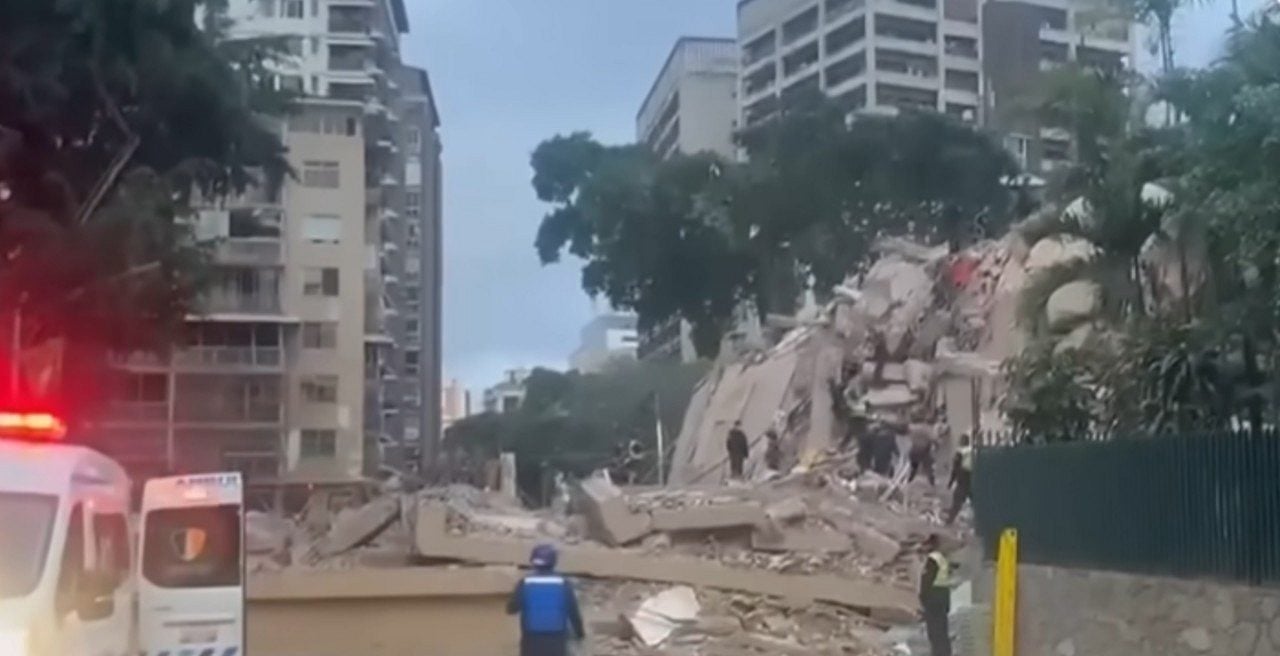
Earthquakes that hit Venezuela resulted in the uninhabitability of one of the largest housing complexes in the program initiated by former president Hugo Chávez, located in La Guaira, the region most damaged by the earthquakes.
The two earthquakes, recorded last Wednesday within a short interval, resulted in more than 1,400 fatalities and vast destruction in several areas of the country. La Guaira, neighboring the capital Caracas, was identified as the epicenter of the catastrophe and Misión Vivienda, created in 2011, aimed to reduce the housing deficit and offer decent housing for low-income families, now facing the challenge of reconstruction.
Amid the desolate scenario, Jenny Contreras, 28, reports that she sleeps on the street with her husband and four-year-old son. The family has been homeless since strong tremors shook the building where they lived.
The woman lived in an apartment located in one of the 192 buildings of Urbanismo Hugo Chávez, in the neighborhood of Catia La Mar. She managed to rescue only a few belongings before the structure of the building gave way completely, as a result of hundreds of aftershocks.
Search for survivors amid complete destruction in Venezuela
All inhabitants of this complex, which had 3,400 apartments spread over four floors, were evacuated and will be transferred to a temporary shelter in the city of Caracas.
The catastrophe resulted in the collapse of more than 700 buildings. Authorities indicated that 189 of these properties completely collapsed, with the majority of cases recorded in the cities of Caracas and La Guaira.
The remaining buildings have wide cracks, and several of them have given way at their bases, becoming dangerously tilted. Wooden planks, beams and yellow polyurethane foam were visible amid the damage.
Reports from residents seek alternatives to life in shelters
Some residents report that, in addition to the force of the tremors, explosions of domestic gas cylinders contributed to the collapse of other buildings.
In one of the devastated areas, a swollen hand of a fatal victim was visible among the rubble, awaiting rescue by teams.
“Of course, the entire housing complex will be closed off,” Contreras declared. “In the future, it will disappear completely as all the structures have fallen into disrepair.”
Experts had already issued repeated warnings about the accelerated deterioration, cracks and structural compromises observed in several buildings linked to the Misión Vivienda housing plan, an emblematic program of the Chávez administration, raising questions about the inspection of the quality of the material and execution.
The College of Engineers of Venezuela (CIV), the body responsible for regulating engineering and architecture in the country, had already issued previous reports pointing out the vulnerability of buildings and the insufficiency of data on the quality of soil analyses.
“Wards 1 and 3 were the most affected, in the upper part. Everything there has already collapsed, sunk. There are many dead,” said Dayana Lean, a 51-year-old trader.
The trader expresses her refusal to go to a shelter, asking the authorities for the possibility of being relocated to apartments, even in other states.
“Wherever they send us, except to a shelter,” he declared. “To live like refugees, we prefer to stay here and take care of ourselves.”
Faced with the rubble of their homes, the displaced set up makeshift camps with mattresses, washing machines, wooden furniture and other belongings they managed to save.
On Sunday, interim president Delcy Rodríguez announced the creation of “temporary camps” to welcome the homeless. She also assured that new housing construction projects will be implemented “in a very short period of time.”
“Are we going to a shelter?” asks Sandra Racure, 47, a resident of the complex for 13 years. She expresses her sadness that Venezuela is still housing “refugees” from past natural disasters.




