
New research points to Uranus and Neptune as magma worlds, challenging ice giant theory

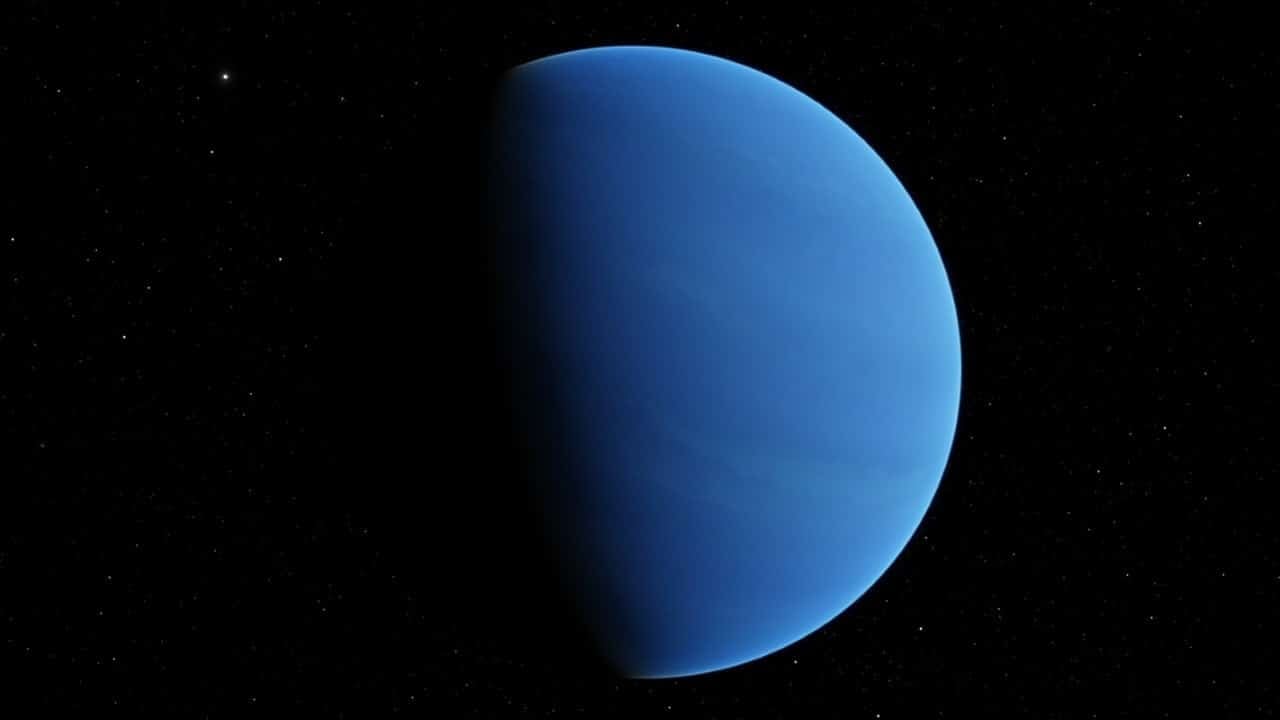
A new scientific study indicates that the planets Uranus and Neptune, known as “ice giants” for decades, may have rocky interiors with vast oceans of magma. The research, led by scientists at the University of California, Los Angeles (UCLA), revolutionizes understanding of the composition and formation of these distant worlds in our solar system.
Uncovering the interiors of distant planets
Uranus and Neptune have always been shrouded in mystery, mainly due to the scarcity of data. The only probe to visit them was NASA’s Voyager 2, in 1986 and 1989, respectively. The classification of “ice giants” arose from ancient hypotheses that suggested icy mantles beneath their hydrogen and helium atmospheres.
This theory of icy layers, composed mainly of water, ammonia and methane, persisted for a long period. However, observations about the planets’ magnetic fields and heat distribution have always raised doubts. The new research aims precisely to confirm or refute these long-standing models, seeking a more coherent explanation.
Innovative UCLA model suggests magma oceans
The team of UCLA researchers used a complex series of computer models to simulate and determine the internal composition and processes occurring in Uranus and Neptune. The study, submitted to the Astrophysical Journal and published on the preprint server arXiv, proposes an internal structure radically different from what was previously believed.
The main conclusion is that the interiors of these planets may be composed of an ocean of magma, and not an icy mass. This new panorama offers answers to the anomalies observed in their magnetic fields and in the way heat is distributed.
Crucial Similarities to Sub-Neptune Exoplanets
The relevance of this study transcends understanding just Uranus and Neptune. Scientists point out that these planets could serve as analogues for sub-Neptune exoplanets, which are the most common types in our galaxy. These worlds have radii between 1 and 4.5 times that of Earth.
The absence of a similar planet in our own solar system has made it difficult to understand the formation and evolution of sub-Neptunes. By proposing a magma structure, the research paves the way to explain chemical features and atmospheric boundary conditions that resemble those observed on gaseous dwarf exoplanets. This suggests a fundamental link between them, despite the different distances from their host stars.
What makes up the proposed new layers for Uranus and Neptune
The new model details a stratified internal composition for Uranus and Neptune, different from the traditionally accepted structure. Proposed layers include:
- An external atmosphere of hydrogen and helium, responsible for transporting heat to the upper layers and radiating it into space.
- An intermediate boundary layer, composed of elements such as hydrogen, helium, magnesium, silicon monoxide (SiO) and oxygen.
- An ocean of magma in the center, formed by silicates, iron and hydrogen.
Future space missions to gas giants
Despite the intriguing new perspective, exploration of Uranus and Neptune remains limited to the solitary visit of Voyager 2. There are currently no missions planned to return to these planets, which highlights the importance of theoretical studies like this.
However, several mission proposals were presented. Among them, the Uranus Orbiter and Probe (UOP) stands out, which would plan to send a probe to penetrate the atmosphere of Uranus, and the Neptune Odyssey. Both concepts aim to orbit the planets to study them up close, in addition to investigating their numerous moons, which would certainly provide more information to corroborate or refine the new theories.





