
Passage of giant asteroid through space near Earth reassures scientists about collision risks


A celestial body of large proportions will make a significant approach to planet Earth this weekend. Experts, however, guarantee that the event does not pose any threat of impact or danger to terrestrial inhabitants.
According to data released by the European Space Agency, the asteroid named 1997 NC1 will reach its closest point on Saturday morning, maintaining a safe distance of 2.6 million kilometers. This measurement equates to approximately 1.6 million miles.
First identified almost three decades ago by a monitoring system in Hawaii, the asteroid has an estimated diameter of between 0.75 kilometers and 1.65 kilometers. This size compares it to a colossal structure, equivalent to two to four buildings of the Empire State Building.
The European Space Agency (ESA) clarifies that asteroid 1997 NC1 will make its closest approach to Earth on Saturday morning. The trajectory will take you 2.6 million kilometers away from our planet.
At approximately 2,461 to 5,413 feet in diameter, the space object, discovered nearly 30 years ago by a tracking system in Hawaii, is comparable in size to multiple Empire State buildings, according to estimates.
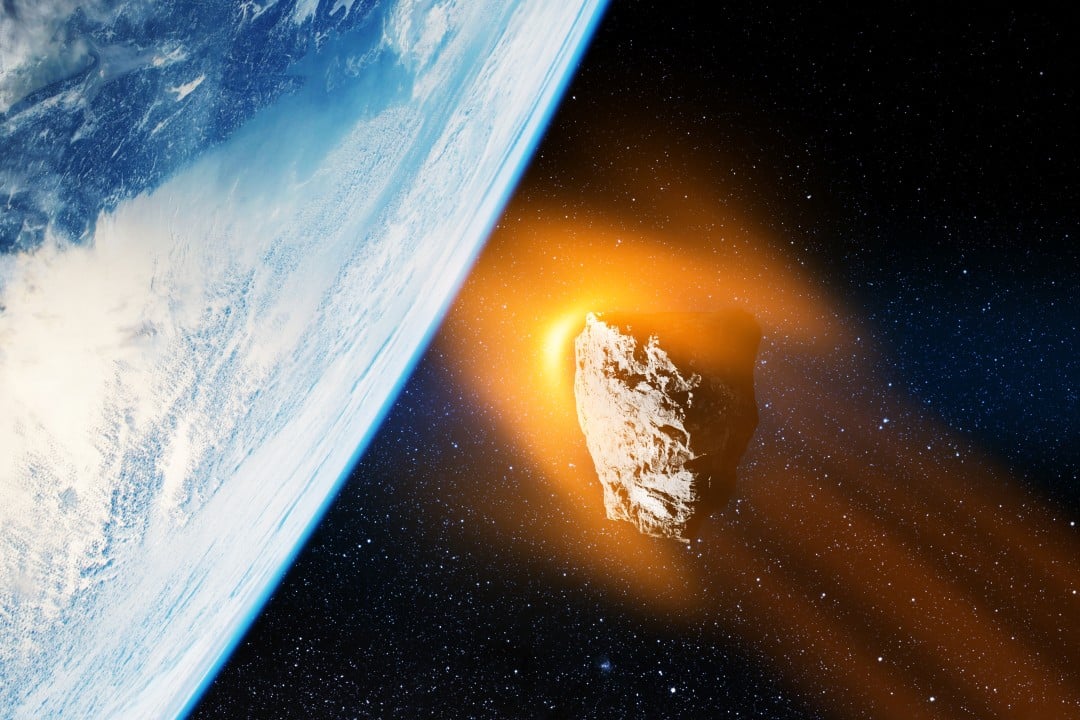
Astronomy enthusiasts equipped with binoculars or small telescopes will have the opportunity to observe the asteroid as a tiny point of light. It will cross the sky harmlessly, offering no risk.
According to information from NASA, the asteroid should not be visible from Earth at this same proximity again. The next observation opportunity for this celestial body, at the same distance, is only scheduled for the year 2133.
A similar event, involving an asteroid of similar proportions, occurred in 2022. On that occasion, the space rock known as 1994 PC1 safely passed our planet, at an even shorter distance.
Both NASA and ESA, along with other global space institutions, maintain continuous monitoring of the trajectories of asteroids and other space debris. This work is essential to protect the Earth from possible future impacts.
The previous year, a smaller asteroid, described as a rotating hockey puck, was tracked by astronomers. The analysis confirmed that it had no probability of colliding with the Earth or the Moon.





