
The first full moon of summer, June’s Strawberry Moon, lights up the sky with a golden hue and optical illusion

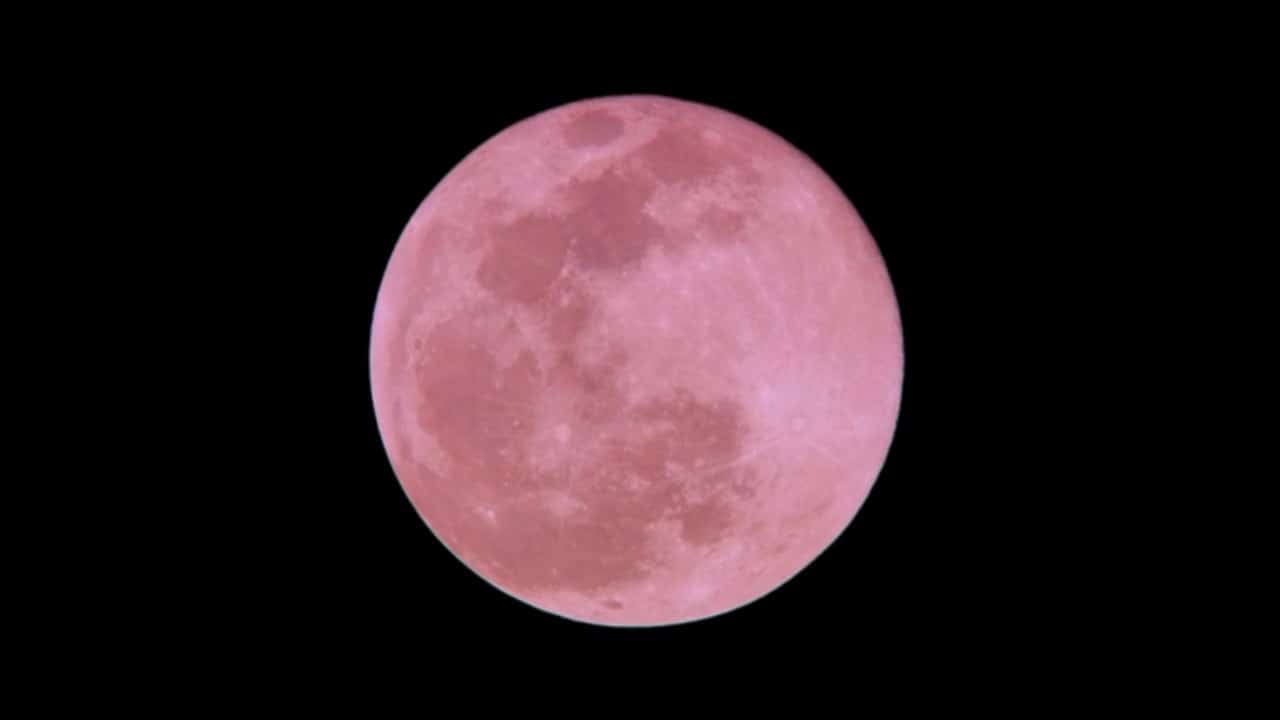
This night on June 29th, the night sky receives the first full moon of the season, known as the Strawberry Moon. This astronomical event promises a visual spectacle, highlighted by a golden glow and a curious optical illusion that will make it appear larger.
The expectation is that the star will radiate a reddish or golden hue when it emerges, positioned notably low on the horizon. This visual feature has been a staple of this full moon’s appearances over the years, drawing the attention of observers in different parts of the world.
Get ready to gaze upon the stunning Strawberry Moon as it rises into the night skies today (June 29), marking the start of summer’s full moon season.
The full moon phase is officially reached at 7:57 pm EDT (11:57 pm GMT) this Thursday, June 29th. At this moment, Earth’s natural satellite aligns itself in direct opposition to the Sun, appearing completely illuminated. Despite the peak, the moon will maintain its full, round appearance for approximately one or two nights before and after the exact date.
June’s full moon will stand out for being the lowest of the year in its celestial trajectory. This occurs due to its proximity to the summer solstice, the period in which the Sun reaches its highest daytime elevation. As the full moon is always positioned opposite the Sun, it travels the opposite path in the sky, drawing the lowest annual arc and, consequently, intensifying the dispersion of light in the atmosphere, which contributes to its characteristic color.

To enjoy the emergence of the Strawberry Moon, direct your gaze east just after sunset. It will rise into the night sky, keeping company with the stars of the constellation Sagittarius.
The name “Strawberry Moon” dates back to the traditions of Native American tribes, who associated it with the short strawberry picking season. Additionally, June’s full moon is known by other names in different cultures, such as Pink Moon, Hot Moon and Mead Moon.
Despite the evocative name, the Strawberry Moon will not display a pink color. Its appearance, however, may reveal golden or orange tones at birth. This chromatic effect results from the passage of lunar light through a denser layer of the Earth’s atmosphere when it is close to the horizon, a process that disperses the shorter wavelengths and accentuates the warm colors.
Observers may also notice that the moon appears to be unusually large when viewed near the horizon. This phenomenon is known as lunar illusion, a peculiarity of human perception that makes the star appear larger when compared to distant elements of the landscape.
For astronomy enthusiasts who want to enhance their observation of the night sky, using equipment such as telescopes or binoculars can provide a more detailed experience. Appropriate astrophotography tools can also help capture the beauty of this celestial event.




