
Saliva Samples Collected on Artemis II Investigate How Herpes Viruses Respond to Deep Space for Future NASA Missions


NASA researchers have already seen dormant herpes viruses, including those that cause chickenpox and shingles, flare up again in astronauts on the International Space Station. The Artemis II mission expanded this investigation into deep space, with the team collecting saliva samples more than 250,000 miles from Earth to see whether radiation, isolation and distance trigger the same immune response hidden outside of low-Earth orbit.
For years, the US space agency has used the International Space Station to monitor a subtle indicator of stress in astronauts: the reactivation of latent herpes viruses that become detectable again during space flights.
Generally, this occurrence does not result in illness for the crew. It means that viruses capable of remaining inactive in the body, such as varicella zoster, responsible for chickenpox and shingles, can be reactivated when the immune system undergoes changes. NASA has already identified this viral release in samples from astronauts from station missions, often without the emergence of symptoms.
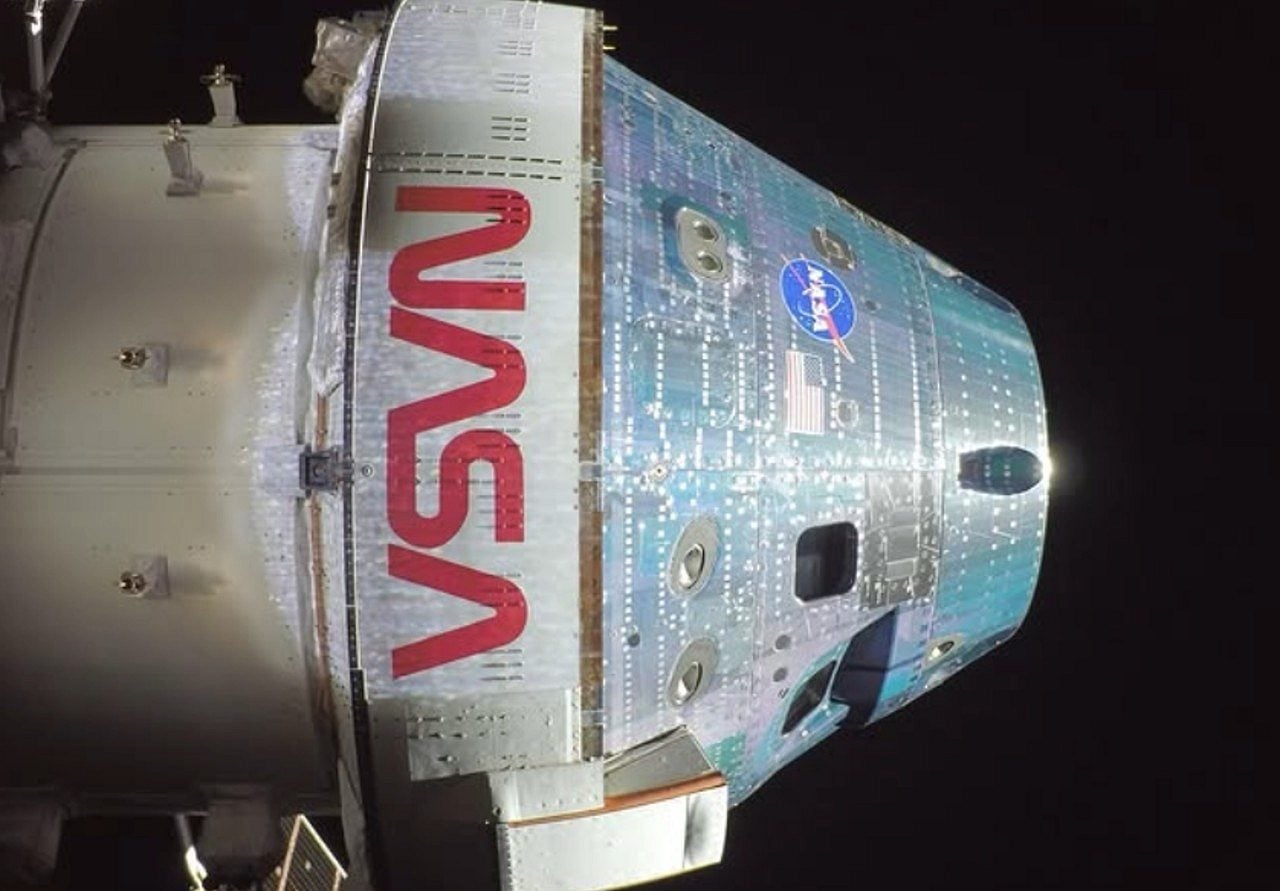
Artemis II extended the scope of this question beyond low Earth orbit. In the Artemis program’s first manned mission around the Moon, astronauts Reid Wiseman, Victor Glover and Christina Koch of NASA and Jeremy Hansen of the Canadian Space Agency collected biological data for research aimed at demonstrating how deep space impacts the human body. One of these studies, focused on Immunological Biomarkers, uses saliva to investigate whether radiation, confinement, isolation and distance from Earth influence immune function.
The mission later reached 406,771 kilometers from Earth during its lunar pass. A Flight Day 4 update from NASA reported that the crew was scheduled to collect saliva samples as the Orion spacecraft drifted away, about 271,000 kilometers from the planet at the time of awakening. The main objective is that the same immunological issue previously investigated at the station is now taken to the deep space environment, where future Artemis and Mars missions are expected to take place, requiring more medical autonomy.
Understanding why latent viruses serve as valuable signals
Herpes viruses are prevalent and persist in the body. After the initial infection, they can remain in the body for life, controlled by the immune system rather than being completely eliminated. The varicella zoster virus can lodge itself in nerve cells after chickenpox and subsequently cause shingles. Other types of herpes, such as Epstein-Barr virus and cytomegalovirus, can also persist asymptomatically.
A 2019 NASA paper titled “NASA Investigates How Dormant Viruses Behave During Spaceflight” sheds light on the usefulness of these viruses to scientists. When immune surveillance decreases or changes, latent viruses can restart their replication. This reactivation can be detected in saliva, blood or urine, even if the person does not show any symptoms of illness.
The peer-reviewed work underlying this research, published in the journal Frontiers in Microbiology, expanded on previous NASA findings about the ability of latent herpes viruses to be reactivated during space missions. The space agency highlighted that the reactivation observed in astronauts was generally subclinical, that is, the virus was detectable, but the crew members were not necessarily sick.
This distinction is crucial. The detection of viral DNA in saliva is not equivalent to a diagnosis of shingles in space. It is a biomarker, a method to infer that the immune system is reacting differently under the conditions of a space flight.
Factors that trigger changes in spaceflight
Spaceflight brings together several immunological stress factors that are difficult to isolate. Astronauts face microgravity, altered sleep, intense workloads, confinement, social separation, launch and reentry forces, and radiation exposures that are different from those found on Earth.
On the International Space Station, Earth still offers some protection against radiation through its magnetic field, and the station has a much larger habitable volume than Orion. The Artemis II mission presented a different scenario. Orion is a small spacecraft, the journey bypassed the protective environment of low Earth orbit, and the crew spent days transiting deep space before circling the Moon.
NASA’s Artemis II human research briefing indicated that the mission was designed to analyze how deep space travel affects the body, mind and behavior. Crew members were tasked with collecting and storing saliva, using monitors to track movement and sleep, and providing other data to NASA’s Human Research Program.
For the study of Immunological Biomarkers, saliva is an attractive material as it can reveal viruses, stress hormones, proteins and other signals related to immune function. In-flight collection is also simpler than blood collection. The challenge on the Orion spacecraft was storage. Without a freezer available for this work, the astronauts used dry saliva sampling, absorbing the saliva on special papers stored in pocket booklets.
The station’s transition to Orion in research
An overview of NASA’s Artemis II deep-space research details that dried saliva samples would be collected before, during and after the mission, while blood and liquid saliva would be collected before and after the flight. The agency said researchers would use these samples to investigate how astronauts’ immune systems are impacted by radiation, isolation and distance from Earth, and whether viruses that are dormant reactivate in space, as had already been observed on the station.
This positions Artemis II as a bridge between two phases of human research. The space station has provided years of data from low Earth orbit, spanning long-duration missions with regular sample collection. Artemis II, meanwhile, offered a significantly shorter mission but in an environment more pertinent to future lunar return flights and Mars planning.
NASA’s Flight Day 4 mission update reported that the AVATAR payload, which carried bone marrow cells derived from crew blood samples, was functioning as expected, and that immune biomarker activity would provide additional data. The same update indicated that the crew had saliva sample collection scheduled for that day.
These samples represent just a fraction of the broader health package. Artemis II also carried radiation sensors inside Orion, dosimeters for the crew, actigraphy devices to monitor sleep and movement, psychological and performance measurements, and “organ-on-a-chip” experiments designed to test cellular responses to deep-space conditions.
The relevance of these studies for long-duration missions
Although a ten-day lunar flyby does not compare to a journey to Mars, being brief compared to a months-long transfer or a stay on a distant surface of Earth, it is sufficient to test procedures, handling, sample storage and initial biological responses in a manned vehicle beyond low Earth orbit.
For future missions, NASA is less interested in a single yes or no answer than in standards. The question arises whether stress hormones increase, whether sleep and activity alter, whether immunological markers change, whether dormant viruses reappear more frequently beyond low Earth orbit than at the station, and whether radiation readings within Orion align with biological changes in the samples.
These questions are important because immune problems can become more difficult to control as distance increases. A crew on the station can return to Earth relatively quickly in an emergency. A team on a lunar or Martian mission must have greater medical autonomy and improved forecasting tools.
If saliva biomarkers are able to warn of a failure in immune control, NASA could use this information to develop countermeasures. This could involve vaccination when available, specific antiviral treatments, sleep and workload adjustments, radiation procedures, or medical kits tailored to specific crew risks.
Limitations and scope of Artemis II for the space future
Artemis II cannot fully determine how the immune system behaves during a mission to Mars. It involved four individuals, a short timeline, and a unique spacecraft environment. Furthermore, it cannot prove that isolated radiation, solitary isolation or distance alone cause any immunological changes, as these factors occur simultaneously during the flight.
What it can do is broaden the chain of evidence. NASA already knows, through research at the station, that latent viruses can reactivate in astronauts and that saliva is capable of revealing immunological changes. Artemis II tested whether these same tools could work during a crewed mission around the Moon, in a small spacecraft, and outside of low-Earth orbit.
The crux of the matter lies in hidden biology. A dormant virus that becomes detectable in saliva may be imperceptible to the crew and undramatic to the public, but it offers researchers a sensitive read on how spaceflight is impacting the immune system. For planning the Artemis and Mars missions, this discreet signal could become one of the practical ways to keep crews healthy when Earth is no longer nearby.





