
Scientists discover Australian spider that uses spring-loaded webs to launch prey into the air with impressive force

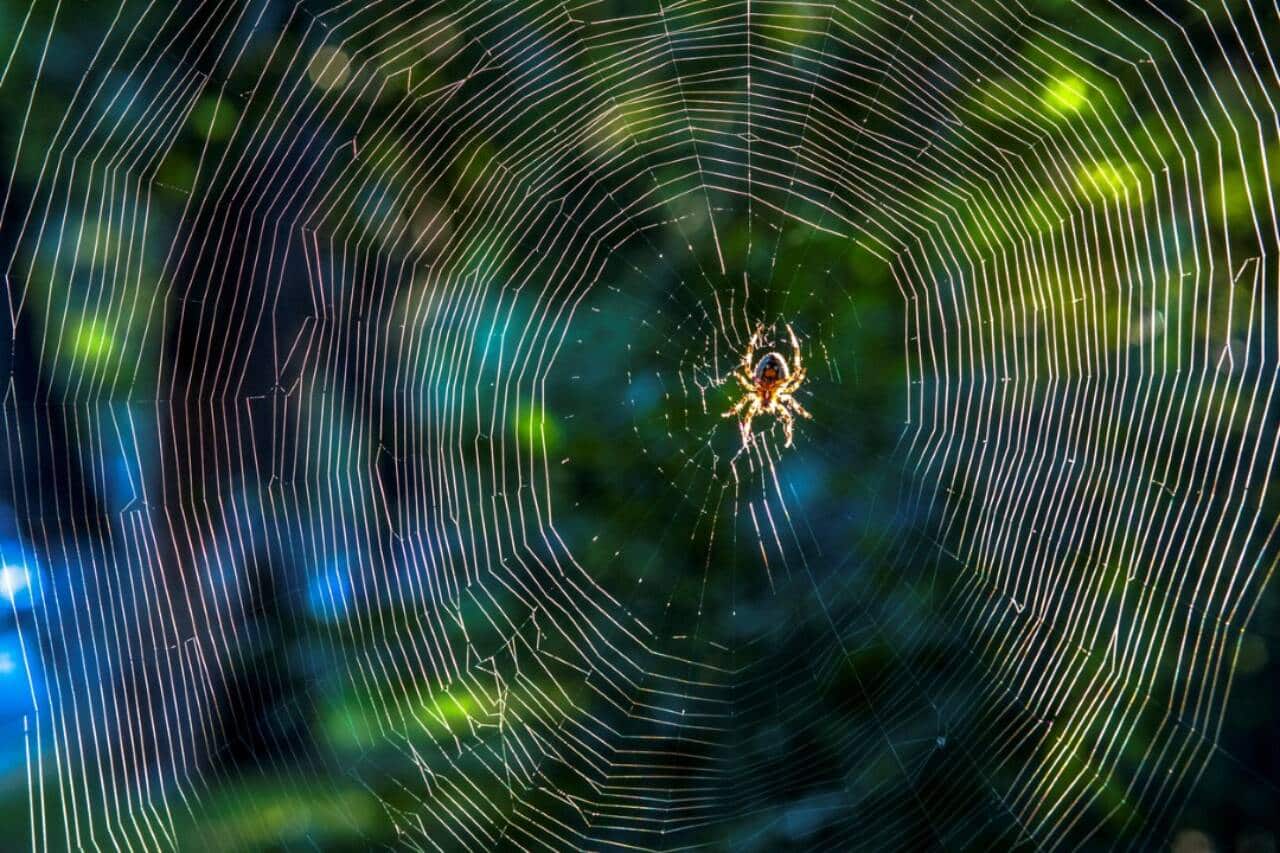
The animal kingdom continues to fascinate with its innovative hunting strategies. Recent research has revealed an unprecedented hunting method in an Australian spider, highlighting a remarkable biomechanical ability. This arachnid constructs silk traps with elastic tension to launch its victims to great heights, redefining the concept of tool use in the natural world.
Spider develops sophisticated strategy to capture prey
The rainforests of Queensland, Australia, were the scene of this recent discovery. A detailed study, published in the journal Current Biology, describes the ingenious mechanism employed by the arachnid. The species assembles webs under high elastic tension, remaining in wait until prey approaches and then activating a high-speed ballistic throw.
The process involves hours of dedication by the spider in building strategic threads, firmly attached to the forest floor. Upon touching the prey, these triggers trigger the abrupt release of energy, propelling the insect upwards. This unique tactic nullifies the victims’ natural defenses, ensuring an extremely effective hunt and reducing the dangers to the predatory spider.
- Trap construction: Tensioned wires anchored in the ground.
- Activation: A catch deactivates the pressure system.
- Result: The target is thrown vertically into the air.
Species of the genus Propostira exhibits unique abilities
Identified as part of the genus Propostira, this lineage of arachnids still awaits formal scientific classification. The species draws attention for its remarkable ability to manipulate the physical properties of its silk. Observations by researchers indicated the presence of glands that generate threads with extraordinary elasticity, capable of withstanding intense mechanical forces without the web unraveling.
This spider’s hunting pattern reveals an impressive ecological specialization, perfectly adapted to tropical environments. They prefer to live in low vegetation, a place that offers an abundance of potential prey. This strategic location minimizes energy expenditure, ensuring consistent feeding and favoring the proliferation of the species.
- It predominantly occupies the forests of Queensland.
- It produces silk with high tensile strength.
- It has nocturnal habits, focusing on its tension lines.
- It has developed a hunting mechanism that avoids excessively dangerous prey.

Uncovering how the natural catapult works
The physics behind this throw involves an advanced understanding of the accumulation and discharge of elastic energy. By tensing its silk threads, the spider stores a considerable amount of mechanical potential energy. At the moment of collision, this concentrated energy is converted into kinetic energy, projecting the insect and making any instantaneous defensive response impossible.
The compiled data revealed physical values that surprised the team of German researchers. The documented acceleration surpassed the impressive level of 1,300 meters per second squared, marking a new biological record. Such an explosion of force nullifies the prey’s grip on the ground, leaving it disoriented before being definitively paralyzed by the sticky silk.
- Number of warp threads: from 15 to 60
- Throwing acceleration: 1,300 m/s²
- Maximum launch height: 30 centimeters
Specialized hunting tactics to combat green ants
Green ants are notoriously aggressive and equipped with powerful jaws. Approaching these insects directly for hunting could result in a fatal risk due to their deadly counterattacks. Thus, the ballistic mechanism appears as a vital evolutionary adaptation, allowing the capture of an abundant source of food while the spider maintains a safety margin.
There is evidence that the silk used by the spider contains chemical compounds capable of attracting the ants directly to the firing point. This advanced chemical imitation transforms the web into a highly effective trap, combining behavioral seduction with complex mechanical engineering to complement the species’ diet.
The scientific implications of the discovery of the catapult spider
The identification of this unique system expands the horizons of bioengineering and research into advanced materials. The ability to store such a significant amount of mechanical energy in microscopic natural fibers opens up new possibilities for the development of high-performance industrial polymers. Researchers are committed to deciphering this structure to apply its resilience to medical technology and modern microelectronic devices. The remarkable ability to generate an acceleration of 1,300 m/s² through such a delicate biological structure suggests that the key lies in silk’s molecular architecture, inspiring innovative approaches to creating materials capable of managing energy storage and release in a controlled manner.
Additionally, this discovery emphasizes the crucial importance of protecting ecosystems that are still little explored. The presence of species with such complex mechanisms, but without a formal classification, serves as a warning about the vast biological heritage that remains unknown. The preservation of these regions is essential to deepen the study of natural evolution and expand the understanding of biodiversity on a global scale.





