
What is the phase of the Moon today? See the lunar calendar for June

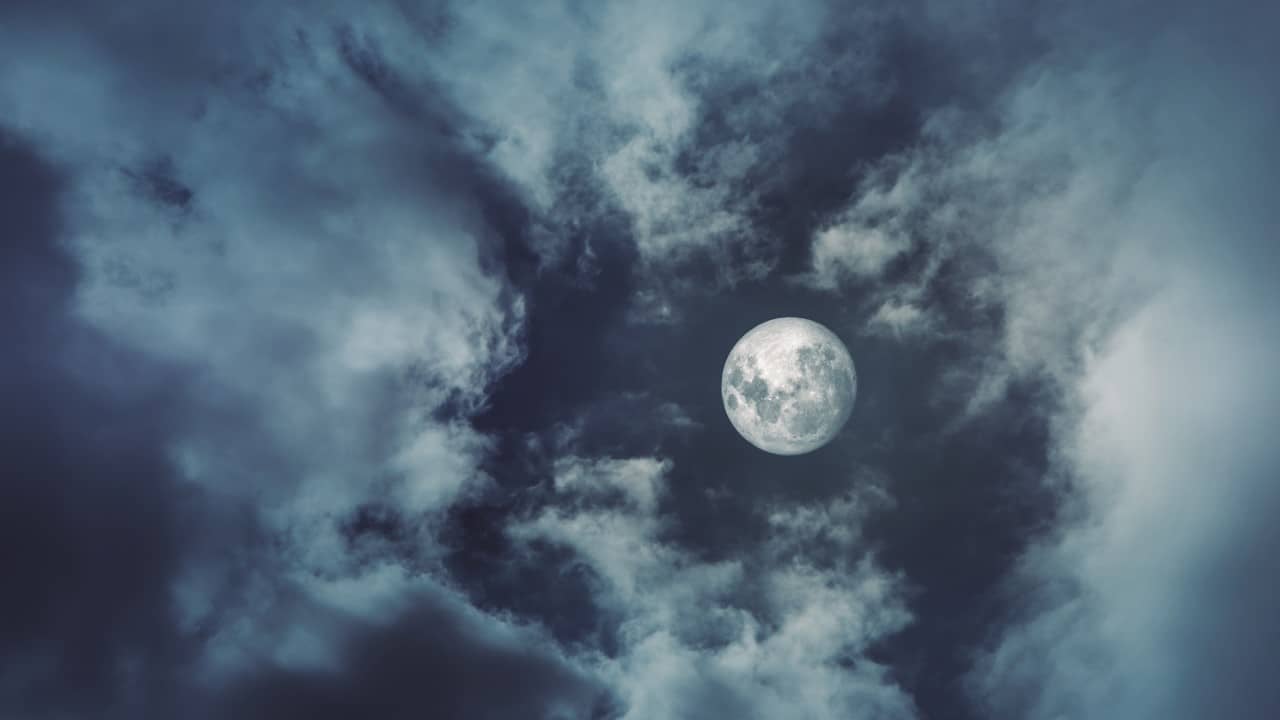
The Moon reaches its full phase this Tuesday, June 30, 2026, offering a spectacle of maximum visibility in the night sky. The lunar change cycle indicates that the next transition, to the waning phase, will occur in eight days.
Visibility of the natural satellite on June 30, 2026
The astronomical calendar confirms that the totality of light reflected by the lunar surface marks today.
For observers on Earth, this means that the Moon is completely illuminated, characteristic of the full phase.

Lunar phase schedule for the month of June
The month of June began with the waning Moon, which occurred on the 8th, promptly at 7 am.
Subsequently, the transition to the new Moon was recorded on June 14, almost midnight, at 11:54 pm.
The crescent phase lit up the sky from June 21st, starting at 6:55 pm.
And, culminating the month’s cycle, the full Moon was established on June 29, at 8:56 pm, setting the stage for this Tuesday’s observation.
Thus, the June lunar journey began with the waning phase, advancing sequentially to the new phase and then to the crescent phase, ending the period with the full illumination of the full Moon.
Understand how the complete lunar cycle works
The concept of lunation, or lunar cycle, defines the period between two consecutive occurrences of the new Moon. This process, which varies minimally, covers an average of 29.5 days, during which the natural satellite goes through its four main phases: new, waxing, full and waning. Each of these stages lasts approximately seven days.
Forecast for the next stage of the lunar calendar
The next change in the celestial panorama is scheduled for July 7, 2026, when the Moon will begin its waning phase.
The distinct characteristics of each phase of the Moon
The different appearances that the Moon takes on are the result of the complex gravitational interaction between it, the Sun and planet Earth. Our natural satellite exhibits four distinct stages – waning, new, waxing and full – each with particularities that define its visibility from a terrestrial point of view.
The characteristic shape of the waning Moon
When observed in the Southern Hemisphere of the Earth, the waning Moon displays a shape that resembles the letters D and C, whose arrangement changes depending on the satellite’s position in the sky.
The invisibility of the new Moon in the daytime sky
The new Moon phase occurs when the satellite aligns with the Sun in the same direction relative to the Earth. During this period, the Moon is in the daytime sky, making it imperceptible to observers on our planet, explaining the absence of its image at this stage.
The representation of the crescent Moon in different hemispheres
When the Sun illuminates the western half of the Moon, it enters the waxing phase. For those observing from the Southern Hemisphere, its shape resembles the letter C, while in the Northern Hemisphere, the same phase takes on the appearance of the letter D.
The period of maximum luminosity of the full Moon
The full phase represents the peak of lunar luminosity, making it intensely visible from Earth. At this stage, the satellite is positioned directly opposite the Sun, allowing its entire surface to be bathed and reflect sunlight.
Measuring the distance between the Moon and planet Earth
Currently, the calculated distance between the Moon and planet Earth is 399,877.13 kilometers, a figure that fluctuates slightly due to the satellite’s elliptical orbit.
Comparison of lunar observation between the southern and northern hemispheres
Although the natural satellite is intrinsically the same, its visual perception for an observer on Earth changes according to latitude. For those in the Southern Hemisphere, the Moon appears inverted when compared to the view of those observing it in the Northern Hemisphere.
A notable peculiarity is that, regardless of location or phase, the Earth always views the same face as the Moon. This phenomenon is explained by the synchronism between the satellite’s rotational movement around its own axis and its translational movement around our planet, making the periods identical.




