
BMW X5 2026 revolutionizes with five engines and production in the USA including electric and hydrogen versions

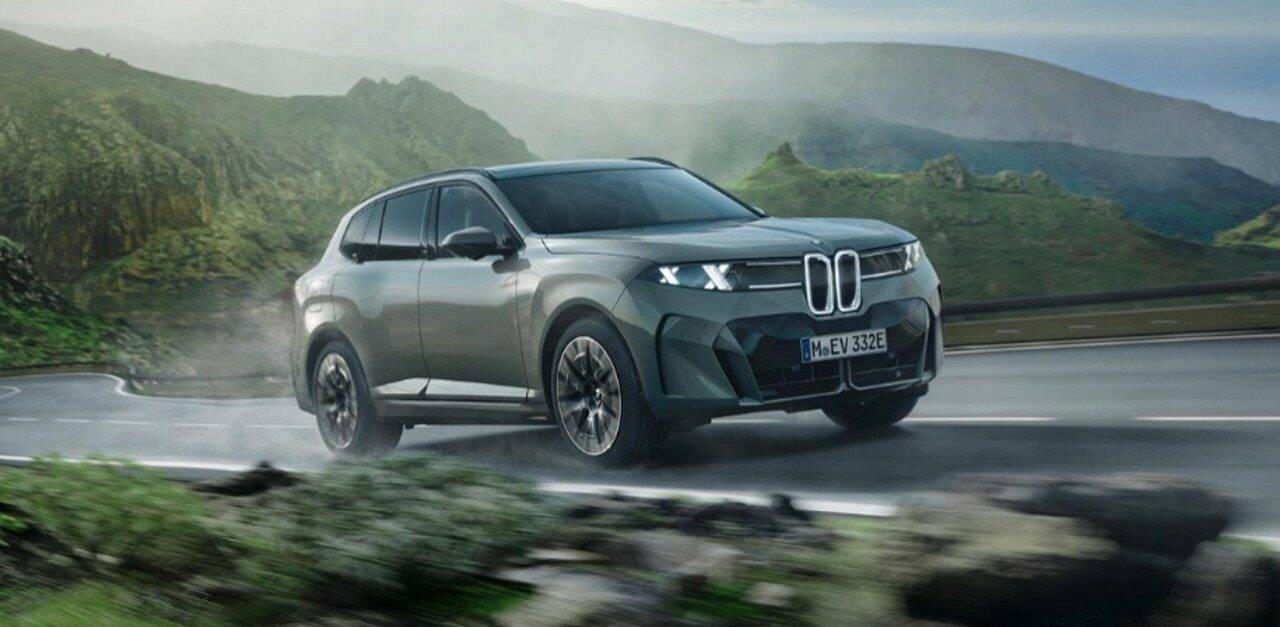
The fifth generation BMW X5 will be launched offering an unprecedented choice of five engine options in the same model, demonstrating an “open technology” approach. The sports utility vehicle (SAV) will be available in gasoline, diesel, plug-in hybrid, fully electric and, in the future, hydrogen-powered versions, a fundamental strategy to meet diverse mobility profiles, customer demands and market regulations globally. This diversity is crucial in an automotive landscape with uncertainty about the speed of adoption of electric vehicles and charging infrastructure in different regions.
The evolution of the BMW Sports Activity Vehicle
BMW introduced the X5 in 1999, marking the emergence of the Sports Activity Vehicle (SAV) concept, which combined the grandeur of a large car with the brand’s characteristic driving dynamics, everyday practicality and comfort for long journeys. The latest generation elevates this concept, incorporating a new design, a greater focus on sustainability and a propulsion portfolio capable of meeting multiple usage profiles.
Consumers will be able to choose between petrol, diesel and plug-in hybrid variants, in addition to the BMW iX5, which is fully electric. Later, the BMW iX5 Hydrogen will be added to the family. This flexibility reflects the BMW Group’s philosophy of offering tangible solutions: the new X5 is ideal both for those looking for short electric trips with frequent recharges and for those who need greater autonomy and quick stops on long journeys, in addition to providing multiple options for driving without local emissions.
Production of the new X5 is scheduled to begin in August 2026 at the BMW Group plant in Spartanburg, South Carolina. This plant, the group’s largest in the world, will also be responsible for manufacturing the BMW iX5 from December 2026, marking its first foray into producing an all-electric vehicle.
Details of the all-electric BMW iX5
The BMW iX5 60 xDrive represents the X5’s step towards an all-electric future. Based on sixth-generation eDrive technology and an 800-volt architecture, this will be the first model to incorporate the 120mm tall Gen6 cylindrical cells. The increased energy content of the high-voltage battery in these cells provides a provisional range of 645 to 845 kilometers (WLTP), depending on the equipment package. The provisional maximum charging rate is 460 kW, allowing ten minutes of charging at suitable rapid stations to provide up to 350 kilometers of range, with two electric motors delivering a combined power of 425 kW (578 hp).
Plug-in hybrid versions of the X5 combine gasoline engines with an electric motor. The BMW X5 50e xDrive offers a system output of 360 kW (489 hp) and an electric range of up to 102 kilometers, according to provisional WLTP data. The BMW X5 M60e xDrive reaches 460 kW (612 hp) and an electric range of up to 98 kilometers. Both are capable of reaching speeds of up to 140 km/h in pure electric mode.
The X5 line will also maintain gasoline and diesel variants. The BMW X5 40 xDrive delivers 294 kW (400 hp), while the BMW X5 40d xDrive produces 230 kW (313 hp). In both models, 48-volt mild hybrid technology provides electrical assistance to the combustion engine, resulting in more efficient starts and acceleration.
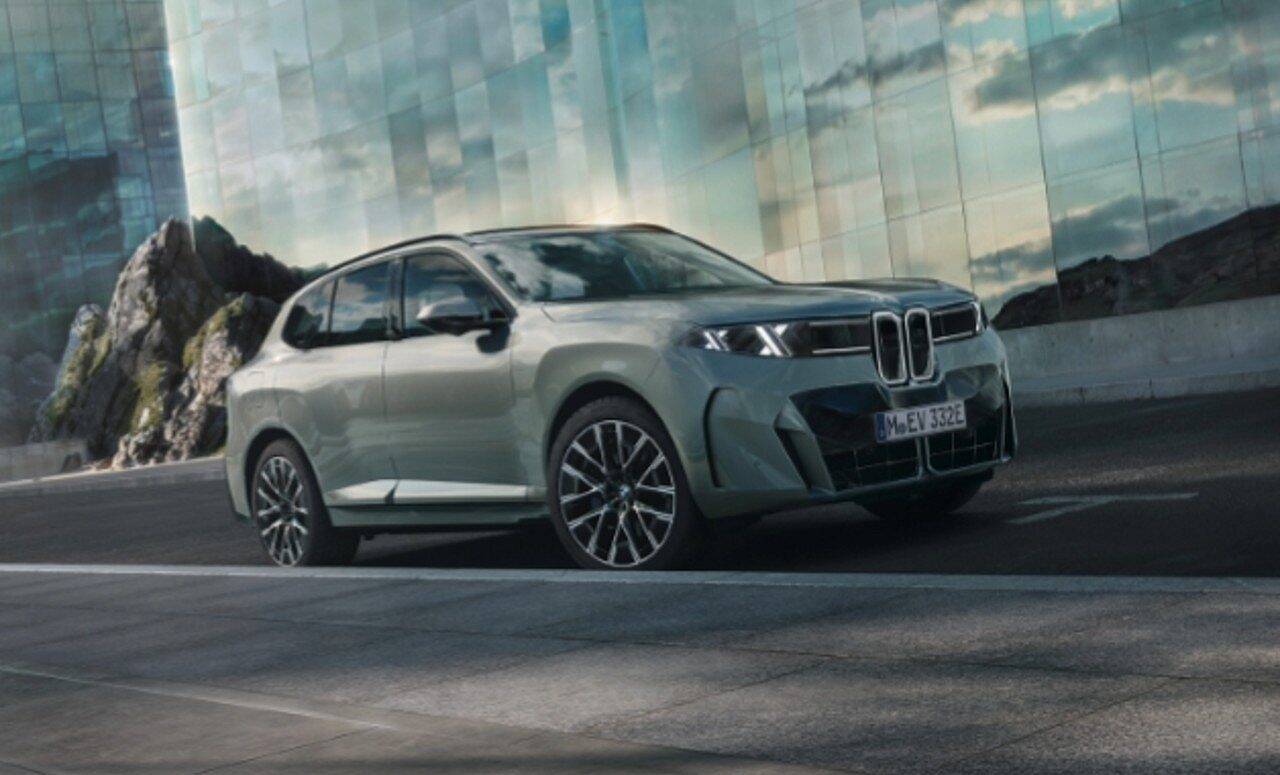
The innovative BMW iX5 hydrogen version
With the BMW iX5 Hydrogen, the BMW Group stands out as the first global premium manufacturer to put a fuel cell production vehicle on the road. The propulsion system incorporates a third-generation fuel cell system, developed in partnership with Toyota, as well as the new BMW Hydrogen Flat Storage, together with a state-of-the-art high-voltage battery. Hydrogen storage maintains the same pack space as a Gen6 high-voltage battery, ensuring cabin space remains unchanged.
External design with clean and impactful lines
The new BMW X5 ushers in a renewed chapter in BMW design, featuring a cleaner, more upright and monolithic exterior. The front is marked by BMW’s vertical double kidney grille and new “double-X” light icons, giving the X5 an unmistakable presence, whether day or night.
The side view is further defined by smooth, uninterrupted surfaces, made possible primarily by BMW’s new “winglets”: integrated into the B and C pillars, high-gloss black door handles allow for continuous door surfaces and a calmer side appearance. This creates the impression of a vehicle carved from a single piece. Its iconic proportions are maintained, with muscular wheel arches, an elongated silhouette and a dynamic roofline.
The new model introduces a series of visual highlights, which vary depending on the variant. The BMW X5 M60e xDrive, for example, sports BMW M yellow lights in “double-X” style, along with four exhaust pipes and 22-inch wheels. In total, eleven exterior colors are available, including four BMW Individual finishes, and an extensive wheel selection ranging from 21-inches up to the recently introduced 23-inch variants.
Digital cabin focusing on the driver experience
With a remarkably horizontal architecture, the interior features a wraparound cockpit that hugs both the driver and front passenger, creating a feeling of inclusion without restriction. Glass details, the backlit ambient light strip and new materials contribute to the cabin’s sophisticated atmosphere.
One point that draws attention is the use of slate, a new feature for BMW. This natural material, together with the glass details and the X-shaped stitching on the doors and dashboard, creates a luxurious interior environment. Sports seats come standard, while multifunctional seats with ventilation and massage functions are available as options.
The digital hub of the car is BMW Panoramic iDrive, equipped with BMW Operating System X. BMW Panoramic Vision projects content across the entire width of the lower windscreen, positioning crucial driving information directly in the driver’s field of vision. The system is complemented by the BMW 3D Head-Up Display, a 17.9-inch central screen and the optional passenger screen.
These displays were specifically designed to make information absorption faster and the system more intuitive. Its digital concept follows a core BMW principle: placing the driver firmly at the center of the experience. Consequently, the interior transforms into a dynamic space that adapts to both the driving situation and the needs of the occupants.
Comprehensive approach to sustainability in the new X5
With the new BMW X5, the BMW Group takes a holistic approach to sustainability that extends across the vehicle’s entire life cycle. From the supply chain to production, use and end-of-life recycling, the focus is on decarbonization, efficiency and greater use of secondary materials. CO2e emissions associated with product development fell by around 40%. The same commitment extends to manufacturing: At the BMW Group plant in Spartanburg, energy from external suppliers comes entirely from renewable sources. At the new high-voltage battery assembly facility in Woodruff, normal operations are completely fossil fuel-free.
The BMW Group has also achieved significant advances in terms of materials and components. Around half of the flat steel used in the new BMW X5 is produced in electric arc furnaces, which operate with a high proportion of secondary raw materials and are powered by energy from renewable sources. The BMW iX5’s Gen6 battery cells are also made in part from secondary cobalt, lithium and nickel. Furthermore, the production of anode and cathode materials is powered by renewable energy, as is the production of the cells. As a result, CO2e emissions per watt-hour from Gen6 cell production are now 28% lower than the emissions associated with Gen5 cell manufacturing in the BMW iX. The BMW iX5 60 xDrive now comprises around 940 kilograms of secondary materials, representing approximately a third of the entire vehicle.
Sustainability also plays a key role in daily vehicle operations. BMW EfficientDynamics technologies continue to improve efficiency during vehicle use through measures such as aerodynamics, lightweight engineering, tires with optimized rolling resistance and energy management. In the all-electric BMW iX5, the “Heart of Joy” – the high-performance central unit that controls the vehicle’s propulsion and dynamics – recovers more energy during deceleration.
The trajectory of innovations of the BMW X5
Since 1999, the BMW X5 has been a vehicle that combines driving dynamics, comfort and versatility in a single concept. Made in the USA, its second generation was launched in 2006, followed in 2009 by the BMW X5 M, BMW M’s first SAV and its first model with a turbocharged engine. The third generation of the BMW X5 arrived in 2013, bringing improved aerodynamics and more efficient engines. In 2015, the BMW X5 xDrive40e iPerformance set an important milestone in electrification as BMW’s first series-produced plug-in hybrid. The fourth generation was launched in 2018. In 2021, the BMW Group presented the BMW iX5 Hydrogen, the pilot fleet of which has been tested worldwide since 2023.
Now in its fifth generation, the story of the BMW X5 continues. It remains a large-format vehicle for new ideas, demonstrating how the BMW Group’s key future themes come together in a Sports Activity Vehicle: diverse powertrain options meet clear design and an even stronger focus on sustainability.
Five powertrain options, a sharper design, a digital interior and a more holistic approach to sustainability are the crucial aspects that come together in the new BMW X5, where progress means the power of choice and technology that adapts to the realities of different lifestyles.





