
Chemical evidence from Perseverance rover in ancient Martian rocks indicates past habitable environment

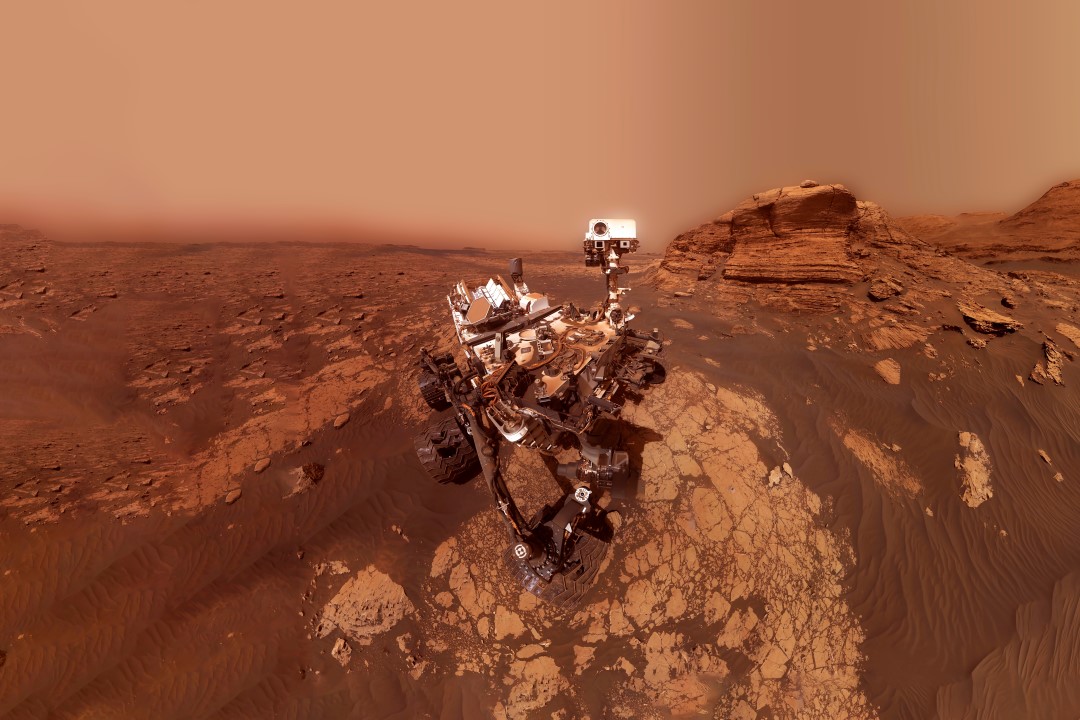
The Perseverance rover identified evidence that strengthens the thesis that Mars may have offered a favorable environment for the existence of microbial life in its past. Recent findings include organic carbon molecules with a complex structure, found in rocks formed billions of years ago, in places that once housed large volumes of water.
Substances found by the Perseverance robot on Mars
The analyzes were conducted on rock formations located in the area known as Bright Angel, inside the Jezero crater. The robot’s equipment detected macromolecular organic carbon, a type of compound whose presence can be attributed to both biological activities and chemical reactions unrelated to life.
These materials were discovered in layers of clay, which make up ancient river beds. The finding suggests that the region was a very active aquatic environment during a remote period of Martian history.
Among the main discoveries, the following stand out:
- Complex organic carbon molecules preserved in sedimentary rocks.
- Nodules and mineral formations with an unusual configuration.
- Evidence of ancient aquatic ecosystems in Jezero Crater.
- Chemical signals that may be compatible with biological or geological processes.

Scientists still cannot confirm the presence of ancient life on Mars
Although the results are seen as extremely promising, scientists emphasize that there is, to date, no definitive confirmation of the existence of ancient life on Mars. The organic carbon found, despite being a key element, may either have a biological origin or be the result of natural geological phenomena or even have arrived on the planet through meteorites.
This lack of definition keeps the scientific debate open, since different processes are capable of generating materials that resemble those associated with life. The complexity of differentiating these origins is one of the biggest challenges in current astrobiology.
The main hypotheses for the origin of the materials include:
- A biological origin associated with microorganisms from a distant past.
- Chemical reactions between water and rocks over time.
- Deposition of organic substances through meteorites.
- Geological changes that occurred over billions of years.
The strategic relevance of Jezero Crater for Martian missions
Jezero Crater is considered one of the most relevant locations for the search for signs of prehistoric life on Mars. The site was home to a complex system of rivers and lakes, which raises the possibility that organic compounds were preserved in its sedimentary rocks.
The main factors that justify the great interest in the area include:
- The presence of ancient river deltas.
- Sedimentary rocks with a high concentration of clay.
- Conditions conducive to the conservation of organic compounds.
- A history of prolonged interaction with liquid water.
By studying this area, researchers seek to uncover what the Martian environment was like at a time when liquid water still existed on the planet’s surface.
Rover limitations prevent definitive confirmation
Despite notable advances, the Perseverance rover does not have all the instruments necessary to determine with absolute certainty whether the compounds detected have a biological origin. The robot can identify organic substances and intriguing structures, but cannot completely distinguish between biological and abiotic processes. This is a technological limitation inherent to current missions.
For this reason, the conclusive analysis of these samples fundamentally depends on their eventual transport to laboratories on Earth, where much more sophisticated equipment could investigate their origin with superior precision.
The main obstacles to immediate confirmation include:
- The limitations of the instruments on board the rover.
- The possible degradation of samples over time.
- The difficulty in differentiating biological signals from natural processes.
- The dependence on future missions dedicated to returning samples.
Implications of the discoveries for future explorations on Mars
The new evidence reinforces the conviction that Mars was a planet capable of supporting life in its ancient times. Although it is not yet possible to confirm the existence of life, the results increase the importance of future missions that aim to bring samples from the red planet for terrestrial analysis.
These data are crucial in directing the search for answers to one of the most fundamental questions in modern science: whether life existed beyond Earth and under what conditions it could have developed on other worlds.





