
Radio telescope observations identify excess methanol in the interstellar comet 3I/ATLAS, indicating diverse stellar origins

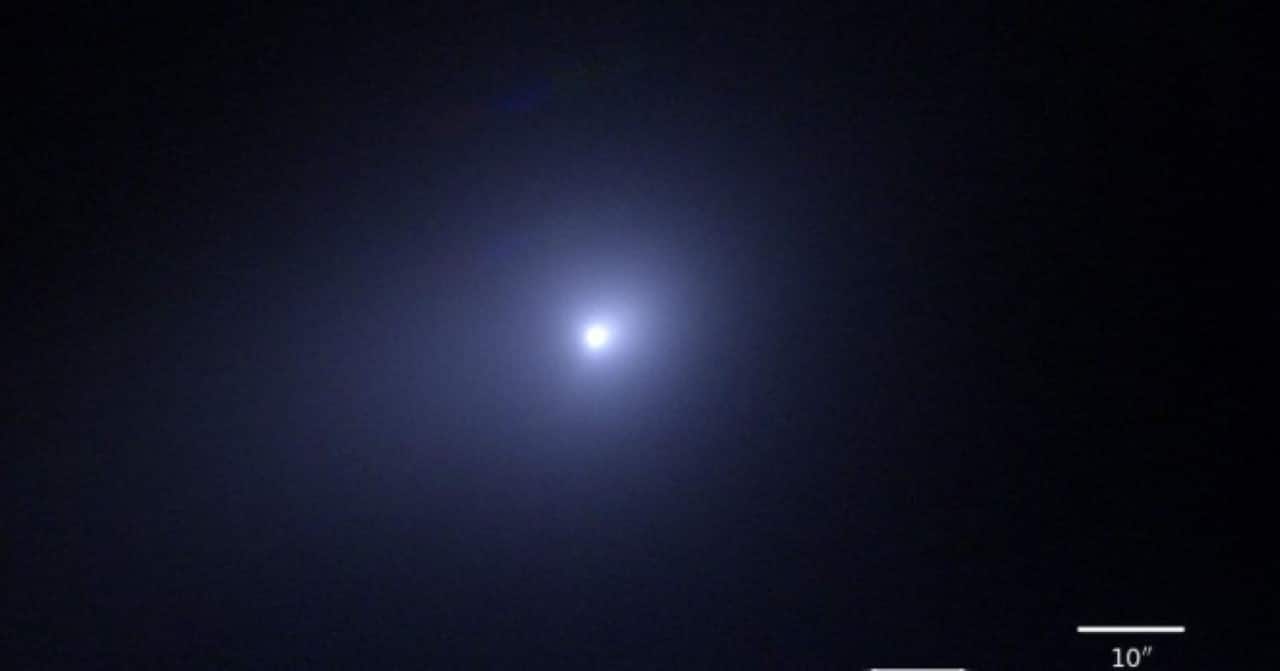
New studies of the interstellar comet 3I/ATLAS have brought a surprising chemical feature to light. Recent observations have revealed that the object contains an amount of methanol, a simple type of alcohol, far above what is commonly detected in comets in our own Solar System.
This discovery, made by an international team of astronomers, was made possible thanks to the Atacama Large Millimeter/submillimeter Array (ALMA), a powerful radio observatory located in the Atacama Desert in Chile. Detailed analysis of the composition of 3I/ATLAS offers valuable clues about the environments and formation conditions of other stellar systems besides our own.
Unraveling the makeup of a cosmic visitor
Comet 3I/ATLAS, a space-traveling object from outside our Solar System, continues to be a source of fascination for the scientific community. Its interstellar nature makes it a unique “time capsule”, carrying materials that originated around distant stars. The detection of methanol in unusual abundance is an important milestone in understanding these celestial “messengers.”
Astronomers seek to understand the formation of stars and planets in distant galaxies, but directly observing these processes is a challenge. Interstellar comets like 3I/ATLAS offer a rare opportunity to analyze materials directly from other stellar nurseries, providing a chemical “fingerprint” of regions that are beyond our reach for direct study.
The observation method and research findings
To investigate the comet’s composition, scientists monitored 3I/ATLAS on several occasions at the end of 2025, just as it approached the Sun. During this phase, solar radiation heats the comet’s frozen surface, releasing gases and dust into space.
This expelled material forms a bright cloud around the comet’s nucleus, known as a coma, which can be analyzed by telescopes. Using ALMA, researchers examined the chemical signatures present in this cloud, focusing on two specific organic molecules: methanol (CH₃OH) and hydrogen cyanide (HCN). Both are common components in comets and are crucial for reconstructing the chemical conditions of their formation.
The comparative analysis between these molecules revealed an unexpected and significant result. Data collected by ALMA indicated that methanol is 70 to 120 times more abundant than hydrogen cyanide in 3I/ATLAS. This proportion elevates the comet to one of the richest objects in methanol ever cataloged among known comets, surpassing most comets that originated in our own Solar System.
The importance of methanol for astrophysics
The discovery of this unbalanced proportion of methanol suggests that the icy material that gave rise to 3I/ATLAS was formed under chemical conditions different from those that prevailed in the formation of comets in our Solar System. This difference is crucial, as organic molecules found in comets are considered the building blocks of life, providing essential elements for the emergence of habitable planetary systems.
Comets are often described as cosmic fossils, preserving the primordial composition of the clouds of gas and dust from which stars and planets were born. By analyzing a comet from another system, scientists have a direct and unprecedented view of how the raw material for the formation of worlds behaves in different stellar environments, opening new perspectives on the diversity of planets and the possibility of life in the universe.
Other unusual features of the 3I/ATLAS
- Abundance of carbon dioxide:Previous observations, carried out with the James Webb Space Telescope, had already indicated another peculiar characteristic of 3I/ATLAS. When the comet was still very far from the Sun, its gas cloud was dominated by carbon dioxide.
- Interstellar origin:The classification of 3I/ATLAS as an interstellar comet is a determining factor, as it is not part of our Solar System. This allows scientists to study materials that have not been altered by local conditions in our own cosmic neighborhood.
- Impact on exoplanet research:Detailed chemical analysis of comet 3I/ATLAS complements exoplanet research by offering concrete information about the materials available for planet formation in other systems. This helps refine models and theories about the habitability of worlds beyond Earth.
The constant analysis of objects like 3I/ATLAS allows the scientific community to explore the vast diversity of chemical and physical processes occurring in the cosmos, deepening our understanding of the origin and evolution of planetary systems, including our own. With each new discovery, more is revealed about the complexity and beauty of the universe.





