
Authorities in Michigan issue severe storm warning for this Friday with risk of hail and destructive winds

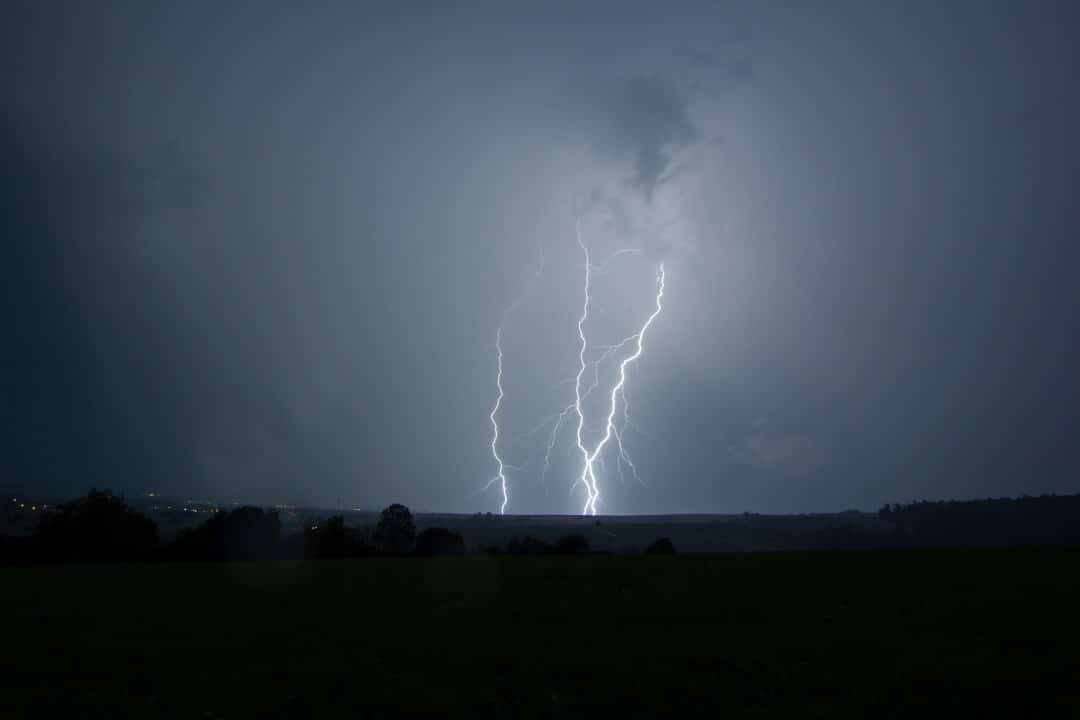
The National Weather Service (NWS) issued severe weather warnings for several regions in western Michigan, in the United States, this Friday afternoon.
Areas affected by severe thunderstorm warnings, with their respective end times, include:
- Allegan, valid until 4:45 pm.
- Ottawa, valid until 4:45 pm.
- Van Buren, with a deadline of 4:45 pm.
- São José, extended until 5:30 pm.
- Branch, scheduled to end at 5:30 pm.
- Kalamazoo, in effect until 5:30 p.m.
- Calhoun, valid until 5:30 p.m.
- Kent, closing at 5:45 pm.
- Barry, finishing at 5:45 pm.
Forecasts indicate risks such as isolated hail, with rocks that can reach the size of a ping-pong ball, wind gusts that reach 120 km/h and a high incidence of lightning.
This type of warning, known as “warning”, indicates that intense meteorological phenomena are already occurring or have been detected by radar, requiring immediate action due to imminent danger. The NWS emphasized that damage could be significant, affecting trees, manufactured homes, roofs and other structures.
There is an additional warning that these storms have the potential to be lethal. For residents of affected areas, the advice is to seek refuge in an internal room, preferably on the ground floor of a robust building. It is also advisable to abandon cars in favor of safer shelters and avoid proximity to windows.

Additionally, a severe storm watch condition has been issued for a number of counties in western Michigan.
This advisory indicates that the atmospheric environment is prone to the emergence of severe storms in the region, including adjacent areas. Contrary to the warning, “surveillance” does not imply that the event is already occurring, but rather that the population must prepare for the eventual formation of these storms.
The “watch” was launched around 2:35 pm and will remain active until 10 pm for the following counties:
- Allegan
- Barry
- Berrien
- Branch
- Calhoun
- Cass
- Clinton
- Eaton
- Genesee
- Hillsdale
- Ingham
- Ionia
- Jackson
- Kalamazoo
- kent
- Lapeer
- Lenawee
- Livingston
- Macomb
- monroe
- oakland
- Ottawa
- Shiawassee
- Saint Clair
- Saint Joseph
- Van Buren
- Washtenaw
- Wayne
How to receive weather warnings and notifications
It is crucial to have multiple tools to stay up to date with weather conditions and access highly important meteorological information:
Use NOAA weather radio for automatic alerts
One of the top options is the NOAA weather radio. Often compared to a “smoke detector” for extreme weather events, this device automatically activates an alarm in the event of natural disasters or severe weather conditions.
Follow broadcasts from local stations
The television stations in your locality are a constant source of information. The 13 ON YOUR SIDE Weather Department, for example, offers live coverage both on television and online during storms. You can follow weather forecast reports and broadcasts through platforms such as Roku, Amazon Fire TV and Apple TV.
You can also download the 13 ON YOUR SIDE app. When launching the application, the user can allow access to their location to receive alert notifications specific to their region.
The most recent warnings about severe weather can be consulted through digital platforms.
Stay informed by radio stations
Your local radio stations are programmed to report thunderstorms in the area. Additionally, voice assistants like Alexa and Google Home can be set to issue warnings about weather conditions.
Use your smartphone for weather alerts
Mobile devices also provide several options for receiving crucial weather warnings. The 13 ON YOUR SIDE Weather app, for example, allows you to monitor storms and receive notifications.
You can download weather forecast apps from the App Store for Apple devices or app stores for Android devices.
Sign up for Nixle’s free alerts
Nixle presents itself as a free and comprehensive alert system, developed for the agile distribution of notices and public information across multiple channels.
Through it, alerts and emergency data are delivered in real time via SMS, email, internet and social media, focusing on specific emergency situations of interest to the local community.
To register for ALERTA NIXLE:
- Text your zip code to 888777.
- Register and create a user profile through the Nixle platform.
Limitations and Use of External Sirens
Sirens installed in external areas also represent an alternative, as they are activated in situations of imminent danger. However, they were developed to only be noticeable outdoors. For this reason, they should not be the main form of alert for those inside the home. Additionally, these sirens can malfunction, be inaudible to people with hearing impairments, and be triggered for reasons unrelated to tornadoes.
Detailed Benefits of NOAA Weather Radios
- Designed to warn of a wide range of dangers, these radios can be adapted to suit people with special needs, including individuals who are deaf, hard of hearing or blind.
- Programmed to notify you about threats specific to your region, such as tornadoes, severe thunderstorms, strong head winds, microexplosions, hail, hazardous materials releases and flooding.
- They provide accurate details about the weather phenomenon and the emergency protective actions you should take.
- They are automatically activated by local NOAA weather radio towers as soon as an alert is issued, with notifications in a matter of seconds.
- They operate on a battery, ensuring operation even in the absence of electricity. Some models are portable, and others incorporate AM/FM radio and alarm clock functions.
- Its average cost is US$20.00 per unit, and maintenance is no more expensive than smoke detectors.





