
Sustainable transformation: shrimp shells become innovative bioplastic with rapid degradation in just 33 days

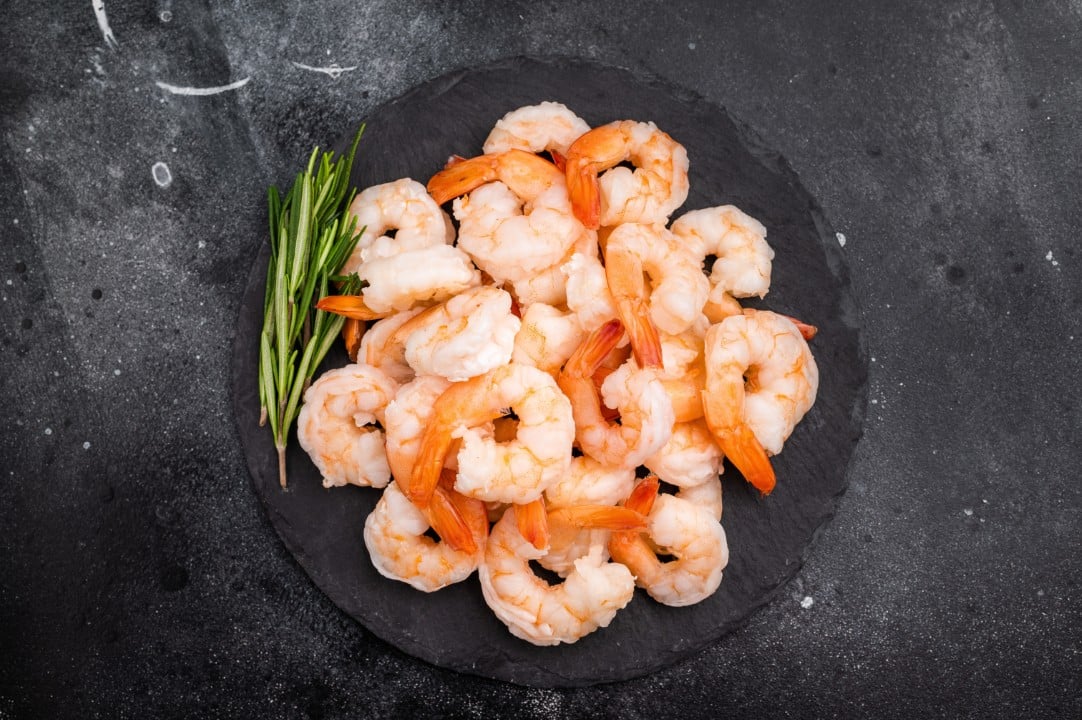
An unexpected discovery during a shrimp dinner led a young Australian woman to develop a revolutionary material: a bioplastic made from crustacean shells. This new material completely disintegrates in just 33 days, a process 1.5 million times faster than conventional plastics, offering a promising alternative in the fight against pollution.
The invention, conceived by Angelina Arora when she was just 16, highlights science’s ability to find solutions to global problems in unlikely places. His casual observation about the similarity between shells and plastic paved the way for an innovation that could transform the way we deal with waste and packaging.
The curiosity that drove great innovation
The young scientist’s interest in the issue of plastic waste did not arise out of nowhere, but from everyday questioning. His curiosity about environmental impact began to blossom when he questioned the need to pay for plastic bags in a supermarket. That simple question turned into a passion for science and the search for solutions.
Angelina, then a student at Sydney Girls High School, began to dedicate herself to bioplastics research. She explained that science represents the key to unlocking the mysteries of the world, a belief that motivated her to look for a practical and environmentally friendly alternative to plastic.
The path of attempts and the search for a functional bioplastic
The path to innovation was not linear, but marked by several attempts and learning experiences. Initially, Angelina focused on creating plastics from corn and potato starch. However, these early experiments ran into a significant problem: water solubility.
A material that falls apart at the slightest contact with moisture would not be practical for packaging, for example. Furthermore, the student had a clear principle: bioplastic should be produced from waste, without competing with food sources. This philosophy drove her to explore other discarded raw materials, such as banana peels, before finally arriving at crustaceans.
From dinner to the laboratory: the discovery of shrimp shells
The decisive inspiration came during dinner, after a long and exhausting day in the laboratory. Angelina noticed the texture of shrimp shells and their similarity to plastic. This observation triggered an “epiphany”, propelling her back to the laboratory to investigate the composition of the material.
The basis of its bioplastic is chitin, a carbohydrate abundant in the exoskeleton of crustaceans such as shrimp, lobsters and crabs, as well as some insects. The chemical process developed by Angelina involved converting chitin into chitosan and mixing it with fibroin, an insoluble protein found in silk cocoons.
This clever combination resulted in a material with the characteristics and appearance of plastic. The use of these organic components and careful chemical processing were crucial to creating a resistant and functional product.
The environmental benefits of an innovative material
Angelina Arora’s invention stands out not only for the speed of its decomposition, but also for an additional environmental benefit: the ability to enrich the soil. This bioplastic, when exposed to bacteria and temperatures found in landfills, completely disintegrates within 33 days.
The material presents a rare combination of qualities, including:
- Cheap and versatile:offers a low-cost option for a variety of applications.
- Insoluble, flexible and durable:essential characteristics for a plastic substitute.
- Rich in nitrogen:when it decomposes, it releases a vital nutrient for agriculture.
This last feature is particularly notable. The nitrogen released by shrimp shell bioplastic can be incorporated into compost piles or directly into agricultural fields, serving as a natural fertilizer. Such a feature has the potential to reduce dependence on chemical fertilizers, which are known to emit greenhouse gases. Thus, the material not only disappears quickly, but also contributes to soil fertility, transforming waste into a valuable resource for plants. Angelina also explored the material’s use in medical packaging, demonstrating its wide applicability.
Recognition and a young scientist’s vision of the future
Angelina’s innovative work has earned her numerous awards and global recognition, highlighting the impact of her research. She was awarded the Innovator to Market award at the 2018 BHP Billiton Foundation Science and Engineering Awards and was highlighted at the Intel International Science and Engineering Fair, where she competed against young talent from over 81 countries. In 2019, she was named Young Conservationist of the Year by the Australian Geographic Society.
Despite all her prestige, Angelina maintains a pragmatic and mature view on the environmental crisis. She highlights the importance of each individual doing their part, whether by eliminating the use of plastic straws or rethinking other consumption habits. His resilience in the face of the laboratory’s challenges is fueled by the constant reminder of the initial purpose of his research: combating environmental destruction. While Angelina’s bioplastic still needs further development and testing to reach commercial-scale production, her invention represents a significant step towards a more sustainable future, showing that perseverance and curiosity can change the world.





