
Uncovering the Depths: 10 Colossal Sea Creatures That Gave Birth to Terrifying Monster Legends


For navigators of past centuries, the immensity of the ocean represented a daunting challenge. The little understanding of marine environments at the time meant that sailors’ fertile imagination filled in the gaps about the beings that could inhabit unexplored waters.
Faced with the unknown, many of the mythical sea monster figures we know today may have had their origins in real wildlife sightings. Below, we explore some of the animals that, with their grandeur or unique behavior, inspired these legendary stories.
The giant squid and the inspiration behind the legend of the Kraken
Scandinavian popular narratives narrate the existence of the Kraken, a fearsome beast that rose from the depths. This being enveloped vessels in a powerful embrace, dragging the ship and its hapless crew to the seabed.
Many scholars believe that this legend was shaped by the observation of its real-life counterpart: the giant squid (Architeuthis dux). This impressive cephalopod inhabits the great depths and can reach up to 13 meters in length. Despite being a legendary figure for centuries, these ocean giants are rarely seen, so much so that the first video record of a live giant squid only occurred in 2006, a fact that highlights the mystery and inaccessibility of deep-sea creatures, justifying the ancestral fear.

The impact of the real sperm whale on Herman Melville’s fiction
The fantastic story of a sperm whale attacking a boat and sinking it may seem unlikely. However, the plot of “Moby Dick” was actually conceived based on true events. Writer Herman Melville learned of a whaling ship, the Essex, that was rammed by a sperm whale, and this story became the basis for his acclaimed novel.
Researchers were recently able to document this clashing behavior for the first time in footage of sperm whales clashing against each other. The exact reason for these frontal clashes, however, still remains an enigma to science.
The mystery of Porphyry: which marine animal inspired the legend?
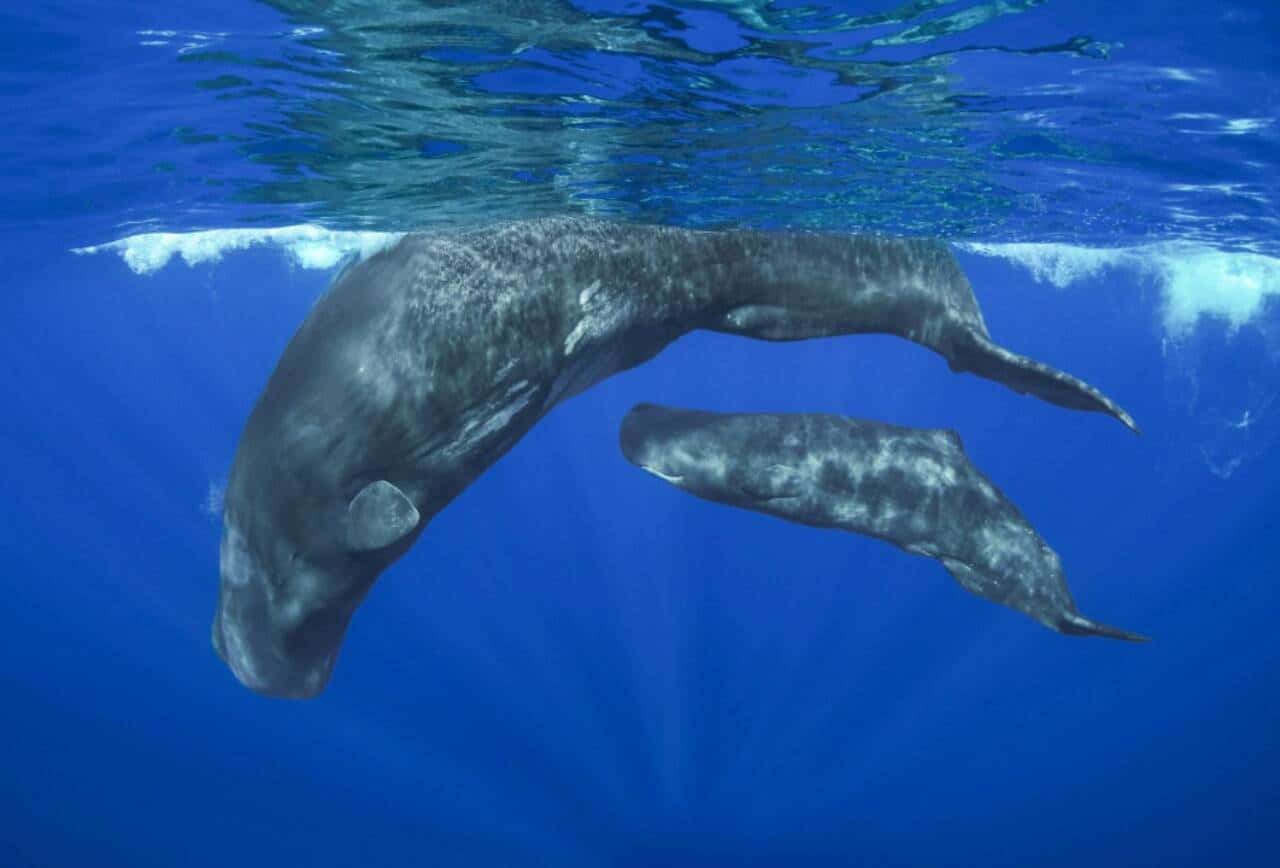
Porphyry was a whale of extraordinary dimensions that, according to legend, terrorized vessels off the coast of Constantinople for five decades. There are some clues that could point to the species to which it belonged, but the enigma has never been completely deciphered.
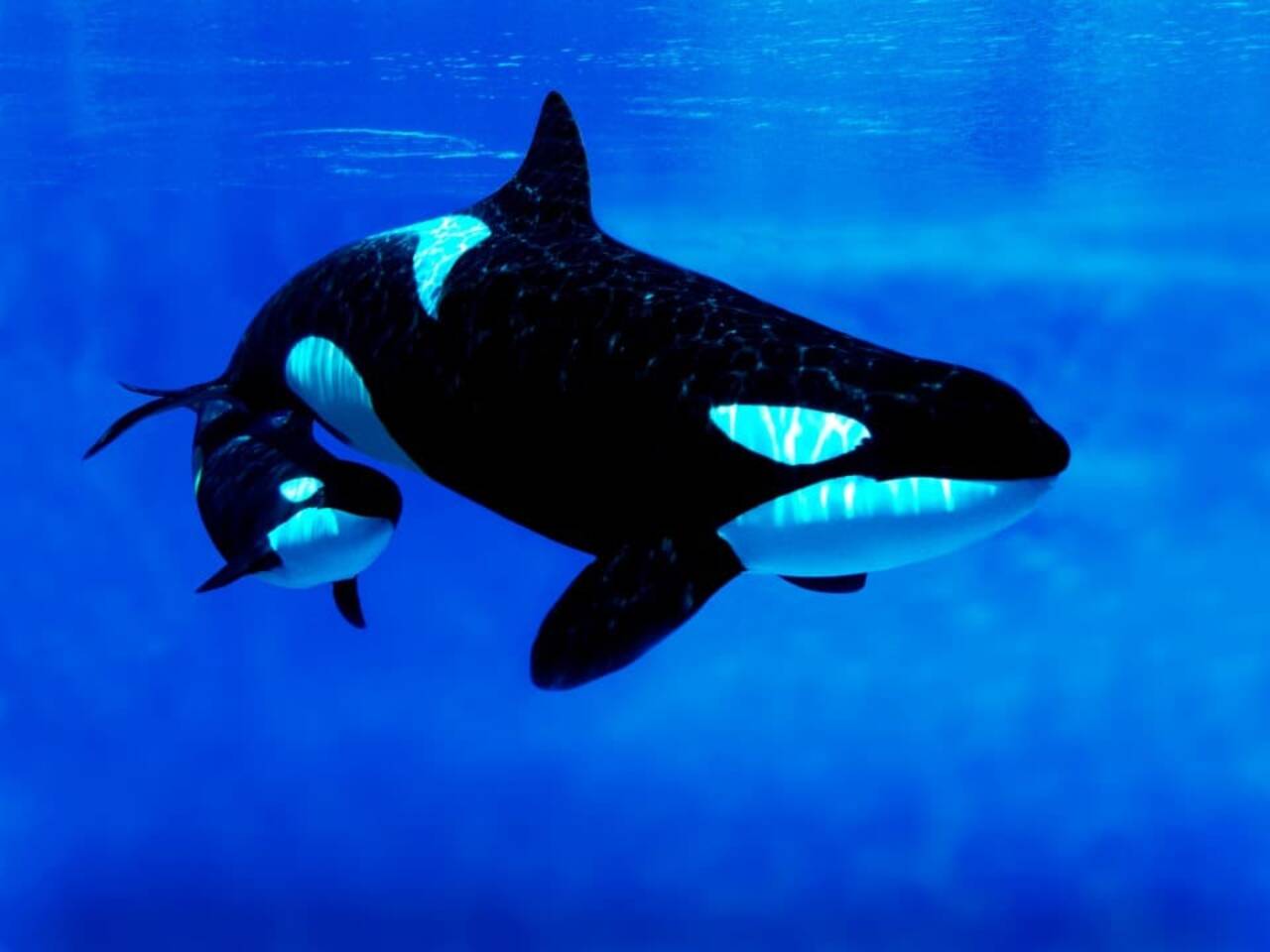
Some suggest that this fearsome sea monster could be a sperm whale, due to its impressive size of around 13 meters in length. Others, however, point to its hunting style — it ran aground while trying to capture dolphins — suggesting that it was an orca, which occasionally runs aground on purpose while hunting.
The complexity is heightened because Procopius, the historian who narrated the story, was recording ancient events and could have misinterpreted or exaggerated elements to make the narrative more captivating. Whether Porfirio was an orca, a sperm whale or something else entirely is a question whose answer may never be known with certainty.
The oarfish and belief in omens of natural disasters
Conventional wisdom says that when an oarfish washes up on a beach, an earthquake, tsunami or some other natural catastrophe is about to occur. For this reason, these serpentine-bodied fish are nicknamed by some “omens of doom” or “fish of the apocalypse”, although this belief has no scientific support.
These peculiar animals, also known as ribbon fish, are in fact real, and it’s easy to see why they would inspire mythical tales. They sport long, shiny silver bodies that can reach around seven meters in length, complemented by showy red crests on their heads that resemble an elegant headdress.
The reality behind the fear of great white sharks
The simple theme tune from the movie “Jaws” is already capable of arousing fear in many people. The feature film played a significant role in cementing the image of great white sharks as irrational, human-eating predators.
However, the truth is that, although it is prudent to remain cautious in waters where predatory sharks may be present, the chances of being bitten by a great white shark – or any other species – are incredibly low. According to data from the International Shark Attack Archive, only 65 unprovoked bites and 29 provoked bites were recorded in 2025 globally, covering all shark species, highlighting a marked disparity between popular perception and statistical reality.
Whales and the feeding phenomenon that harks back to the legend of Hafgufa
In 2011, marine researchers documented a unique feeding behavior in whales, which they termed “trap feeding.” They observed baleen whales remaining motionless at the surface of the water, with their mouths wide open, allowing fish to swim in before being quickly swallowed.
Initially, scientists considered this behavior as something new, but they noticed an intriguing similarity. Ancient Norse sagas from the 13th century described a monster called Hafgufa, whose description was remarkably similar to that of whales that practice “trap feeding”: fish would rush into the Hafgufa’s gaping mouth until it clamped its jaws shut, swallowing them all.
Lyngbakr, the Norse creature that passed for an island
Another Norse legend, also from the 13th century, tells the story of Lyngbakr, or “heather back”. His deadly tactic consisted of imitating an island to attract his victims.
Imagine the relief of an exhausted sailor when he finally sets foot on dry land after long months at sea. So, when they saw a vast elevation rising from the ocean, covered in vegetation, it was natural for them to believe they had found an island.
However, as soon as they set foot on its back, the Lyngbakr plunged into the waves, dragging the sailors with it and causing them to drown. Although the story is not factual, it is easy to imagine how a whale of gigantic proportions could have served as inspiration for such a fable.
The Hydra of Greek mythology and its tiny biological analogues
Greek mythology is revered for its grandiose monsters, and the Hydra stands out as one of the scariest. This sea serpent had an excessive number of heads – some counted three, others nine – and, if one was severed, two new ones would grow in its place.
Of course, Hydra is not a real animal, but there are freshwater organisms known as hydras that are related to jellyfish and corals. Unlike the mythical Hydra, these creatures are tiny, but they have the remarkable ability to regenerate their entire bodies from small parts.
Dugongs: the unlikely beauty that gave rise to the myth of mermaids
Among the most widespread maritime legends is that of mermaids: mystical beings with fish tails and a stunning female body.
Considering her reputation for luring sailors into risky situations with her beauty, it may seem strange that the legend of the mermaid was inspired by the first sightings of dugongs. These docile “sea cows” are charming in their own way, but they resemble a floating potato more than an idealized female figure.
However, a simple glimpse of their graceful tails is enough to understand the origin of the myth. Watching a dugong’s tail fin disappear gently beneath the waves in Bazaruto, Mozambique, I was immediately convinced I had witnessed a mermaid.
Narwhals: the ‘sea creatures’ that inspired the legend of land unicorns
Although it’s more common to associate unicorns with bouncy, green meadows than with marine environments, this mythical creature’s roots have a surprising connection to the ocean.
Narwhals are known as “unicorns of the sea” due to their long, horn-shaped tusks. However, these royal Arctic whales were not only named after the legendary creatures, but also contributed to inspiring them. During the Middle Ages, narwhals were hunted, and their tusks were traded as authentic “unicorn horns.” This fact may explain why ancient representations of unicorns display such a long, spiraling horn.





