
567-million-year-old fossils discovered in Canada alter understanding of the origin of complex animal life

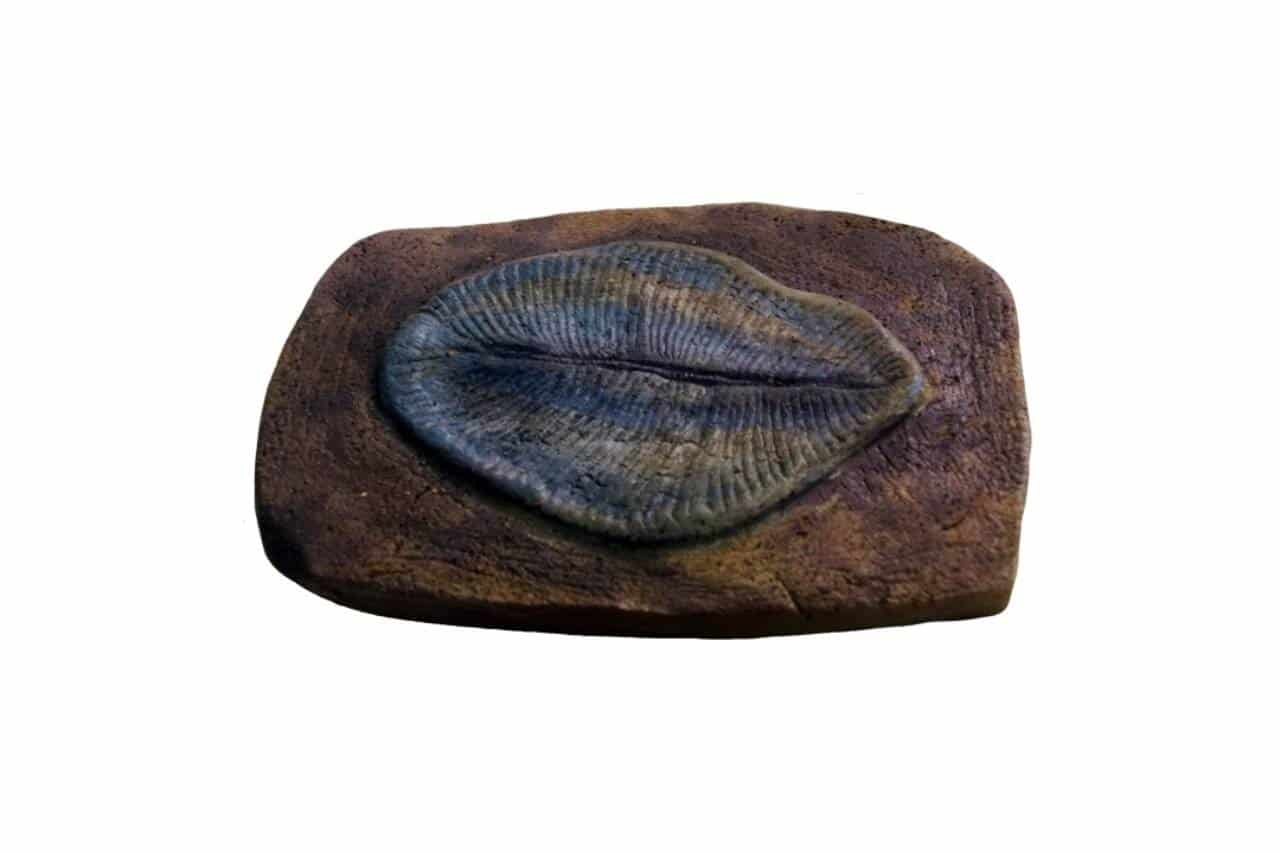
Recent discoveries of prehistoric creatures found in deep ocean environments indicate that traits such as locomotion, sexual reproduction, and animal complexity arose much earlier in Earth’s evolutionary timeline.
The lineage of all living things today, from jellyfish to humans, dates back to a crucial phase when complex life forms distinguished themselves from a predominantly microbial ecosystem. However, the collection of fossils from this period of evolutionary transition is still limited, which generates significant uncertainties about the initial development of vital animal attributes and their dispersal throughout the primitive oceans. This new evidence provides an unprecedented perspective that challenges and expands our current understanding of the emergence of complex life.
A team of scientists has located a fossil deposit of remarkable abundance in the Northwest Territories of Canada, which promises to clarify several outstanding questions. The remains, attributed to the enigmatic Ediacaran biota, indicate that certain characteristics of animal life, such as the ability to move and reproduce sexually, may have emerged five to ten million years earlier than previous estimates. The results of the study were detailed in the publication Science Advances and are the result of the work of researchers from the American Museum of Natural History and Dartmouth University.
“For a period of three billion years, planet Earth was the stage for the dominance of microorganisms. Suddenly, these marine beings with unusual physiognomy appear, with noticeable dimensions and capable of carrying out actions recognizable today”, explained Scott Evans, assistant curator of invertebrate paleontology at the American Museum of Natural History and main author of the study. He added that to decipher this shift, when life reached great scale, complexity and became unmistakably animal, this new archaeological site offers vast potential.
Unraveling the complexity of the first marine animals
Fossilized records from the Ediacaran period display a diversity of shapes, including flat discs, leaf-like structures, and ovals with distinctive markings. These finds represent the oldest direct fossil evidence of multicellular animal organisms.
Certain Ediacaran species are related to prominent contemporary animal groups, such as mollusks, nematodes, ctenophores and cnidarians (which include jellyfish and corals). Other specimens, although without obvious modern parallels, are among the oldest animals capable of locomotion for food or sexual reproduction.
Geological importance of the site in the Mackenzie Mountains, in Canada
Because they inhabited the planet before the appearance of shells, bones or other rigid structures in most animals, Ediacaran beings were predominantly soft-bodied. This characteristic makes the conservation of its fossils a challenge, resulting in their rarity. Although Ediacaran remains have been found on every continent except Antarctica, few archaeological sites reveal more than ten species. These rare sites provide the best information about a crucial period of approximately 40 million years in Earth’s evolution.
North America’s Contribution to the Global Fossil Record
Experts classify Ediacaran life into three distinct groups corresponding to specific phases in the fossil record: the Avalon assemblage (dating from 575 to 559 million years ago), the White Sea assemblage (from 559 to 550 million years ago), and the Nama assemblage (from 550 to 538 million years ago). Before the recent revelation, fossils from the White Sea group had already been located in Europe, Asia and Australia, but never on the North American continent.
In the course of this new research, scientists confirmed the presence of distinct fossils from the White Sea assemblage in ancient rocks from the Mackenzie Mountains, in Canada. The location is on the ancestral lands of the Sahtú Dene and Métis peoples, who offered their support and authorization for the research team to access the site.
The current research is based on previous geological surveys of the region, but represents a considerable advance. The team of scientists unearthed more than a hundred fossils, covering six groups never seen before in North America. The most surprising find was its age. Some specimens were dated at approximately 567 million years old, placing them five to ten million years before previous records from the White Sea assemblage and, in part, contemporary with the even older Avalon assemblage. The layers where the fossils were discovered also extend through hundreds of meters of rock, suggesting the possibility of more discoveries.
“This new site not only exhibits a vast variety of species, but it also falls into a portion of the rock sequence where there was previously no fossilized evidence,” said Justin Strauss, co-author of the study and associate professor of Earth and Planetary Sciences at Dartmouth University, who has been researching the area for about 15 years. He highlighted that, considering regional geological knowledge in northwestern Canada, there is enormous potential to re-evaluate the understanding of Earth’s history during the Ediacaran period.
The fascinating revelations of new species and their primitive behaviors
Among the specimens revealed for the first time on the North American continent, the following stand out:
- Dickinsonia: a flat being that glided along the ocean floor. Lacking a mouth, this organism absorbed bacteria and algae across its entire lower surface, being described by Evans as a “pancake” or “bathroom rug” with a circularly segmented body structure.
- Funisia: a tubular and stationary being that lived in communities of specimens of similar sizes. It offers the oldest fossil record of sexual reproduction, presumably through the joint release of gametes into the water, a process similar to that observed in corals.
- Kimberella: a creature with a muscular foot that fed by scraping the marine substrate. Widely considered a distant ancestor of molluscs, it may be the oldest fossil of a bilateral animal. Bilaterals are characterized by a body plan with distinct front, back, upper and lower parts, in addition to bilateral symmetry, and encompass more than 99% of existing animal species.
- Eoandromeda: possibly a comb jellyfish characterized by eight spiral arms.
The fundamental role of deep-sea ecosystems in early evolution
The researchers also found that these beings inhabited ecosystems in deeper waters than previously imagined for the White Sea as a whole. This conclusion supports the growing thesis that the first animals may have appeared in deep oceanic environments, before spreading to shallower coastal areas. This pattern of development opposes the evolutionary trajectory most commonly observed in animals after this period.
“These findings point to a model where evolutionary innovations begin in deeper habitats and subsequently diffuse toward coastal regions,” explained Evans. He detailed that although the deep ocean is often seen as a dark and inhospitable place, it offers relative stability, with minimal variations in crucial factors such as temperature and oxygen, vital for most forms of animal life. This environmental constancy may have provided the ideal conditions for the emergence and early development of the first complex life forms.




