
China uses advanced AI to manage cities and infrastructure, leaves chatbots behind

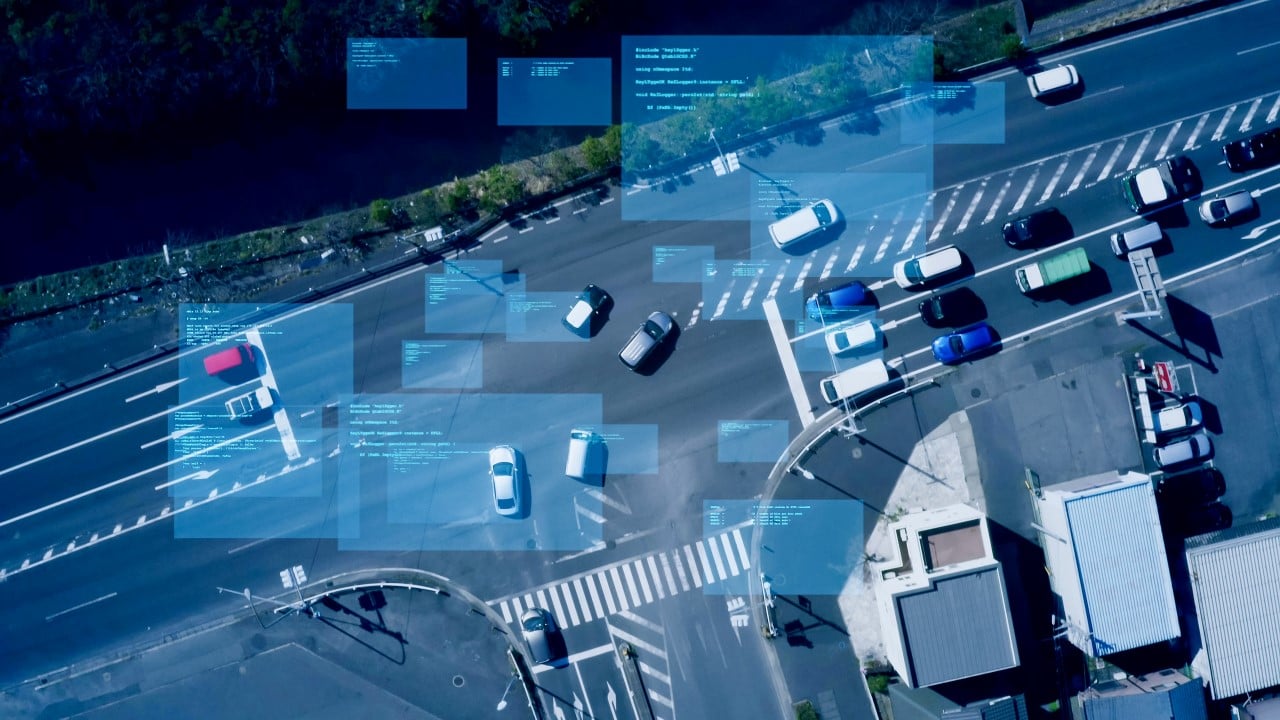
China is developing a form of artificial intelligence that differs significantly from the model often discussed in the West. Instead of focusing predominantly on conversational assistants and artificial general intelligence (AGI), the Asian country directs its investments to systems that enable cities, factories, logistics chains and public infrastructures to adapt in real time, as reported.
Periodically, a new Chinese innovation in artificial intelligence gains global prominence. Whether it’s a model that outperforms in reviews, a factory that achieves greater automation or a metropolis that becomes smarter and more connected. The usual explanation points to a greater number of engineers, factories, data and state support in China compared to many other nations. While this is partially true, it does not encompass the entirety of the story.
What really stands out is not just the magnitude of the Chinese effort in AI, but its direction. In China, artificial intelligence is increasingly designed for coordination, prediction and management functions. The focus is less on creating systems that only interact verbally with humans and more on creating tools that help complex environments operate smoothly.
This distinction is crucial. It suggests a broader perspective on intelligence itself, shaped not only by modern economics and industrial policy, but also by ancient Chinese philosophies that address change, interdependence, and continuous adaptation.
Expanding beyond chatbots and AGI
In the Western scenario, the discussion about artificial intelligence is often limited to the sphere of chatbots, productivity tools and general artificial intelligence. While these areas are important, they represent only part of the picture.
The most ambitious applications of AI in China often feature a distinctive configuration. They are designed to manage urban traffic, anticipate disruptions in supply chains, monitor industrial systems, balance energy demand and update digital models of entire cities. In other words, the objective is not restricted to generating language or mimicking human conversation. The goal is to regulate movement, assimilate complexity and constantly react to transformations.
This is why concepts such as digital twins, smart manufacturing and predictive logistics have become such relevant topics. These systems are not merely reactive. They are built to anticipate future events and make adjustments before problems manifest themselves to human operators.
In this light, China is not just looking for bigger, more powerful AI models. It is building an intelligence infrastructure of a fundamentally different kind.

Ancient traditions influence thinking
To understand this orientation, it is useful to examine an intellectual tradition from earlier times. More than three centuries ago, an exchange of correspondence between Europe and Beijing brought together two very distinct conceptions of intelligence.
In 1701, Gottfried Wilhelm Leibniz wrote to Joachim Bouvet, a French Jesuit who was in the court of the Kangxi Emperor, about his newly developed binary arithmetic. Leibniz had demonstrated that any number could be expressed using just two symbols, 0 and 1. This idea would become a fundamental pillar of digital computing.
Bouvet responded with a diagram of the 64 hexagrams of the I Ching, or Book of Changes, one of China’s classic works. Each hexagram is made up of six lines, which can be broken or continuous, totaling 64 possible combinations. Leibniz immediately noticed the similarity with binary logic and believed that the ancient Chinese had somehow anticipated this discovery.
Although this conclusion was an exaggeration, the connection was not devoid of significance. The I Ching does not configure a mathematical system in the modern sense of the word. It is a framework for understanding transformation. Its symbols are important not only for what they represent in themselves, but for what they can become.
A hexagram is never just a fixed pattern. Certain lines may change, changing one setting into another. The text focuses on movement, transition, and unfolding conditions. In this sense, it reflects a way of thinking that prioritizes process over permanence.
Static systems in constantly moving worlds
Modern computing developed from the opposite direction. She inherited a tradition that fragments the world into discrete units: bits, tokens, numbers and symbols. This approach has proven to be extraordinarily powerful, enabling digital technology, software and artificial intelligence.
However, the universe that artificial intelligence currently needs to deal with is not static. Cities evolve as traffic flows. Markets change as decisions are made. Supply chains change while goods are already in transit. A model can describe one instant perfectly and still completely miss the next moment.
At this point, China’s AI strategy appears particularly unique. Its most visible applications are built with a focus on continuous adaptation. The goal is not just to map reality, but to stay oriented within it as it transforms.
A useful metaphor is the difference between a map and a compass. A map displays the structure. A compass indicates direction. AI systems that merely map the world can be extremely detailed, but they can still struggle when conditions change quickly. Systems designed like a compass are designed to continue operating as the environment moves.
Artificial intelligence as infrastructure
For most people, artificial intelligence is perceived as something personal and interactive: a chatbot, a search engine, a translator or an image generator. These tools are useful, but they still resemble software that opens when necessary.
China’s most advanced vision for AI treats intelligence as essential infrastructure. Instead of simply responding to queries, AI can adjust traffic lights as congestion increases, reroute loads in the event of outages, balance energy demand across a network, or predict machine failures before they occur.
Hangzhou’s “City Brain” is a notable example. Instead of just collecting traffic data, it processes vehicle flow, congestion, emergency routes and public transport in real time, using this information to manage the city more effectively. The city is seen as a living system, not a collection of isolated intersections.
This is a very distinct model from the chatbot-centric AI narrative that dominates much of the public conversation. It is also more demanding, as it requires systems capable of coordinating with real-world conditions rather than simply generating responses.
Purpose and adaptation in Chinese concepts
Chinese discussions on artificial intelligence often emphasize concepts that transcend simple data processing. One example is DIKWP, a framework that expands the well-known data-information-knowledge-wisdom ladder by adding purpose as a fifth layer. The idea is straightforward: intelligence is not just about processing inputs, but about understanding why those inputs are relevant.
Another significant concept is gongsheng, often translated as symbiosis or coevolution. He suggests that humans, machines and institutions should be understood as interactive systems that shape each other over time. Intelligence, from this perspective, is not just computing. It’s relationships, feedback and mutual adaptation.
These ideas help explain why AI development in China often seems more systems-oriented than chatbot-oriented. The focus is on how intelligence fits into a larger environment and how it helps that environment continue to function as conditions evolve.
A different model, but growing rapidly
It would be incorrect to frame this situation as a simple competition between East and West. American and European AI research also moves toward world models, embedded systems, continuous control, and autonomous tools capable of responding to changing environments. The difference does not lie in one side understanding the future and the other not.
The distinction lies in emphasis. China has been particularly bold in applying artificial intelligence to infrastructure, logistics, manufacturing and urban management. This gives your AI strategy a more practical, more integrated and, in certain areas, more advanced character than the public discussion around chatbots and AGI would suggest.
The overarching lesson is that artificial intelligence is not a monolithic entity. It can be a language model, a predictive system, a control layer, or part of the gear that keeps a city, factory, or supply chain running. China has been remarkably clear in building for this second future.





