Six planets align on August 12, 2026 with no threats to Earth

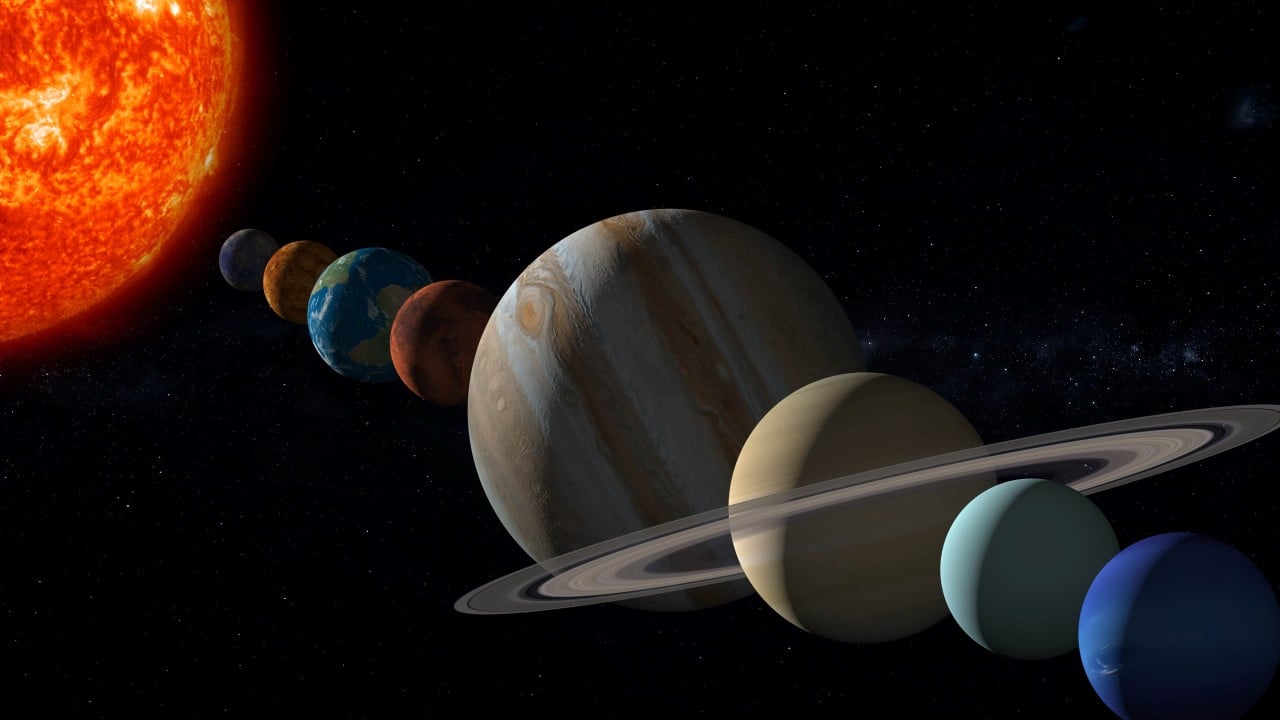
On August 12, 2026, a remarkable astronomical event promises to be visible in the pre-dawn skies: the so-called “planetary alignment.” On that date, Jupiter, Mercury, Mars, Uranus, Saturn and Neptune should appear close together in a strip of sky, a phenomenon also known as a “planetary parade”.
When hearing about the proximity of the planets, it is common for some people to associate the event with mysterious forces or the imminence of something unusual on Earth. Historically, since antiquity, celestial phenomena such as these have been interpreted as signs and, more recently, in works of science fiction and occult currents, they have often been linked to disasters and great transformations, reflecting an ancient human attempt to find meaning in cosmic events.
It is important to emphasize, however, that this planetary alignment does not represent any specific risk for our planet. The true highlight of the event lies not in possible terrestrial impacts, but rather in the rare beauty of seeing multiple planets in a spectacular display in the early morning sky.
Understand the definition of a planetary alignment
The concept of “planetary alignment” carries two main interpretations. One of them refers to when, observing the solar system from a superior perspective, several planets appear to group together on one side of the Sun. However, due to different orbital inclinations, they never form a perfect straight line in space.
The other interpretation describes the phenomenon in which, seen from Earth, several planets give the impression of being aligned in the same direction in the firmament. It is this last definition that generally applies when we report a “planetary alignment,” like the one that will be visible on August 12, 2026, when multiple celestial bodies will come together in the sky before sunrise.
Some of these planets will be easily identifiable with the naked eye, while others, such as Uranus and Neptune, will require the use of binoculars or telescopes for clear observation. Thus, the most accurate way to understand the event is as the perception that “several planets appear to be aligned in the same direction in the sky as seen from Earth”, rather than as a straight-line arrangement in outer space.
Why an alignment of planets doesn’t cause unusual events on Earth

The expression “planetary alignment” often evokes a sense of mystery, and even a certain fear. In the past, it was a popular belief that the sum of the gravitational forces of the aligned planets could trigger anomalies in both the Sun and our own planet.
Over the decades, several rumors have emerged about alignments that would cause catastrophes. For example, in the 1980s, rumors spread of a major disaster caused by a similar event. In 1999, a celestial alignment known as the “Grand Cross” generated much discussion, with speeches connecting it to the prophecies of Nostradamus fueling widespread anxiety.
Often, science fiction magazines and occult publications portray planetary alignments as moments of global crisis or critical turning points for humanity. The visual impact that the image of multiple planets together in the sky causes is undeniable, making it an attractive and dramatic theme for narratives.
However, from a scientific point of view, there is no basis for believing that planetary alignments cause significant impacts on Earth. The tidal forces exerted by the other planets on our planet are extremely small, being irrelevant when compared to the tidal forces of the Moon and the Sun. There is no correlation between the apparent alignment of the planets and the occurrence of earthquakes, volcanic eruptions or extreme weather phenomena.
Therefore, this planetary alignment should not be a cause for concern. Instead, the occasion presents itself as an excellent opportunity to look up at the sky and enjoy a natural spectacle.
The planetary alignment expected for August 12, 2026 stands out for its magnitude, with the appearance of six planets in an apparent grouping in the sky.
On the other hand, a configuration where all eight planets in the solar system, from Mercury to Neptune, come together at a 90-degree angle to the Sun is an extremely rare event. Astronomical calculations indicate that an alignment of such proportions should occur around May 1, 2161.
However, it is crucial to remain cautious when interpreting these terms. Even though the planets in our solar system appear to line up in the same direction when viewed from above, this does not mean that they will appear in a perfect straight line in the sky as seen from Earth. Furthermore, planets very close to the Sun are difficult to visualize and may appear scattered throughout the sky.
In summary, the planetary alignment of August 12, 2026 does not promise to cause any extraordinary incidents on our planet. However, it certainly represents a unique astronomical event, providing the chance to contemplate several planets from our solar system gathered in the sky and to feel the grandeur of being part of this universe.