
Spanish newspaper lists controversial decisions that mark the 2026 World Cup

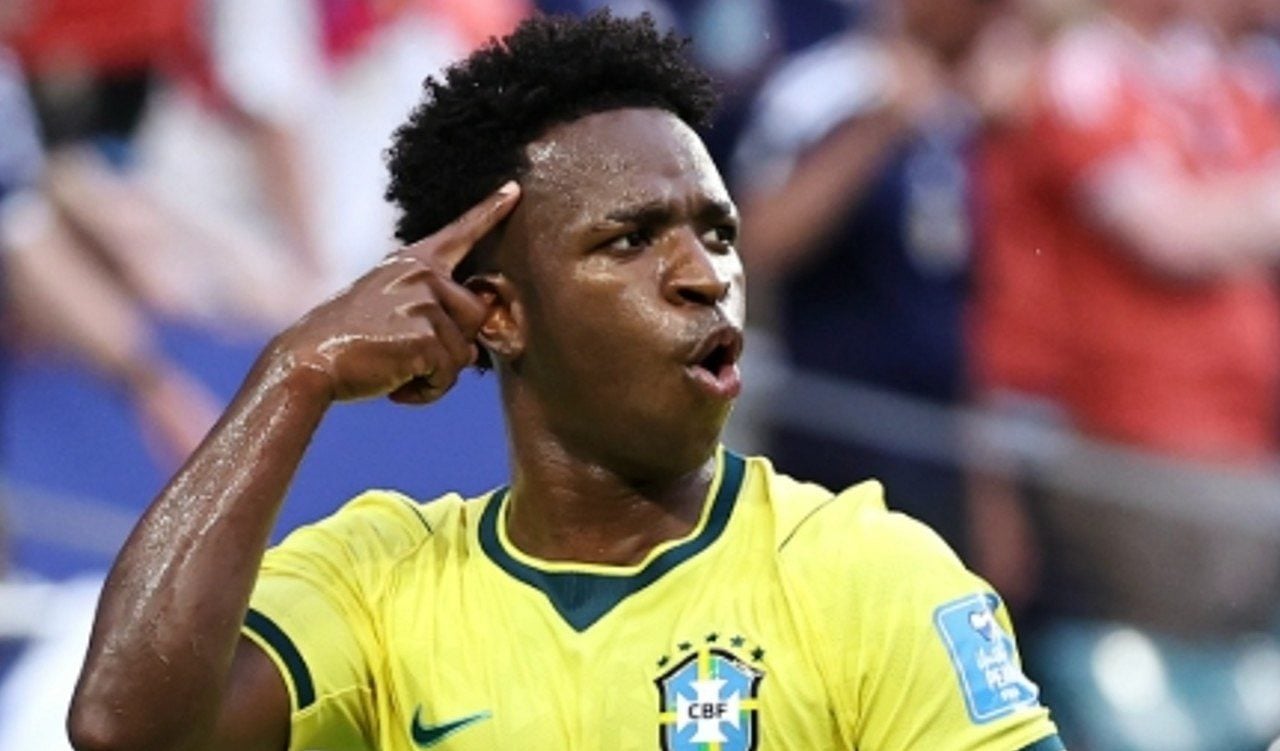
The 2026 World Cup, which on Wednesday, July 9th, has not yet reached the quarter-finals, is already the stage for a series of refereeing moves and decisions that have generated broad global debates. A Spanish press outlet has compiled the main controversies of the championship so far, ranging from the group stage to the round of 16.
Highlights include incidents with teams such as Brazil, Argentina, Portugal, Egypt, Paraguay and the United States, in addition to the suspension of striker Balogun.
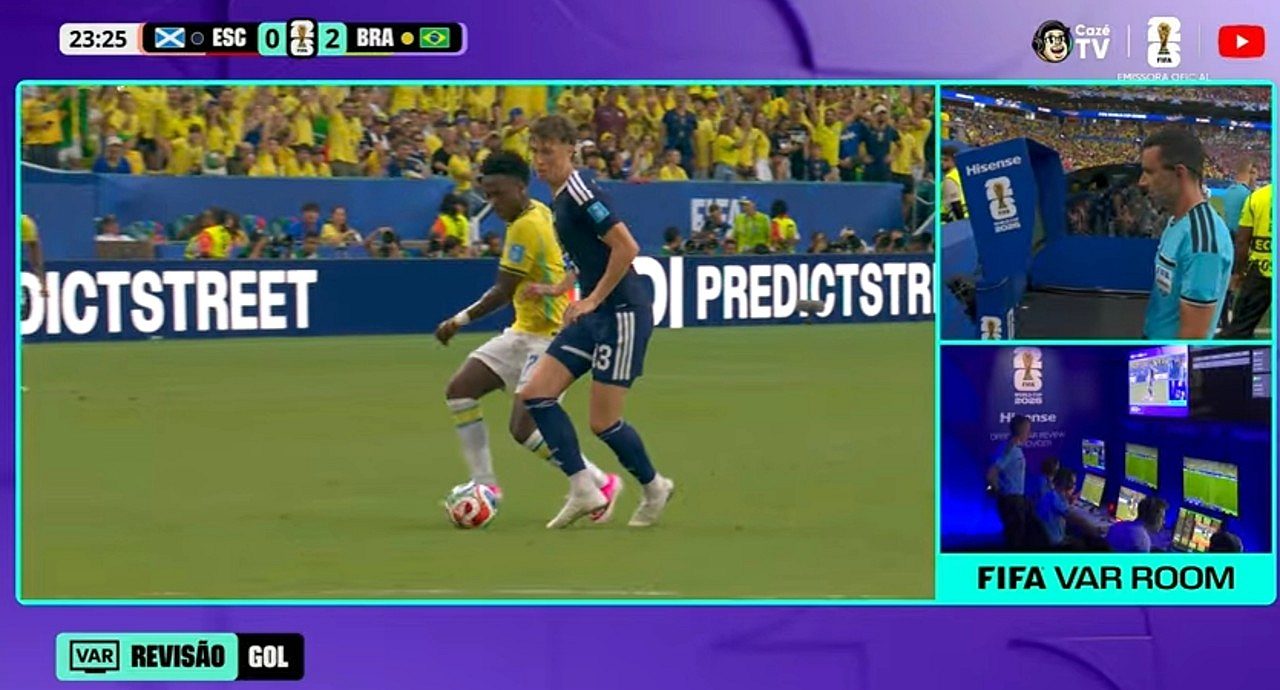
Disallowed goal by Vini Jr.
Among the incidents mentioned is Vinicius Junior’s goal, which was disallowed in the match in which Brazil beat Scotland 3-0. The winger had recovered possession of the ball from the last defender and finished for what would be his third goal of the game, however, VAR noted a subtle touch in the play. After analyzing the move on the monitor, the referee disallowed the goal, a decision that caused widespread discussion.
Messi entry without card
The survey also cites Argentina’s triumph over Algeria, a match in which Lionel Messi made a dangerous tackle on Mandi, hitting him from behind. Even with protests from the Algerian team, the referee did not even issue a yellow card to number 10. Shortly afterwards, Messi scored two more goals in the match.
Penalty not scored on Mbappé
During France’s first match against Senegal, Kylian Mbappé fell inside the box after a collision with a Senegalese defender. The referee allowed the play to continue, but this decision generated a difference of opinion.
The first application of the “Vini Law”
An additional controversy highlighted in the compilation was the unprecedented implementation of the “Vini Law”. The first athlete to be penalized by this new guideline was Miguel Almirón, from Paraguay, who was sent off for covering his mouth while talking during the game against Turkey.
This rule was then used again in the confrontation between Ecuador and Mexico, resulting in the expulsion of Piero Hincapié.
Ball sensor disallows Croatia goal
In the round of 16, Portugal avoided extra time after a goal by Mario Pašalić was disallowed in the final minutes against Croatia. The VAR system identified an almost imperceptible touch from a Croatian athlete at the beginning of the play, something that was only confirmed by the ball sensor technology, indicating the marker’s irregular position.
Balogun case
According to the analysis, the biggest controversy of the World Cup occurred outside the four lines. Balogun was expected to serve a suspension after being sent off in the United States’ previous game, but was released to play against Belgium after FIFA postponed the penalty. This deliberation took place after interference from the then President of the United States, Donald Trump, which generated severe criticism from athletes, coaches and managers from different nations.

Disallowed Egypt goal
The confrontation between Argentina and Egypt added two episodes to the controversial relationship. Firstly, the Egyptian team had a spectacular goal disallowed, after the VAR reviewed and identified a previous foul on Lisandro Martínez. The infraction occurred seconds before the completion of the play and was judged as minor by the Egypt players, who expressed great disagreement.
Additionally, the African team contested the absence of two possible penalties, in plays involving Julián Álvarez and Alexis Mac Allister against Mohamed Salah. In both situations, the referee chose to continue the game.
Record number of expulsions at the opening
Closing the panorama, the survey recalls the opening match of the World Cup, between Mexico and South Africa, which became a historical landmark as the opening game with the highest number of red cards in World Cups. The expulsion of Zwane from the South African team for an infraction without the ball was widely considered exaggerated, beginning the sequence of discussions about refereeing that continue to shape the tournament.





