
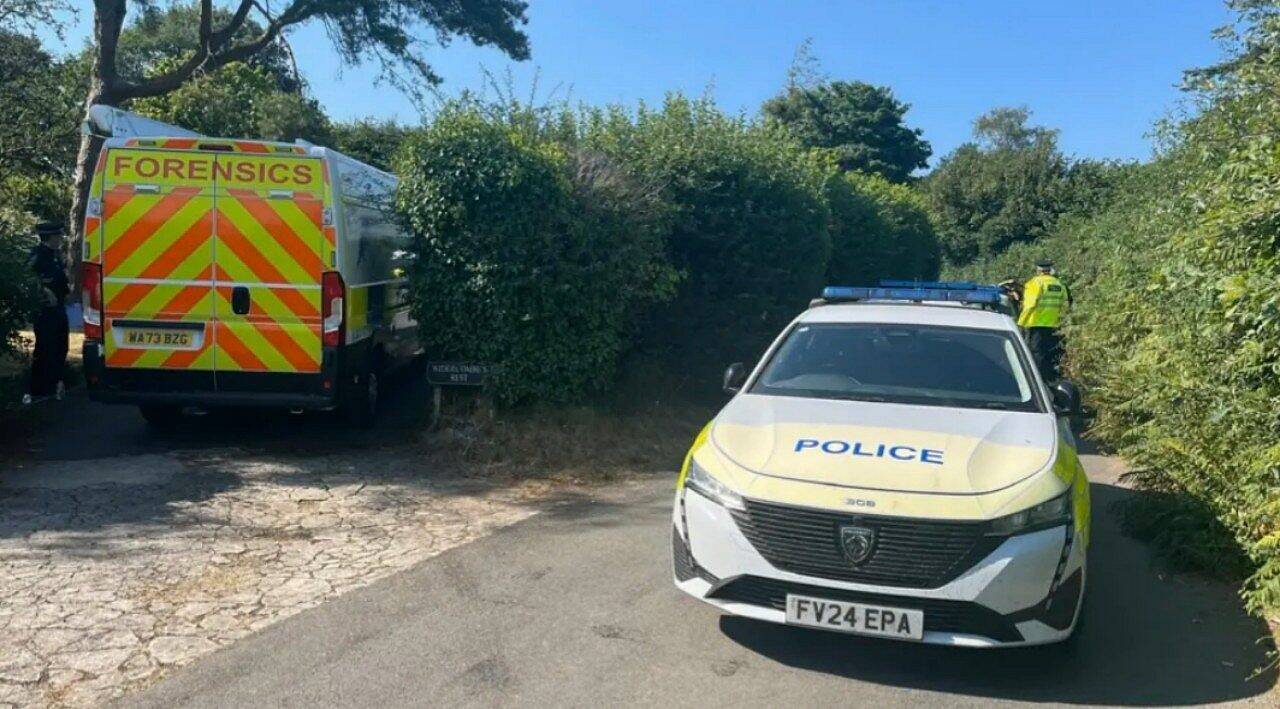
Security authorities in southwest England confirmed the arrest of a 26-year-old man, the main suspect involved in the death of Ann Widdecombe, a historic figure in British politics. The 78-year-old former minister was found dead last Thursday inside her residence, suffering serious injuries that immediately raised suspicion of homicide. The case quickly mobilized local security forces, who isolated the area to begin forensic work.
Devon and Cornwall Police, responsible for the jurisdiction where the crime occurred, reported that the detained individual is a white British citizen, who remains in custody while preliminary interrogations are conducted. Investigators race against time to map the victim’s last steps and understand the dynamics of the events that led to the fatal outcome. To date, access to the investigation remains restricted to preserve the collection of evidence at the crime scene.
Given the notoriety of the victim, who built a long career in parliament and the media, speculation about the motivation for the attack quickly arose. However, the detectives in charge of the case went public to rule out any link to acts of terrorism. Initial reports indicate that there is no evidence that the murder was politically motivated, as it is a criminal investigation of an isolated homicide, the exact contours of which are still being defined by experts.
Details of the police operation and capture of the suspect in southwest England
The 26-year-old’s arrest did not occur in the same place where the former minister’s body was discovered. According to spokespersons for the corporation, the capture was carried out at an address located in the city of Newton Abbot, a municipality that is a short drive from the region where the victim lived. The speed in locating the suspect indicates that the authorities were able to track down crucial elements in the first few hours after reporting the discovery of the body.
One of the homicide team’s main focuses now is to establish whether there was any kind of previous link between the detained man and Ann Widdecombe. The age difference and different social circles raise questions about how their paths crossed. The police reiterated that the investigation is at an embryonic stage, and it is premature to say whether the attack was premeditated, the result of a property invasion or whether the victim and attacker already knew each other in some way.
To organize the flow of information and prevent the spread of rumors, authorities established a direct channel with the local press. The objective is to ensure that the public receives updates based on technical reports, especially with regard to the exact cause of death, which will be confirmed after the completion of autopsy examinations at the region’s legal medical institute.
Remote setting in the national park contrasts with the brutality of the episode
Where Ann Widdecombe chose to spend the final years of her life adds a layer of complexity to the investigators’ work. The property is in the Haytor area, nestled within Dartmoor National Park, a region famous for its vast landscapes, open moorland and geographical isolation. Satellite images analyzed by reporting teams show that the house is an individual structure, surrounded by extensive fields and with few neighbors nearby.
The residence, which has a large garden and an outdoor pool, reflects the search for privacy that many public figures crave after decades of continuous exposure. This same isolation, however, may have made calls for help or the perception of strange movements by nearby residents difficult during the time of the attack.
The impact of the news hit the small local community hard. Susan Coish, who lives nearby, told the press about the feeling of disbelief that gripped the neighborhood. She described the former minister as a lovely lady with a remarkable personality, noting that the environment where they live has always been considered extremely peaceful and safe.
The neighbor shared that her last contact with the victim occurred about ten days ago, during a chance meeting at a gas station in the region. According to Coish, although Widdecombe maintained a somewhat reserved posture, typical of someone who spent her life in the spotlight, she was always accessible and polite in her daily greetings. The lack of understanding about the reasons that would lead someone to commit such violence against an elderly woman dominates conversations in the Dartmoor community.
Party leaders put differences aside after the tragedy
The violent death of such a prominent figure forced a pause in the usual bickering of the British parliament. Representatives from across the ideological spectrum expressed repudiation of the crime and solidarity with family members. Prime Minister Keir Starmer, of the Labor Party, and Kemi Badenoch, leader of the Conservative Party, issued official statements highlighting the importance of Widdecombe’s trajectory in the country’s recent history.
The shock went beyond the barriers of traditional parties. Zack Polanski, who leads the Green Party, used the social network X to express his dismay at the brutal circumstances surrounding the case. He directed his thoughts to the former minister’s loved ones, highlighting how respect for the public figure overcame the profound political differences that marked the victim’s career.
To understand the scope of the case and the progress of the investigations, the authorities consolidated the following points of attention:
- The 26-year-old man’s arrest took place in Newton Abbot, outside the main crime scene.
- The investigation treats the case strictly as a homicide, with no connection to political extremism.
- The Haytor residence remains under police lockdown for detailed forensic scanning.
- Experts seek to determine the exact nature of the serious injuries found on the victim’s body.
Legacy divided between the corridors of power and popular entertainment
The most scathing reaction came from Nigel Farage, leader of Reform UK, the party for which Ann Widdecombe served as spokesperson in recent years. In a videotaped statement, Farage expressed deep shock at the violent nature of the death. He described her as a woman of unshakable principles, extraordinary and kind, stating that she was incapable of harming anyone.
The former minister’s trajectory is a unique portrait of British public life. Before joining the Brexit agenda and Reform UK, she built a solid base in the Conservative Party, serving in senior roles during John Major’s government in the 1990s. Her transition from hardline politician to charismatic pop culture figure is a rare phenomenon. Farage made a point of highlighting this duality, remembering that she dedicated her life to public service with the same intensity with which she embraced new challenges.
Widdecombe’s national recognition was cemented by his memorable appearances on highly rated British television programs. Her appearances on the reality show Strictly Come Dancing and Celebrity Big Brother introduced her to a new generation, turning her into a true celebrity, far beyond her role as a lawmaker. This ability to move between heated parliamentary debates and mass entertainment guaranteed her a unique place in the country’s imagination.
The Reform UK leader ended his tribute by stating that the nation is much poorer without her presence. The party, which counted on its experience and communication power for the next electoral clashes, is now dealing with the vacuum left by one of its most recognizable voices, while the country awaits the justice system’s answers regarding the crime that interrupted its trajectory.