
Opposition to Gianni Infantino at FIFA gains strength in Europe with list of possible candidates

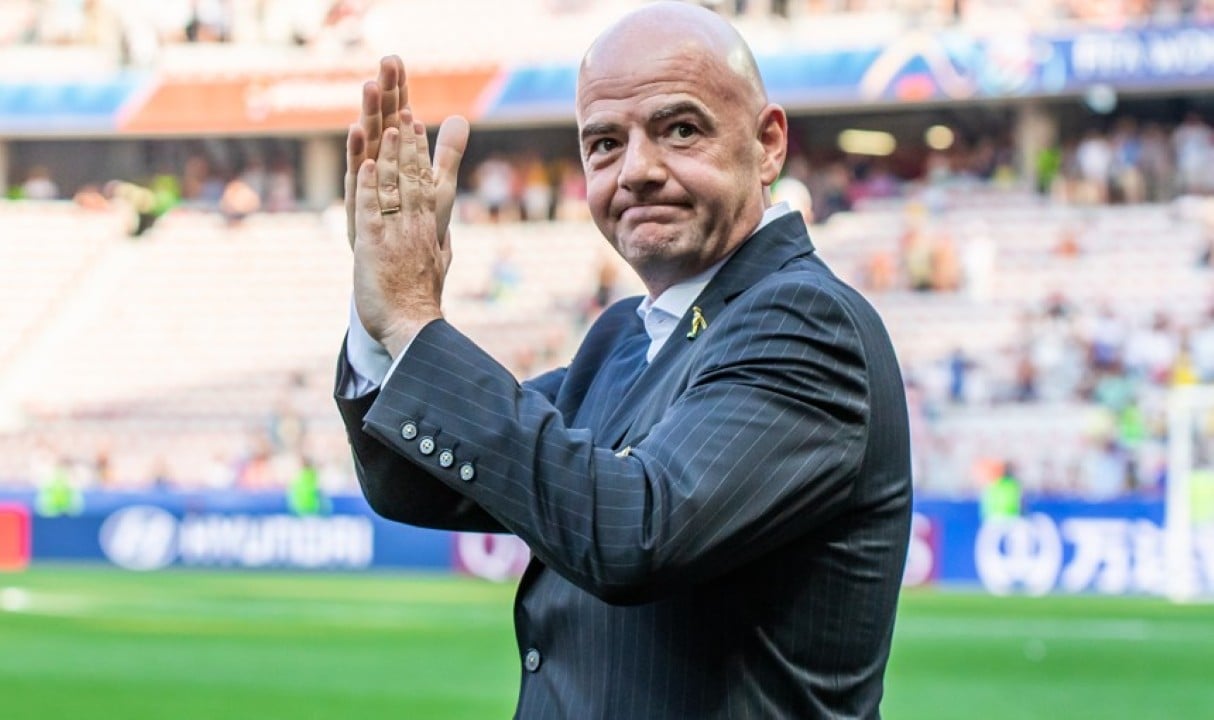
Leaders of European federations, members of UEFA, are intensifying a movement to launch an opposition candidacy for Gianni Infantino in the next FIFA presidential elections. The initiative, revealed this Tuesday, July 14, 2026, by a British radio station, stems from growing discontent with the current leadership of football’s highest entity. The search for a new name reflects dissatisfaction with management, which has generated increasing tensions between FIFA and several national and continental associations, especially in Europe.
Gianni Infantino had already confirmed, during the FIFA Congress in April, his intention to run for a third term, hoping for re-election without opponents. However, this expectation began to change as the friction between UEFA and FIFA increased, leading European leaders to accelerate discussions to find a strong name to challenge the president.
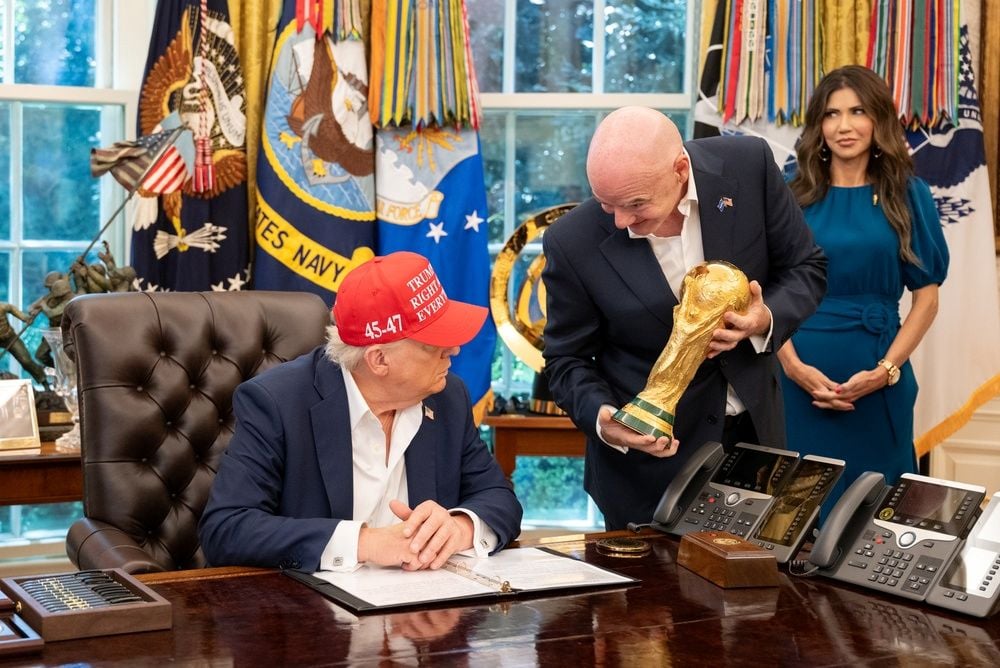
The turning point in this relationship occurred during the 2026 World Cup. The situation worsened with the incident involving American striker Folarin Balogun, whose red card was reversed after a telephone intervention from the then President of the United States, Donald Trump, directly to Infantino. The decision to overturn the punishment provoked a strong reaction from UEFA, which issued an official statement stating that FIFA had “crossed a red line” with this unprecedented action.
Who are the potential opponents for the FIFA president
Among the names that emerge in discussions for the opposition, the most prominent is Aleksander Ceferin, current president of UEFA. Despite his prestige and recognition, the Slovenian leader demonstrated a preference for remaining at the head of the European confederation. He would be willing to seek re-election at UEFA, if there are no other competitors, to avoid a direct confrontation with Gianni Infantino.
Nasser Al-Khelaifi, who presides over Paris Saint-Germain and the European Club Association (ECA), is also a name that gained strength on the list. Some federations, including those of Belgium and Poland, along with other UEFA associations, have expressed support for his possible candidacy. However, the Qatari leader apparently shows no interest in running for the FIFA presidency, and it would take a considerable effort to persuade him to enter the electoral race.
If Al-Khelaifi’s decision is indeed not to run – a scenario considered quite likely – Poland has already indicated its intention to support Dariusz Mioduski, owner of the Legia Warsaw club. Other leaders of federations such as Bosnia and Herzegovina, Norway, Sweden, Germany and Spain have also discussed the feasibility of supporting Mioduski or other potential candidates from the European continent.
On the scene outside Europe, Victor Montagliani, president of Concacaf, is another name mentioned as a possible successor to Infantino. Sources close to the Canadian leader say that, although his current priority is re-election as head of the continental confederation, he has the objective of running for FIFA president in the near future.
Patrice Motsepe, president of the Confederation of African Football (CAF), was also mentioned as someone who could receive support from UEFA. However, the South African leader is considered a close ally of Infantino and would be unlikely to present an opposition candidacy. The expectation is that he will wait until 2031, when the current president will no longer be able to run for office, and then seek the position with the support of Infantino.
The challenges faced by the opposition
The biggest obstacle for European federations lies in the difficulty of garnering enough support to effectively challenge Infantino. Many of its proposals, such as expanding the World Cup to 64 teams and holding the Club World Cup every two years, enjoy broad support from confederations such as CAF, Concacaf and the Asian Football Confederation (AFC), which makes it difficult to form a united front.
Currently, there is no indication that the federations are willing to present a motion of no confidence against the director, despite this possibility having been discussed at the previous FIFA Congress. For several associations, the election itself will represent a plebiscite on management. Thus, the desire of UEFA members to launch a candidate aims, mainly, to ensure a real and substantive dispute for the leadership of the entity.
Gianni Infantino assumed the presidency of FIFA in 2016 and, since then, has managed two re-elections without facing any opposition, the most recent of which was in 2023, guaranteeing his mandate until 2027. The deadline for registering new candidacies for the 2027-2031 cycle extends until November 18, with the vote scheduled to take place on March 18, 2027, in the city of Rabat, Morocco.




