
Sea creature with a transparent head is filmed alive in the depths of the Atlantic

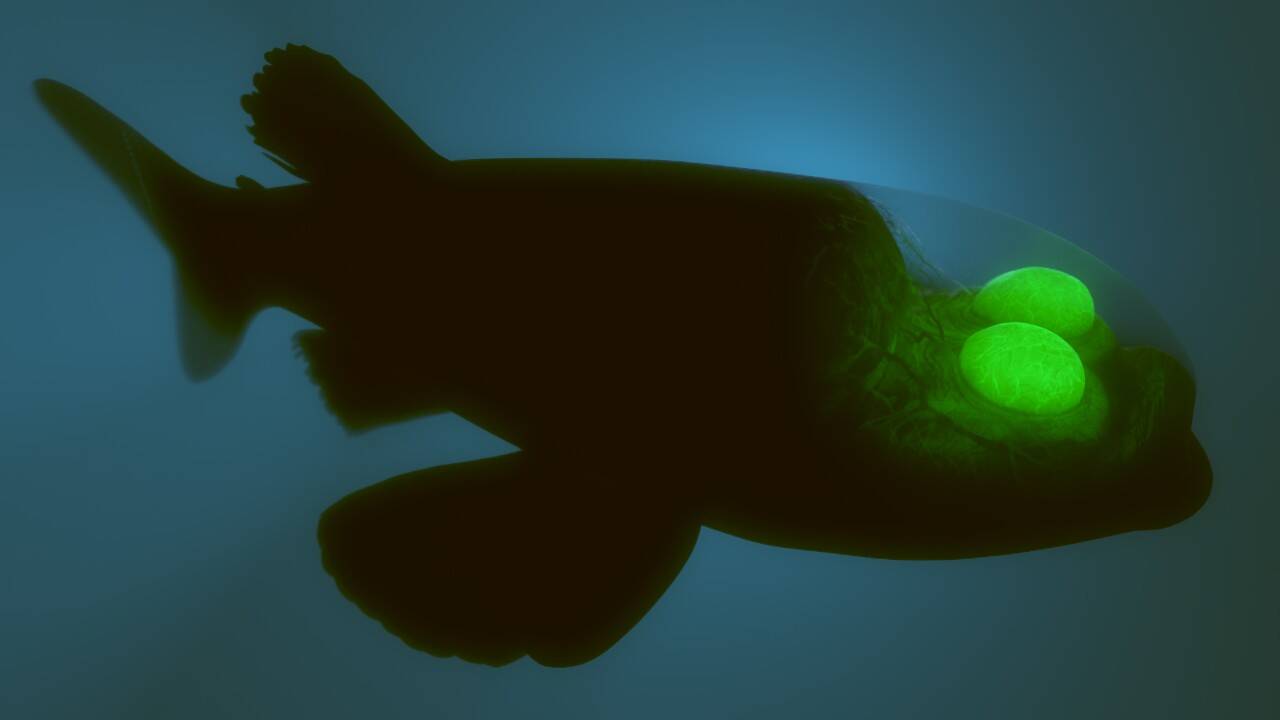
A significant event for marine science recently occurred, revealing an organism adapted to extreme deep-sea conditions. This finding promises to substantially expand understanding of underexplored ecosystems.
This is the first live recording of a rare barrelfish in its natural environment, as announced by the Schmidt Ocean Institute on Tuesday, July 7, 2026.
The creature, known scientifically as Winteria telescopa, was spotted about 710 meters below the surface of the Atlantic Ocean.
This pioneering footage allows researchers to observe in detail the animal’s unique adaptations to the dark depths, something that was previously impossible due to the fragility of the specimens collected.
The unique encounter took place in the Doldrums Fracture Zone, a location recognized for being one of the least investigated oceanic areas in the world.
At that depth, sunlight is almost non-existent, creating challenging habitat conditions for marine life.
How the underwater vehicle recorded the rare fish in its habitat
The observation was part of a scientific research mission led by the Schmidt Ocean Institute.
The remotely operated submarine, named ROV SuBastian, was sent to explore an isolated and abyssal portion of the Atlantic.
Cameras on board the equipment captured the fish swimming freely, without any sign of damage that commonly results from capture in fishing nets.
Before this record, most information about this species came from specimens that were already dead or had changes in their structure.
The fragile translucent constitution of the animal’s head was, in general, disintegrated in the process of collecting specimens from the seabed.
In this way, the recent video offers a unique perspective to study natural features that were rarely kept intact outside the deep ocean.
The function and unusual shape of tube eyes
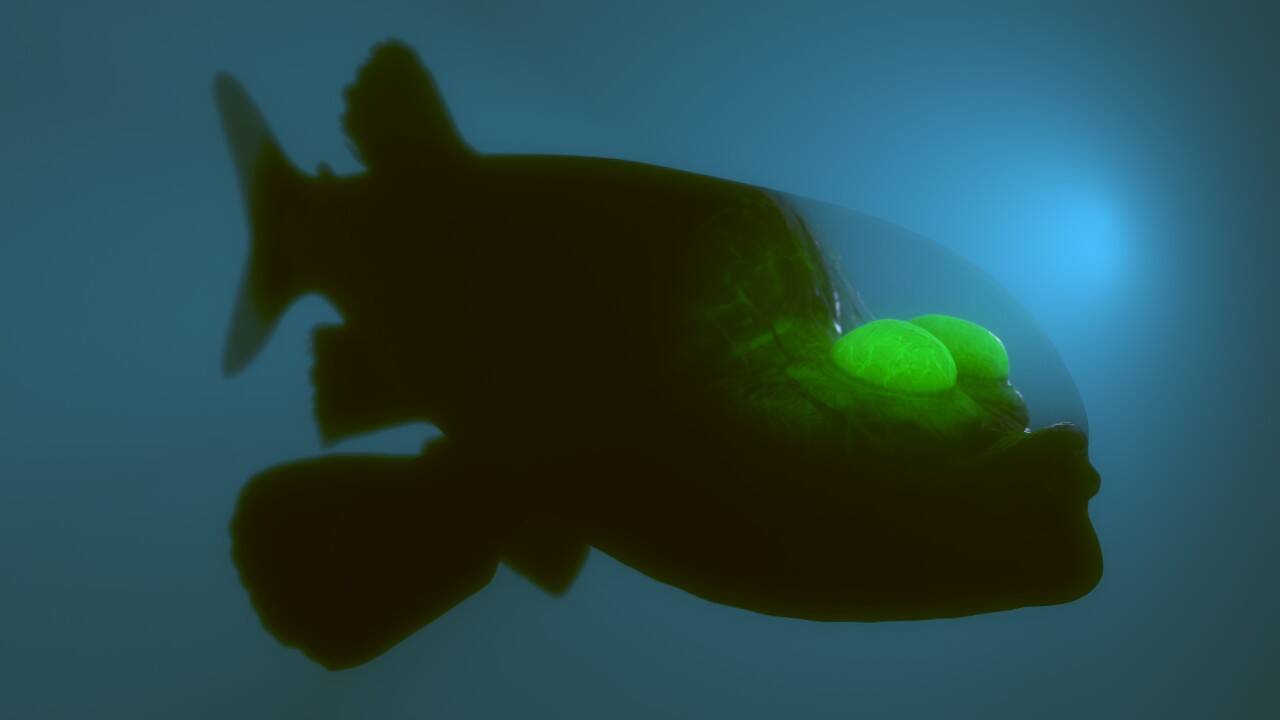
Winteria telescopa exhibits an eye configuration that differs significantly from most fish species.
Its tubular-shaped eyes are permanently pointed upwards, a crucial feature for finding prey in the vast depths.
This particularity allows the fish to discern the silhouettes of potential food against the faint glow that filters from the surface.
Organisms such as squid and jellyfish are examples of prey that can be spotted as they move above the barrelfish.
The specialization of these eyes also helps identify the subtle flashes of bioluminescence produced by other forms of ocean life.
This ability expands food options in an environment where light is extremely limited.
The transparent dome that protects the fish’s head
The most distinctive feature of the barrelfish is the dome of transparent tissue that covers its cephalic region.
Through this peculiar covering, it is possible to visualize the creature’s eyes located inside its own skull.
Researchers suggest that this translucent structure also plays a defensive role during the search for food.
This natural shield can protect the fish from possible damage caused by the stinging cells of jellyfish.
This way, the eyes would remain safe while the fish approaches organisms floating in the waters.
The integrity of this structure is of immense relevance for the continuity of scientific research on the species.
The modest size of the barrelfish and its adaptations
Despite its notable appearance in the footage, the barrelfish is relatively small in size.
The species typically reaches between 10 and 15 centimeters in length, equivalent to the size of a banana. Its physical particularities illustrate the ability of marine life to create unique solutions for harsh habitats.
Tube-shaped eyes, a transparent head, and keen low-light perception are vital components of its survival strategy.
The animal’s unique conformation directly reflects the challenging conditions present in the deepest layers of the ocean.
Other important discoveries of the scientific expedition
The barrelfish footage did not represent the only significant discovery achieved by the research mission.
The team of explorers also spotted rare squids, characterized by large fins, in the investigated area.
Additionally, new hydrothermal vent systems were mapped and identified throughout the activities.
The variety of life and phenomena found exceeded the initial predictions of the scientists participating in the endeavor.
Each new image and specimen collected expands understanding of abyssal ecosystems, which still remain largely unexplored.
The relevance of the discovery for marine biology according to expert
Assistant professor Paula Zapata Ramirez, from the Universidad Pontificia Bolivariana, emphasized the strategic importance of the recent expedition.
The specialist stated that each element collected, whether a sample or an image, brings scientific knowledge closer to still unknown parts of the globe.
For Paula Zapata Ramirez, the initiative contributes substantially to a more comprehensive understanding of the complex ecosystems that inhabit the most distant areas.
The filming of Winteria telescopa is seen as a crucial step forward for research in the field of marine biology.
Furthermore, the record serves as evidence of the potential of underwater technologies to reveal species maintained in their natural state within their original environments.
The mystery of the Atlantic depths and future explorations
This inaugural footage of the living species underscores the vast expanse of knowledge that still lurks beneath the surface of the oceans.
Vast abyssal regions cover a significant portion of the planet, but remain some of humanity’s least studied environments.





