
Ukraine displays new amphibious attack drone with machine guns in recent recording

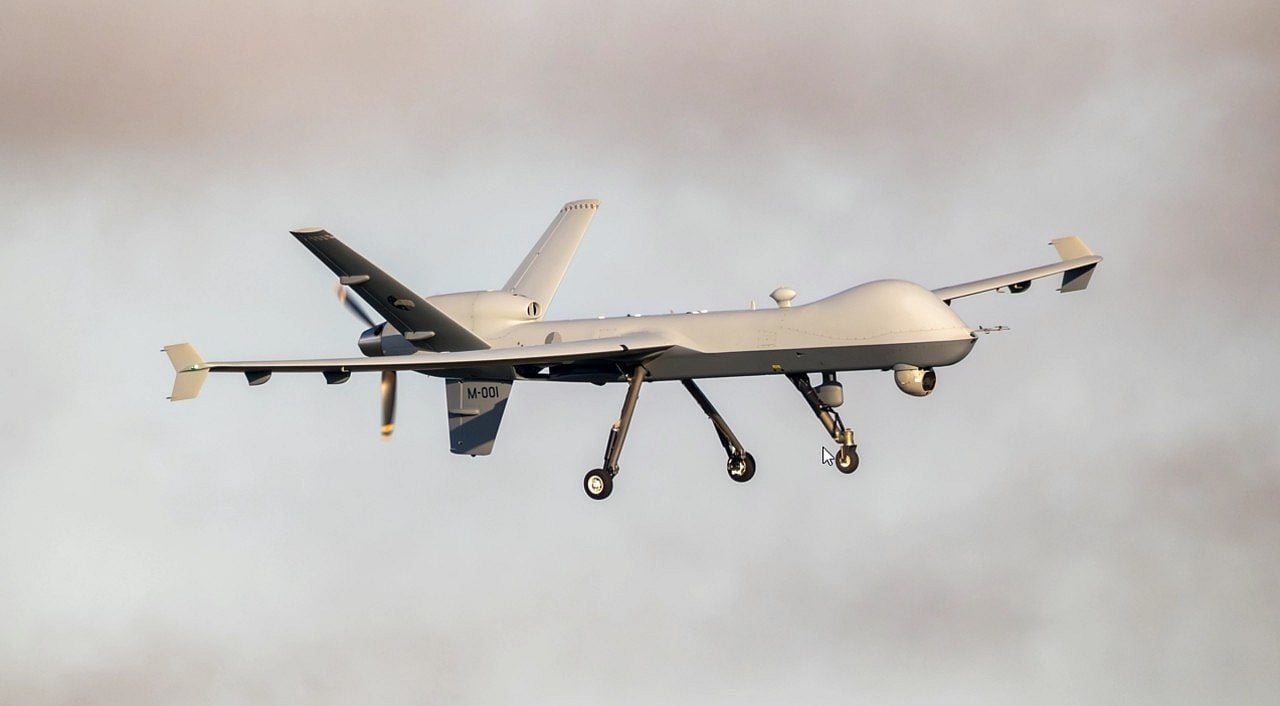
Ukraine’s defense ministry released a video this week that presents a new and innovative weapon in its arsenal: an amphibious landing drone, equipped with machine guns. The revelation underscores the continued evolution of unmanned warfare tactics in the conflict, with remotely controlled vehicles playing an increasingly central role in the country’s military operations.
Presentation of innovative Ukrainian war equipment
The images show an unmanned water vehicle, with a robust design, capable of moving both in the water and on coastal terrain. The most striking feature is the presence of attached machine guns, indicating a direct offensive capability that differs significantly from previously employed explosive naval drones. These multifunctional equipment are designed for missions that require versatility, such as armed reconnaissance, surveillance in hard-to-reach areas, and potentially supporting small-scale landing operations.
The intelligence behind these amphibious drones suggests a breakthrough in asymmetric warfare. Unlike suicide drones that detonate upon hitting their target, this new model appears focused on direct, sustained combat. This capability allows Ukrainian forces to strike coastal or naval targets with suppressive fire, without exposing crews to direct risks, expanding the area of action and the effectiveness of maritime operations.
The intense use of drones in combat strategy
Ukraine has established itself as a global laboratory for innovation in drone technology. Recent data shows that, in June alone, Ukrainian drones participated in an impressive 16 thousand missions. Este número abrange uma vasta gama de veículos, desde drones aéreos de reconhecimento e ataque até veículos navais de superfície e, agora, os anfíbios.
- The scale of these operations demonstrates the deep integration of unmanned systems into Kiev’s military strategy. They are used to:
- Monitoring and collecting information in real time;
- Precision strikes against enemy infrastructure and personnel;
- Defense of positions and tactical support on battle fronts;
- Wear down opposing forces with lower-cost resources.
The growing dependence on drones reflects the search for innovative solutions to compensate for disadvantages in terms of conventional air and naval power.
Strategic repercussions for Russian forces in the Black Sea
The introduction of amphibious drones with direct firepower creates new complexities for Russian defenses, especially in the Black Sea region and along its occupied coasts. Ships in the Russian fleet already face constant threats from explosive naval drones; The addition of vehicles capable of operating in different environments (land and water) and engaging targets with machine guns further diversifies attack vectors.
- This type of equipment can be used to:
- Attack smaller vessels and coastal defenses with greater stealth;
- Carry out harassment operations in Russian patrol areas;
- Provide fire support for special units on coastal raids.
The ability to disembark and operate on land for short periods, even if limited, opens up a range of tactical possibilities for Ukrainian forces, making the protection of Russian ports and naval bases even more challenging. Russia will be forced to invest in new countermeasures and detection technologies to confront this evolving threat.
Operational and tactical challenges of using unmanned vehicles
Despite the strategic potential, large-scale operation of amphibious drones presents significant challenges. Maintenance of these vehicles, training of specialized operators and resilience against electronic countermeasures (CEMA) and enemy air defenses are crucial aspects. The lifespan of a drone in combat can be short, and constant replacement requires a robust supply chain and production capacity.
Coordinating these drones with other land and naval units is also complex, requiring secure and integrated communication systems. Furthermore, the efficiency of its use depends on prior intelligence and the ability to adapt to rapid changes in the battle scenario, underlining the need for a constantly improving operational doctrine.
The future of asymmetric warfare with the evolution of drones
Ukraine has become a stage where the future of asymmetric warfare is being shaped in real time. Continued innovation in drones, such as the new amphibious model, demonstrates a global trend toward increasingly autonomous and multifunctional unmanned systems. The integration of artificial intelligence and the ability to operate in hostile environments, with minimal human intervention, promise to redefine the parameters of armed conflicts.
This development underscores the importance of technological adaptability and the ability to innovate in the midst of high-intensity conflict. The Ukrainian lesson, with its rapid prototyping and deployment of new weapons, serves as a case study for armies around the world seeking to modernize their forces and exploit the advantages of unmanned vehicles. Drone warfare is expanding, and its consequences have yet to be fully understood.





