
Record T. rex auction for US$50 million raises scientific concern

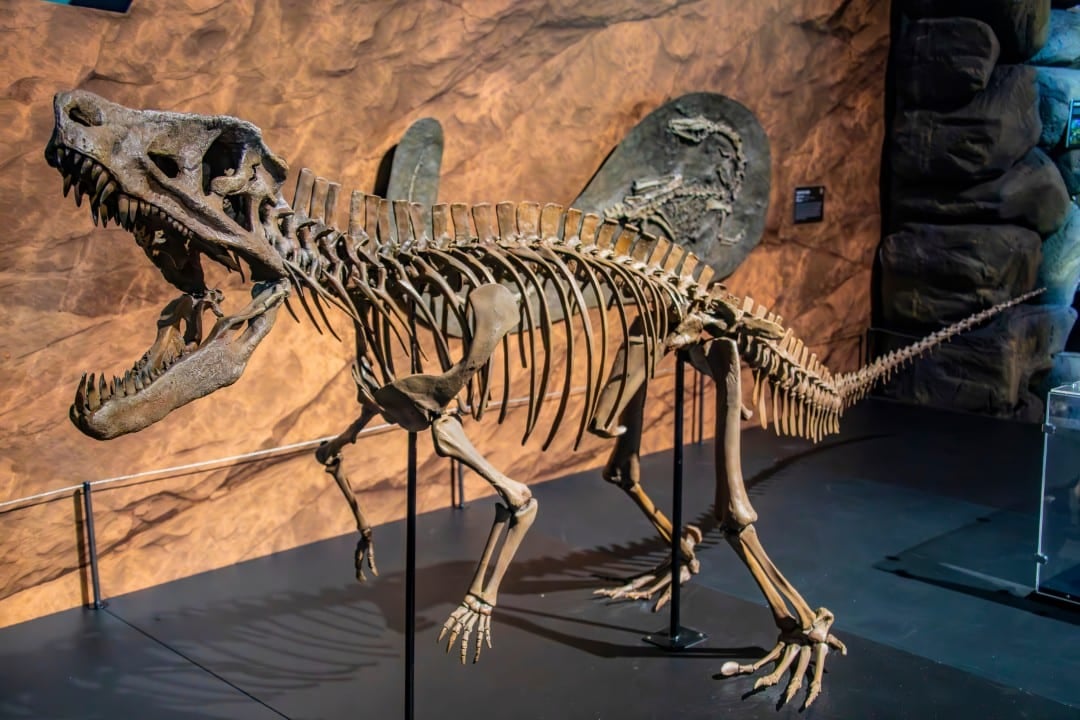
A Tyrannosaurus rex dinosaur skeleton, affectionately nicknamed “Gus”, fetched an impressive US$50 million at an auction held by Sotheby’s. The record sale, which far exceeded initial estimates, sparked a heated debate in the scientific community about access to such valuable specimens as they enter private collections.
Surprising value and the lament of science
Bidding for “Gus,” one of the most complete T. rex skeletons ever discovered and dating back 67 million years, started at $20 to $30 million but soared to the final $50 million mark, a new record for a dinosaur fossil. This amount was offered by telephone, highlighting the strong interest from collectors.
Cassandra Hatton, Sotheby’s vice-chairman and global head of science and natural history, celebrated the result as “the fruit of years of work” and a recognition of the “appropriate care” the specimen received. However, acquisition by a private buyer means that access to the fossil for research and public display could be significantly restricted, a point of lament among paleontologists who see science losing opportunities for study and society losing opportunities for education.
Discovery and meticulous reconstruction of “Gus”
The “Gus” specimen was unearthed on the land of a farmer, Gary “Gus” Licking, in the US state of South Dakota, where the dinosaur got its nickname. Between 2021 and 2023, an excavation team dedicated itself to recovering the fossilized remains, a process that took time and persistence in challenging conditions.
Thomas Heitkamp, president of Theropoda Expeditions, the company responsible for the excavation, reported that the work went on for weeks, sometimes without immediate results. After the excavation, the next three years were dedicated to reassembling the 183 fossilized bony elements that make up T. rex, a meticulous effort that ensured the integrity and completeness of the skeleton.
Unique features that elevate the value of T. rex
The skeleton of “Gus” stands out not only for its impressive size, measuring approximately 11.6 meters long and 3.8 meters high, but also for its remarkable preservation. These are some of the features that make it an invaluable find:
- Specimen name:Gus
- Period:Cretaceous (67 million years)
- Discovery location:South Dakota, USA
- Estimated length:11.6 meters
- Estimated height:3.8 meters
- Percentage of complete bones:Around 63% of the total
- Preserved bone mass:Up to 80% of original bone mass
- Skull conservation:82% with intact original teeth
- Signs of life:Fractures, scars and bite marks evident on the bones, offering insights into his life and interactions.
The high percentage of preserved bones and bone mass, especially the nearly intact condition of the skull with its original teeth, gives “Gus” extraordinary paleontological and scientific value. Fracture and bite marks provide crucial data for understanding the behavior and biology of Tyrannosaurus rex.
The debate about fossils in private collections
The sale of “Gus” reflects a growing “dinosaur market,” as described by Cassandra Hatton of Sotheby’s, where interest in these specimens extends beyond museums and scientific foundations to private collectors. Although this generates record sales, the scientific community expresses concern about the fate of fossils of unique relevance.
When a fossil is acquired by a private collection, there is a risk that it will become inaccessible to researchers, limiting in-depth comparative studies that could advance knowledge about paleontology. Furthermore, society may be deprived of the opportunity to contemplate and learn from these treasures in public exhibitions, losing a direct connection to natural history. This dilemma between commercial value and scientific and cultural value continues to be a point of contention in the world of paleontology.
Future implications for paleontological research
The acquisition of “Gus” by a private buyer highlights a trend that could shape the future of paleontology research. Restricting access to complete and well-preserved specimens can hinder the development of new theories and the validation of existing hypotheses, depending on the goodwill of the owners. Experts argue that fossils like “Gus” are not just valuables, but crucial archives of the history of life on Earth.
Despite excellence in excavation and preparation, the lack of unrestricted access for the academic community may mean that some of its scientific potential will remain unexplored. The record sale, therefore, is a vivid reminder of the constant tension between market demand for art and collections and the imperative need to preserve natural heritage for the benefit of global science.





