Discovery in Sweden reveals that medieval adults and children buried together had no family ties

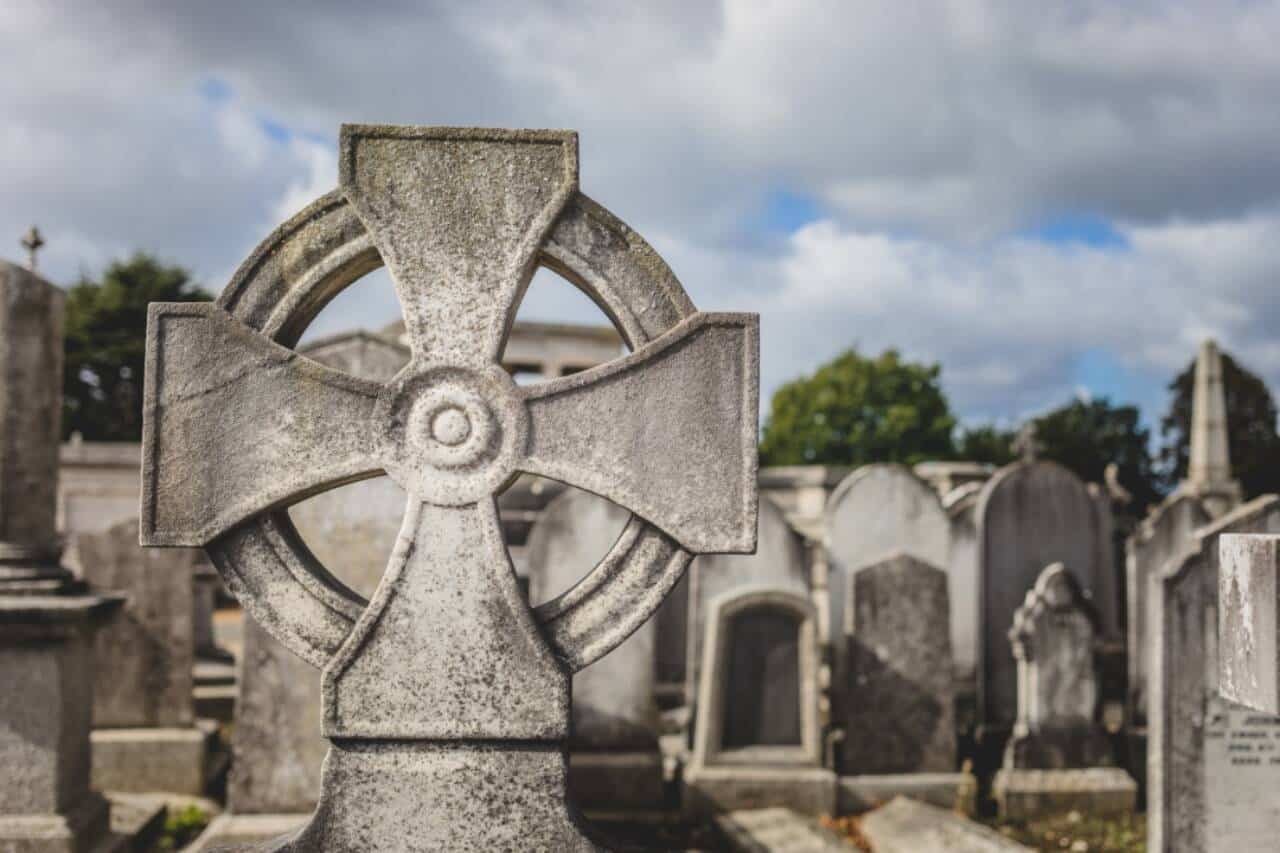
Researchers made a surprising find in three medieval cemeteries located in Sweden, where graves with children and adults buried side by side were found and, despite their proximity, they did not have any biological link.
Early Christian communities in Sweden had the habit of burying young people and adults in the same tombs. However, recent archaeological analyzes have indicated that these individuals were rarely biologically related, raising significant doubts about the funerary customs practiced during the Middle Ages and how society at the time organized its dead beyond blood ties.
To delve deeper into this issue, a new study was dedicated to analyzing the DNA of 142 skeletons. The remains, dating from the 10th to 14th centuries, were taken from three Swedish cemeteries, with particular emphasis on multiple burials that contained at least two people.
“It is common to assume that adults and children who share a grave are parents and children or other close family members,” said Maja Krzewińska, paleogeneticist and lead author of the research at Stockholm University, in an official statement. “However, in most cases, our findings contradicted this assumption.”

The team’s results indicated that most mass burials included both adult individuals and children. It was also noted that those buried together were often of the same sex – a woman with a girl or a man with a boy. DNA analysis, however, brought the unexpected revelation that these individuals, for the most part, did not have close biological ties.
From the end of the 10th century, the expansion of Christianity in Scandinavia led to a standardization in funeral ceremonies. The tombs began to be arranged in an east-west direction, and the bodies were wrapped in simple shrouds, devoid of goods or ornaments. Only baptized individuals could be buried in designated cemeteries, while children who died before baptism were traditionally excluded.
“We have previously examined a tomb containing an adult and the remains of a fetus, which we consider to represent an individual who had not been baptized,” Krzewińska reported.
Such atypical burial configurations probably hark back to ancient Christian customs. One hypothesis is that some of the children buried with adults in the current study may not have been baptized. Generally prohibited from being buried in cemeteries, these children could have been placed with an adult as a way of circumventing religious rules. Another explanation for unrelated burials would be the need to bury the deceased in the spring, after the harshness of winter, when the frozen ground made burial unfeasible.
“We also consider, based on more distant genetic affinities, that certain multiple burials may indicate more distant family ties, or even kinship connections that were not biological,” explained Krzewińska.
In medieval Scandinavia, between the 10th and 14th centuries, family structures often encompassed not only close relatives but also distant family members, servants, servants, and enslaved individuals. The researchers noted that, although genetic kinship was crucial to social organization, integration into the local Christian community could have equal weight in deciding the location and company of burials.
“For a long time, archaeologists have debated the relationships between individuals buried in shared graves,” said Anna Kjellström, co-author of the research and archaeologist at Stockholm University. “Ancient DNA has finally given us the tool we’ve been waiting for to investigate these interpretations directly.”
Evidence of persistent family ties in cemeteries
In parallel with collective burials without biological links, archaeologists also found evidence that some families maintained the tradition of being buried in the same cemetery for several generations. A notable example is the tomb of “Lady 56”, a Christian pilgrim whose remains indicated a link to three generations of relatives.
Lady 56, who died around the age of 30, was buried with a very unusual scallop shell. This object was an emblem of the apostle James, obtained after his completion of a pilgrimage to Santiago de Compostela, a location in northwestern Spain, marking the border of Christian Europe.
Krzewińska also mentioned that the researchers were able to identify the family group of Lady 56, a lineage of great relevance to the community and which spanned several generations in the Västerhus cemetery. Genetic analysis confirmed that Lady 56’s parents, brother and daughters were also buried there, although in separate tombs.
The site of Västerhus was part of a country estate belonging to a wealthy landowner between the 11th and 14th centuries. The cemetery housed the remains of more than a dozen individuals from a genetically linked group, many of whom were buried alongside members of another kin group, indicating complex social interactions.
DNA links observed between the Västerhus core family and other kinship groups in the cemetery confirm the prominent status of this core family. These discoveries of burials of close relatives highlight the relevance of ancient DNA testing to understand that, in the same time and location, burial traditions could vary significantly.