
Koala reproductive cells are frozen in Australia in efforts against extinction


Researchers in Australia have begun a crucial project to preserve the koala species by freezing their eggs and sperm. The initiative, announced this week, creates a “gene reserve” essential to protect the wild population from the imminent threat of extinction.
This reserve of genetic material can be used to form healthy koala embryos, using techniques such as artificial insemination and in vitro fertilization (IVF). The research team explained that, with the death of koalas (Phascolarctos cinereus), there is an irreversible loss of unique genetic characteristics, which are crucial for the species’ adaptation to new environments. The project, therefore, appears as a solution for storing this valuable genetic heritage.
Andres Gambini, a reproductive biologist at the University of Queensland and participant in the study, highlighted that the reduction in genetic diversity could compromise the resilience of future generations and limit the species’ ability to adapt to new challenges. According to Gambini, the project establishes a safe and organized methodology for the rescue and conservation of koala sperm and eggs, aiming to strengthen future conservation programs.
The situation of koalas in Australia is complex and paradoxical. In regions of Queensland and New South Wales, the number of individuals has suffered a drastic reduction, reaching 80% since the late 1990s. Factors such as deforestation, large fires, periods of drought and disease are the main causes of this drop. In response, the Australian government in 2022 reclassified the conservation status of koalas in the eastern part of the country from “vulnerable” to “endangered”.
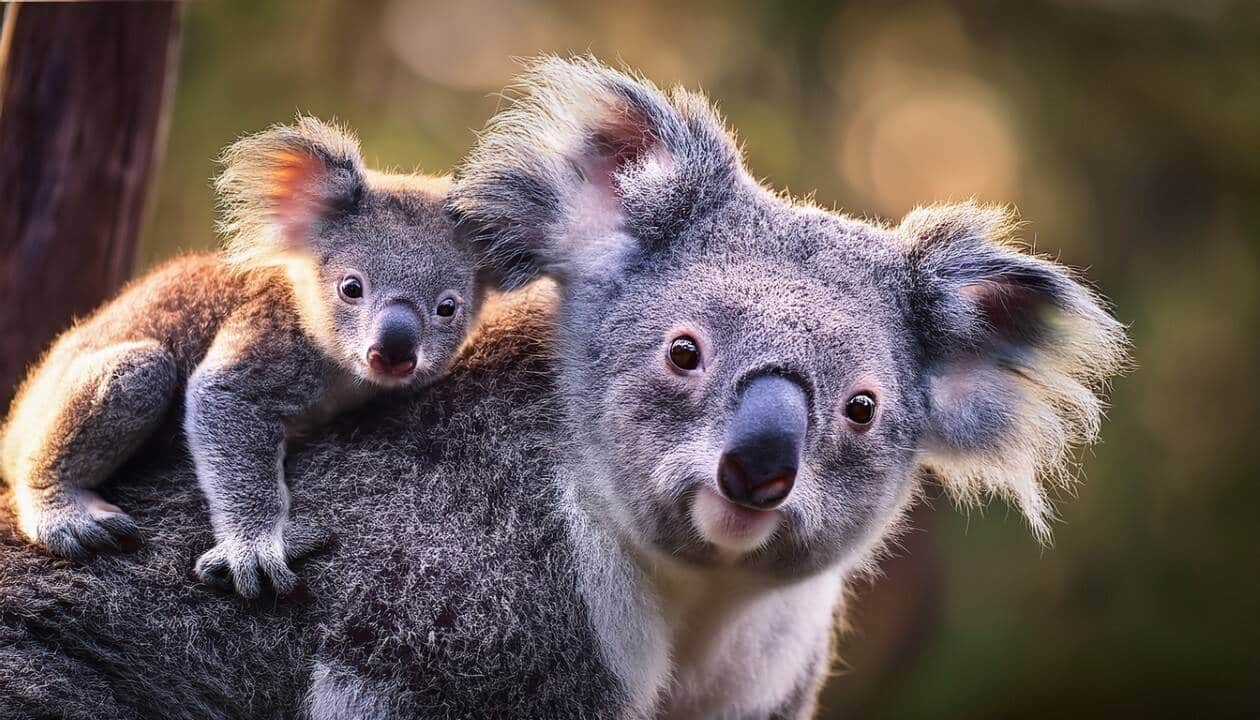
On the other hand, some areas of southern Australia face a koala overpopulation problem. However, recent studies indicate that these locations, currently considered prosperous for the species, may not be able to maintain such a high number of animals for a long period. The reason is that koalas are excessively consuming vegetation, leading to the death of trees essential for their own survival and for the local ecosystem.
To reverse the population decline of koalas, scientists are using liquid nitrogen (LN2) to freeze the animals’ reproductive cells, keeping them at -196 degrees Celsius. Vincent Lynch, evolutionary biologist and associate professor of biological sciences at the University at Buffalo in New York, explained that this cryopreservation technique allows cells to be stored for many decades, remaining viable until they are used.
Every year, several koalas are sent to hospitals specializing in wild animals, victims of illnesses or injuries, and a significant portion of these animals, unfortunately, do not survive.
“I was able to reactivate cells that had been frozen in liquid nitrogen for a few decades,” said Lynch, who, despite not directly participating in the current koala project, brought an important perspective on the effectiveness of long-term cryopreservation.
An official statement details that sperm and eggs will be obtained from wildlife hospitals. At these locations, sex cells will be collected from koalas that have died or that, due to trauma or disease, have lost the ability to reproduce naturally.
“Each year, large numbers of koalas are taken to wildlife hospitals because of illness or injury, and not all of them survive,” Gambini reiterated.
After collection, the cells will undergo tests to identify the presence of Chlamydia pecorum, a variation of chlamydia with high contagion and lethality. In koalas, this infection causes painful conditions in the urinary tract, gastrointestinal disorders and conjunctivitis, culminating, in some cases, in blindness. Additionally, it causes infertility in females. C. pecorum is recognized as one of the main reasons for the decline in the koala population in recent years, directly impacting the birth rate of cubs. In the most affected areas, such as Queensland and New South Wales, the incidence of chlamydia reaches almost 90% of animals.
If the reproductive cells contain the bacteria C. pecorum, there is “technology available to eliminate the infection from the samples”, explained Steve Johnston, associate professor of animal reproduction and captive breeding at the University of Queensland, who also works on the koala conservation project.
Steve Johnston, in 1998, was already part of the team at the University of Queensland responsible for creating the first koala cub through artificial insemination in the world. This new project is also based on a 2025 study, led by Gambini, which managed to produce the first kangaroo embryos via in vitro fertilization. At that time, the embryos did not generate births, and scientists projected that this would take another decade to achieve.
The exact amount of sperm and eggs that will be frozen by researchers has not yet been defined, and Lynch notes that determining the number needed to ensure the health of koala populations is a challenge, as this demand tends to grow over time. As koalas continue to decline, the loss of genetic material is accelerating, which will require the team to collect even greater samples to preserve an adequate level of diversity.
Gambini emphasized that, although the project does not replace established conservation methods — such as protecting habitats, controlling diseases and monitoring populations — researchers consider action urgent. There is no time to wait until koala populations are further reduced, making the recovery of genetic diversity significantly more complex.
Despite widespread concern from environmentalists about the rapidly shrinking koala population, Lynch expressed optimism, stating that “there is a real chance” that scientists could save the species through cryopreservation.
“I support multifaceted approaches like this,” Lynch concluded. He highlighted that “by preserving the environment with traditional conservation, we allow reintroductions because the species have somewhere to live”, highlighting the importance of an integrated strategy.





