
Brazil’s deep waters reveal 31 new species in record expedition


A scientific expedition revealed the existence of 31 new species in deep-water regions of the tropical Atlantic, located off the Brazilian coast, in a period of just two weeks on Tuesday, July 14, 2026. The rapid discovery highlights the ocean’s still unexplored biodiversity.
The unprecedented species were identified in international waters, off the coast of Brazil, within a little explored oceanic area. Researchers at the Schmidt Oceanographic Institute employed an underwater robot, SuBastian, to investigate the “intermediate zone”, a vast environment between the solar surface and the seabed, considered the largest habitat on the planet.
“The mesopelagic zone, considered the largest terrestrial habitat, is home to incredible marine fauna that we have only begun to uncover,” said Dr. Karen Osborn, chief scientist for the mission and researcher at the Smithsonian National Museum of Natural History.
Exotic creatures found at the bottom of the Brazilian sea
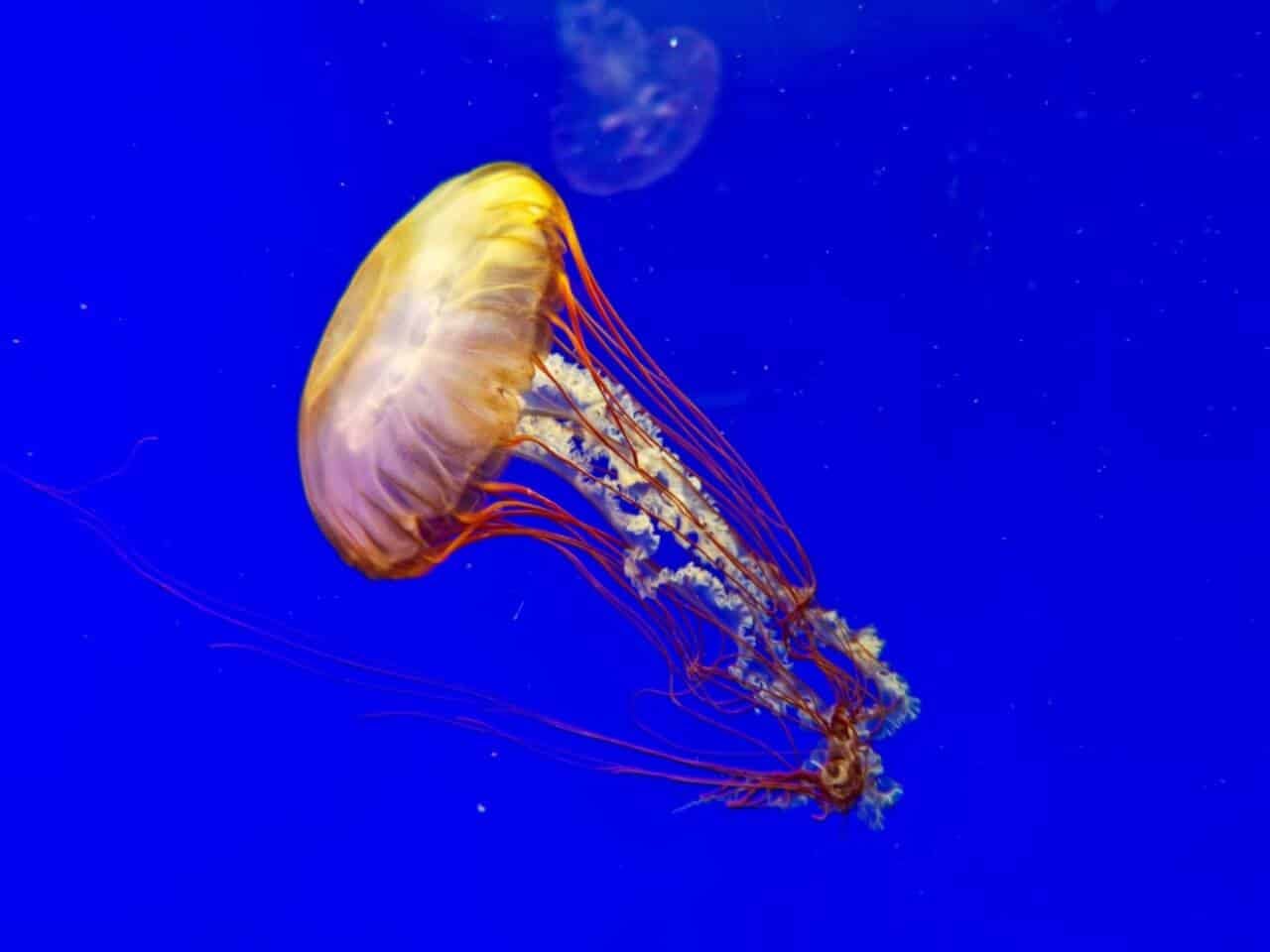
Among the revelations are nine new types of jellyfish, seven ctenophores and seven siphonophores. Four larvaceans were also identified, beings that resemble tadpoles and live in mucus cocoons, as well as a worm with a spider web appearance, an amphipod crustacean and two unicellular microorganisms of size visible to the naked eye.
Some of the newly cataloged species exhibit unique characteristics. A ctenophore, for example, has a transparent body like glass, making it almost invisible, with the exception of a dark red abdomen that serves as camouflage for the prey, sometimes bioluminescent, that it ingests.
Another discovery, a jellyfish of the genus Bathykorus, has a helmet shape and four firm tentacles, inhabiting extreme depths. It had only been observed by robotic vehicles before being captured by SuBastian operators from more than 800 meters away. The expedition also recorded a female octopus feeding on a red jellyfish and a juvenile glass squid.
How technology has accelerated the identification of marine species
Typically, the process of identifying and confirming a new marine species can take several decades. However, the team managed to validate the existence of the 31 species in a record time of just 14 days.
The agility of this confirmation resulted from the combination of high-resolution images with genomic sequencing carried out directly on board the vessel. This innovative method allows scientists to analyze these fragile beings without damaging them, as many would not resist capture by nets. The team also achieved an unprecedented feat by generating 3D images of living cellular structures in a marine environment.
For Dr. Manu Prakash, from Stanford University, the ability to generate 3D cellular images is already a significant advance. “This opens a new avenue for investigating deep-ocean physiology, connecting cellular structures to the functionality of organisms,” he explained.
Understanding life in the mesopelagic zone is fundamental to the global understanding of the planet, as this region drives vital oceanic processes such as the carbon cycle. The ocean’s ability to store carbon is directly influenced by the ecosystems of this vast area, highlighting the relevance of these findings to environmental health.
The depths of the oceans, therefore, continue to be a repository of mysteries and new species waiting to be revealed.





