
Harvard scientist with controversial theses is appointed to UFO council in the Trump administration

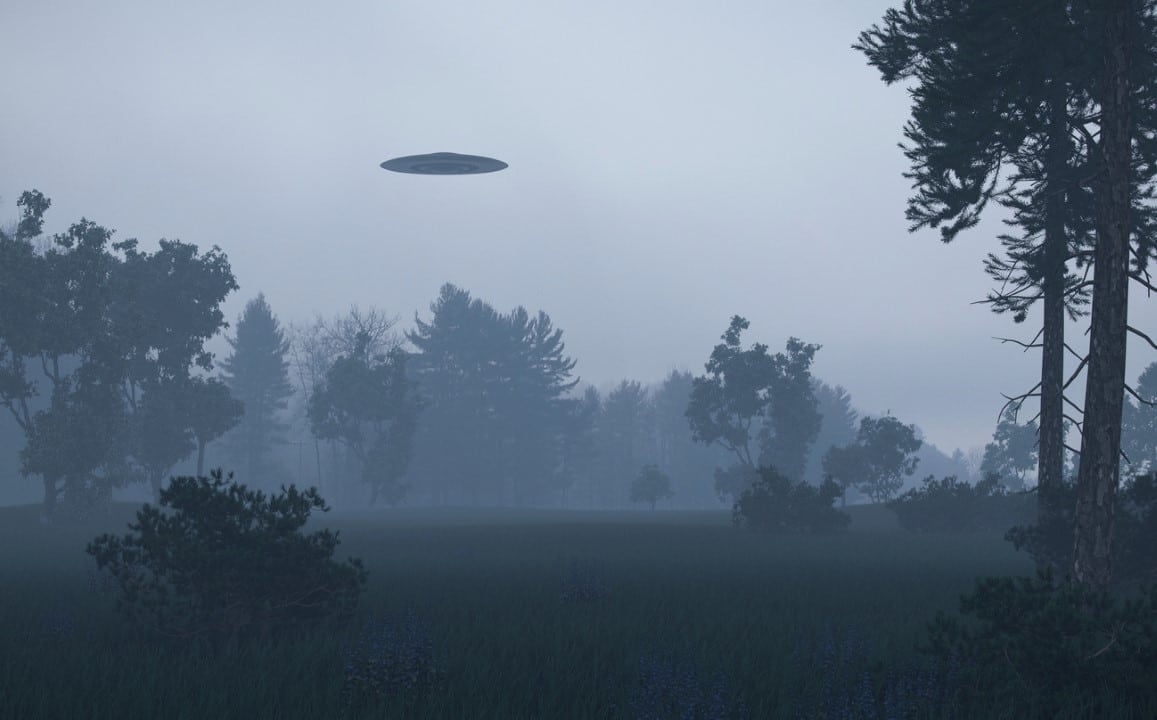
A renowned Harvard astronomer known for his controversial theories about extraterrestrial visitations has been chosen by the Trump administration to lead a new group of scientists. The appointment aims to study the national security risks posed by Unidentified Flying Objects (UFOs).
Avi Loeb, a cosmologist with a background in studying black holes and who headed Harvard’s astronomy department until 2020, has been tasked with chairing a scientific advisory board. The group will have the mission of investigating the origin of mysterious spheres and other objects reported by the military in recent years.
Loeb’s team will report to a newly created panel, which focuses on UFOs, now often called Unidentified Anomalous Phenomena (UAP). This panel was established by the Office of the Director of National Intelligence (ODNI) and is part of an initiative launched by President Donald Trump in February that seeks to declassify more information on the subject.
Loeb himself described his work as a “detective story”, highlighting the enthusiasm of the task. He stated that it is a “really fun experience, as long as you don’t pay too much attention to the critics”.
For the past ten years, Loeb has dedicated himself to searching for evidence of intelligent extraterrestrial life, exploring the skies and oceans. Their journey began in 2017, when scientists were intrigued by an interstellar object passing by Earth. While most suggested it was a comet or chunk of ice, Loeb hypothesized that it could be a thin “light sail” detached from an alien spacecraft.
While his theories have won over enthusiasts in UFO circles, they often generate friction with his academic peers. Other astronomers accuse him of making extravagant claims with little scientific substantiation. There are also those who criticize his habit of releasing his ideas directly to the public, instead of following the traditional peer review process.
Steve Desch, an astrophysicist at Arizona State University and one of Loeb’s critics, argues that his colleague uses flawed methods to reach bold conclusions about alien life. He also points out that Loeb avoids a more established strand of science that searches for life beyond Earth.
Desch expressed skepticism about Loeb’s appointment, saying his participation on the new panel raises doubts about the seriousness of the entire effort. “I don’t know what will come of this, but we won’t get any closer to answering these questions with him in charge,” Desch said.
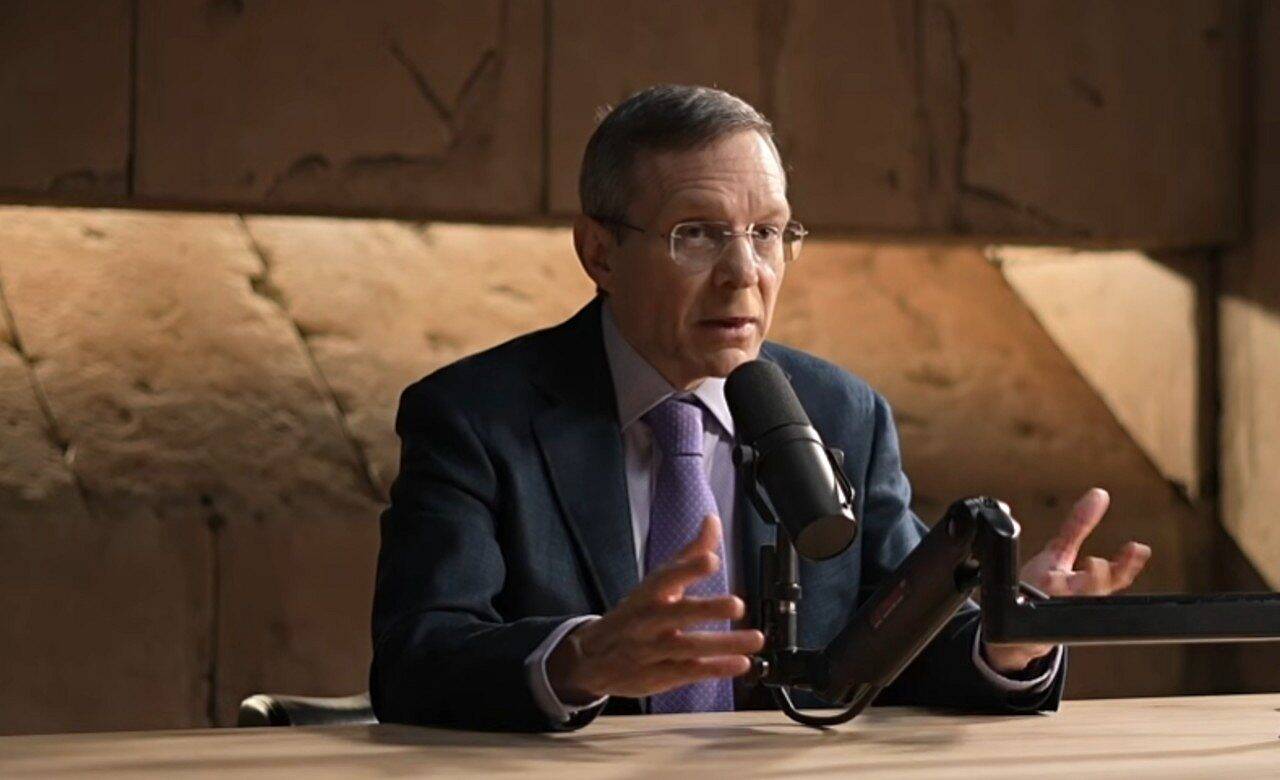
Avi Loeb’s multidisciplinary team to study anomalous phenomena includes activists and billionaire
Loeb ignores the criticism, claiming that his detractors lack the imagination necessary to consider new ideas. He promised a grounded approach to his work for the Trump administration. In analyzing UAPs, Loeb plans to start with the premise that they are human in origin, approaching the issue from a national security perspective.
Still, the professor sees a result in which his work can lead to something greater. Loeb believes that if the government invests in better data collection on UAPs, it could finally resolve the debate over the existence of alien life.
His hand-picked team is made up of more than a dozen scientists and UFO activists. Among the members is Timothy Gallaudet, a retired rear admiral who warned about UAPs controlled by “non-human intelligence”, claiming that the United States has recovered crashed aircraft. Ben Lamm, a billionaire involved in trying to revive extinct species, is also part of the group.
After its first meeting, held last month, the team requested more than 50 videos, images and other documents related to known UAP incidents from the Pentagon. Loeb’s group meets behind closed doors, but he has promised to inform the public and create a website to share the findings.
“At a time when science is not as celebrated, this is an opportunity to do good for all sides involved,” said Loeb.
Creation of new UAP council reflects Trump administration transparency order
Earlier this year, Trump ordered his administration to provide more transparency on UFO and extraterrestrial life issues. So far, the Pentagon has released three batches of files, ranging from old FBI reports to more recent military videos showing orbs moving quickly across the sky.
Trump’s directive resulted in the creation of a UAP Governance Council, overseen by the Office of the Director of National Intelligence. The council met for the first time in June and has the support of Loeb’s team and several other advisory groups, as reported by ODNI. The relevance of this movement intensifies when considering the growing public interest and bipartisan pressure in Congress for more clarification, even though the Pentagon has not found evidence of alien life.
At the same time, a bipartisan group in Congress is pressing the White House to go further, with some Republicans amplifying claims that the US is hiding evidence of alien encounters. The White House, in turn, encouraged anyone with information to come forward. A Pentagon office that investigates UAPs says it has found no evidence of extraterrestrial life.
Loeb, however, does not believe in cover-up theories. “My impression is that the government is perplexed at not being able to infer the nature of some of these objects,” he said.
Before focusing on aliens, Avi Loeb was recognized for his studies on black holes and galaxies
Before he became known for his theories about aliens, Loeb was a respected cosmologist, author of hundreds of articles, specializing in black holes and the birth of galaxies. He chaired Harvard’s astronomy department for nearly a decade.
Loeb’s career took a different turn with his “light candle” theory in 2017, presented in an article and later in a book. He then founded the Galileo Project at Harvard, with the stated mission of seeking artifacts from alien civilizations.
His team attracted attention in 2023 when they used magnets to retrieve hundreds of small spheres from the floor of the Pacific Ocean, near the possible site of a 2014 meteor strike. After analyzing the metallic “spherules,” Loeb suggested that they came from a distant planet or, alternatively, alien technology.
Other scholars disputed the claim, saying they were likely volcanic rocks or coal ash.
Sean Kirkpatrick, a physicist who has investigated UAPs in the Pentagon’s Office of All-Domain Anomaly Resolution, said Loeb is “not viewed favorably” in the scientific community and lacks national security experience. He suggested that the makeup of Loeb’s team indicates that the Trump administration is more interested in “fringe” theories than rigorous science.
The White House did not respond to a request for comment on the criticism.
Loeb, in turn, stated that he intends to pursue science without distractions. “Let’s keep our eyes on the orbs,” he said, “not on social media.”





