
Scientists discover how giant isopod survives for years without food in the deep ocean

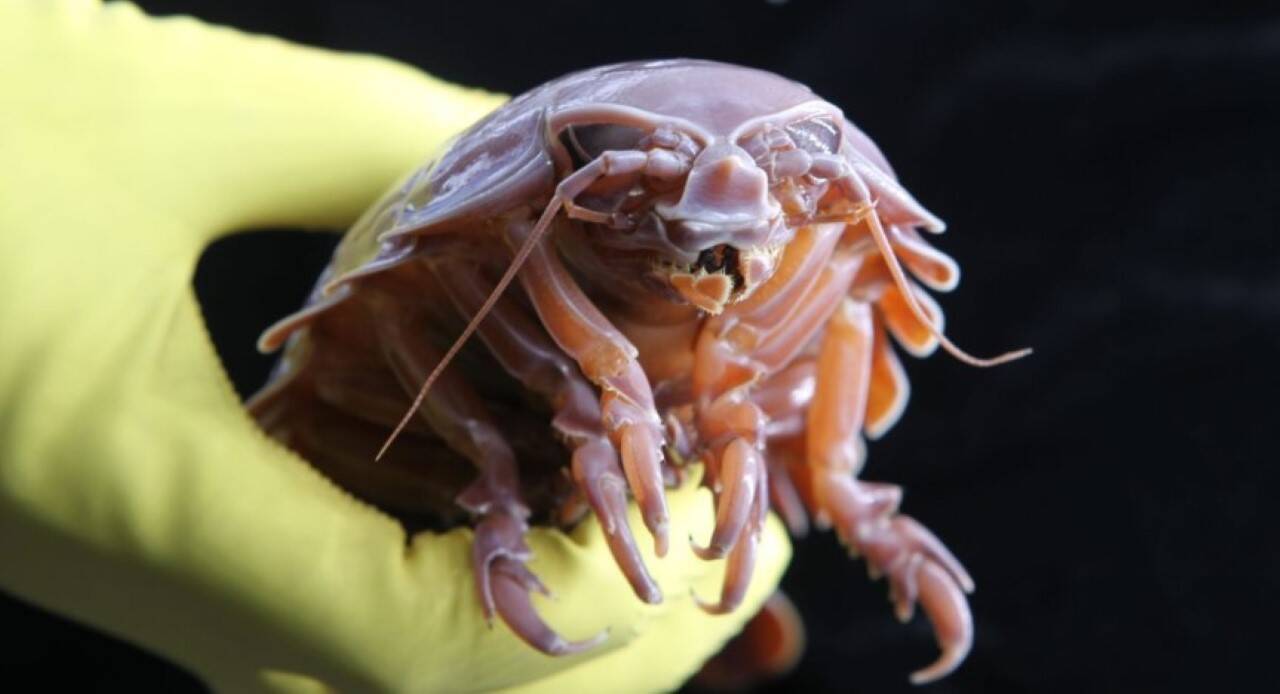
A mysterious creature that lives in the depths of the ocean has the surprising ability to survive for up to five years without eating any food. This phenomenon, which puzzled the scientific community for a long time, was finally unveiled by researchers. The supergiant batinomid, a type of isopod that can exceed the size of a football, thrives in one of the bleakest ecosystems on the planet.
Survival in the abyss: an evolutionary puzzle
The ability of a large animal to thrive in an environment where resources are scarce and food availability is unpredictable poses a challenge to biological understanding. The deep ocean is characterized by extreme conditions, including a lack of sunlight and a reliance on debris falling from the surface, making every feeding opportunity vital. The question of how the giant isopod manages to not only survive, but also grow significantly, has been a focus of investigation.
A research team from the Institute of Oceanology of the Chinese Academy of Sciences (IOCAS) set out to investigate this fundamental question. Through an innovative approach that combined multi-omics analyzes with functional experiments, scientists discovered the mechanisms behind these crustaceans’ remarkable resistance to prolonged starvation. The secret lies in the combination of an exceptionally adapted digestive system and improved metabolic control.
Adaptation strategies: maximizing intake and minimizing expenditure
To understand the nuances of these animals’ survival, the researchers examined two distinct species of deep-sea isopods: *Bathynomus jamesi*, found at approximately 898 meters, and *Bathynomus doederleini*, which lives around 300 meters deep. Using comparative genomics, anatomy, physiology, behavior and associated microbiome, the team identified a survival pattern that was described as an “increase revenue and reduce expense” strategy.
This adaptation involves notable anatomical features. In deep-sea isopods, the stomach occupies approximately two-thirds of the animal’s body, a size considerably larger than that of related species that live in shallower waters or intertidal habitats. When filled, this organ contains a finely ground, highly digested, mud-like mixture low in digestive bacteria but rich in chlamydiae, which are associated with lipid storage. This structure and composition suggest that isopods are able to ingest large volumes of food when available, and then process it slowly, while drastically reducing their basal metabolic rate.
A gene borrowed from bacteria revolutionizes metabolism
One of the study’s most intriguing findings was the identification of a gene, ND1, that was horizontally transferred from an external symbiotic bacterium and subsequently incorporated into the isopod genome. This gene is homologous to a component of Complex I of the electron transport chain, playing a fundamental role in energy metabolism.
Despite the challenges that horizontally transferred genes can face when being incorporated into new genomes, ND1 appears to have overcome these barriers, duplicating itself after transfer and reaching extremely high expression levels. The researchers also detected a mechanism that regulates gene expression in these deep-sea isopods through epigenetic changes in histones, which ensures “high efficiency, energy conservation and precise control.” Histone acetylation specifically controls high ND1 expression.
ND1 functional tests and their influence on starvation tolerance
To confirm the function of the ND1 gene, scientists carried out a series of experiments, inserting it into other organisms.
- The ND1 gene was introduced into zebrafish, nematodes and human 293T cells.
- At normal temperatures, ND1 caused an increase in energy metabolism and reduced the organisms’ tolerance to starvation.
- However, under low-temperature conditions, which simulate the deep-sea environment, the insertion of ND1 resulted in the suppression of energy metabolism and the reduction of mitochondrial activity.
- In zebrafish, this suppression translated into a remarkable 37% increase in starvation tolerance.
These results demonstrate that ND1 plays a vital role in tuning the mitochondrial metabolic network, precisely regulating metabolic depression. This modulation capacity is crucial to resolve the dilemma between the high energy needs associated with gigantism and the imperative need to conserve energy in such hostile environments.
New frontiers in understanding life in extreme environments
This study represents an important milestone by being the first to elucidate a new evolutionary strategy. Deep-sea megafauna, in this case giant isopods, reallocate their energy allocation through a combination of horizontal gene transfer and epigenetic optimization. It is proof of the adaptability of life and the complexity of evolutionary mechanisms.
“Our work not only deciphers the mystery of long-term starvation tolerance in deep-sea isopods,” said Jianbo Yuan, first author of the study, “but also provides an essential paradigm for understanding how life balances growth and survival in extreme environments.” The discoveries pave the way for a deeper understanding of biological resilience and the limits of life in adverse conditions, providing valuable *insights* into the evolution and ecology of the deep ocean.





