
Baseus Card Magnetic Air arrives with aerospace-class security and new Chinese standard


Baseus has begun pre-orders for the Baseus Card Magnetic Air, a new portable charger that the company describes as the first “secure, aerospace-grade power bank.” The device is available for 299 yuan, equivalent to approximately 43 dollars.
According to the manufacturer, the external battery was developed to meet the latest Chinese standard, which will be implemented in 2026. To ensure its safety, the device has undergone rigorous checks, including needle puncture, compression and exposure to extreme temperatures.
The safety and high resistance of the Baseus Card Magnetic Air in tests
During testing, the accessory was shown to withstand compressive forces of up to two tons. Furthermore, even after being pierced three times with needles, the device did not show any signs of combustion.
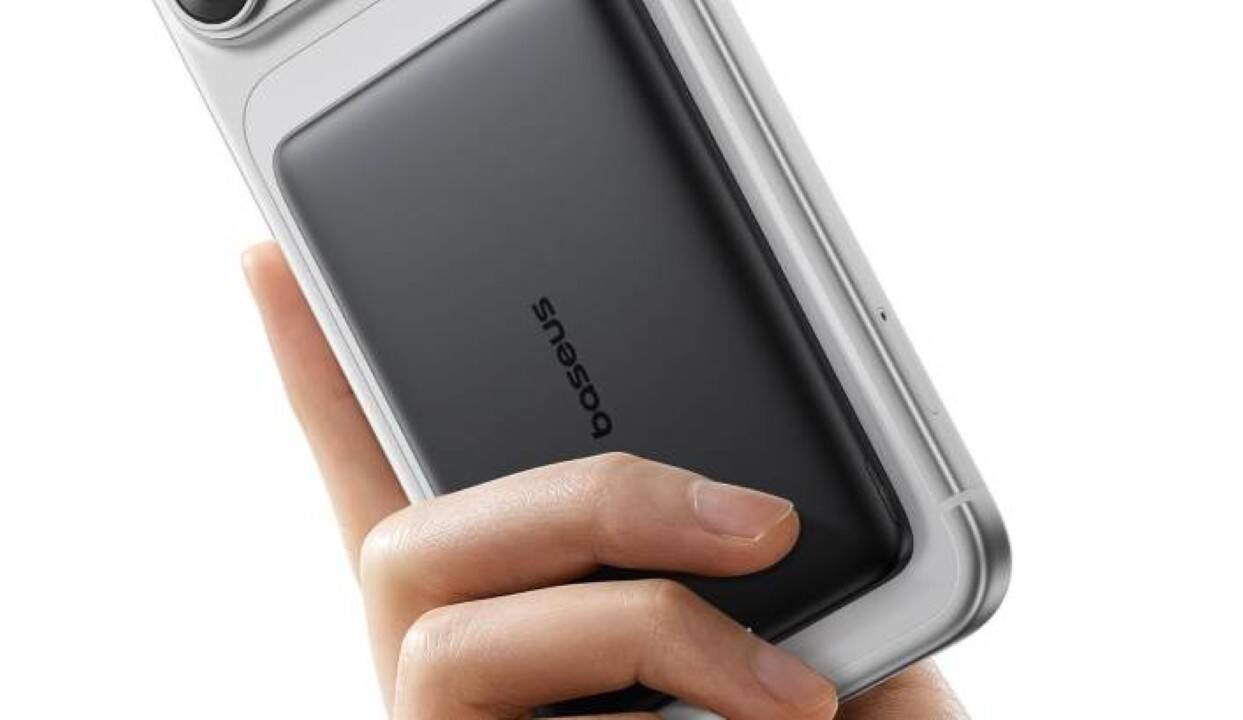
New design, color options and Glacier thermal management technology
Available in silver, black and sky blue, the Baseus Card Magnetic Air is just 6.9 millimeters thick. The company highlights the innovative Glacier temperature control technology, which expands the heat dissipation area by 50%. The device also incorporates new solid-liquid hybrid cells, following the national standard, and offers the function of checking battery status via NFC, with a simple touch.
Advanced charging, power and sensor system with artificial intelligence
The power bank is equipped with a smart sensor that uses an artificial intelligence algorithm. This sensor automatically starts cable charging, reaching a maximum power of 22.5 watts, when the cell phone is magnetically fixed and connected to the cable. When coupled with an adapter or other higher capacity power bank, the device can reach a maximum output of 60 watts.
Baseus highlights that its product complies with an important regulatory milestone: the first mandatory national standard for portable chargers in China. Titled “Technical Safety Specifications for Portable Chargers,” this set of standards was released on Wednesday, April 2. It is the result of a collaboration between the Chinese Institute of Electronic Technology Standardization and 30 large companies in the sector, such as Huawei, CATL, Lenovo, Xiaomi, Oppo, Anker and Ugreen, among others.





