Discovery in El Salvador reveals bones almost 3,000 years old and links to ancient sacrifices


A team of archaeologists found a human skeleton around 3,000 years old, near San Salvador. The discovery was confirmed by the Ministry of Culture through an official statement.
The human remains belong to a burial revealed on July 2 within an archaeological site in Antiguo Cuscatlán, a metropolitan region. Estimates indicate that the dating of the remains dates back to 850 BC, according to data released by the same cultural folder.
Additional findings and analysis methodology
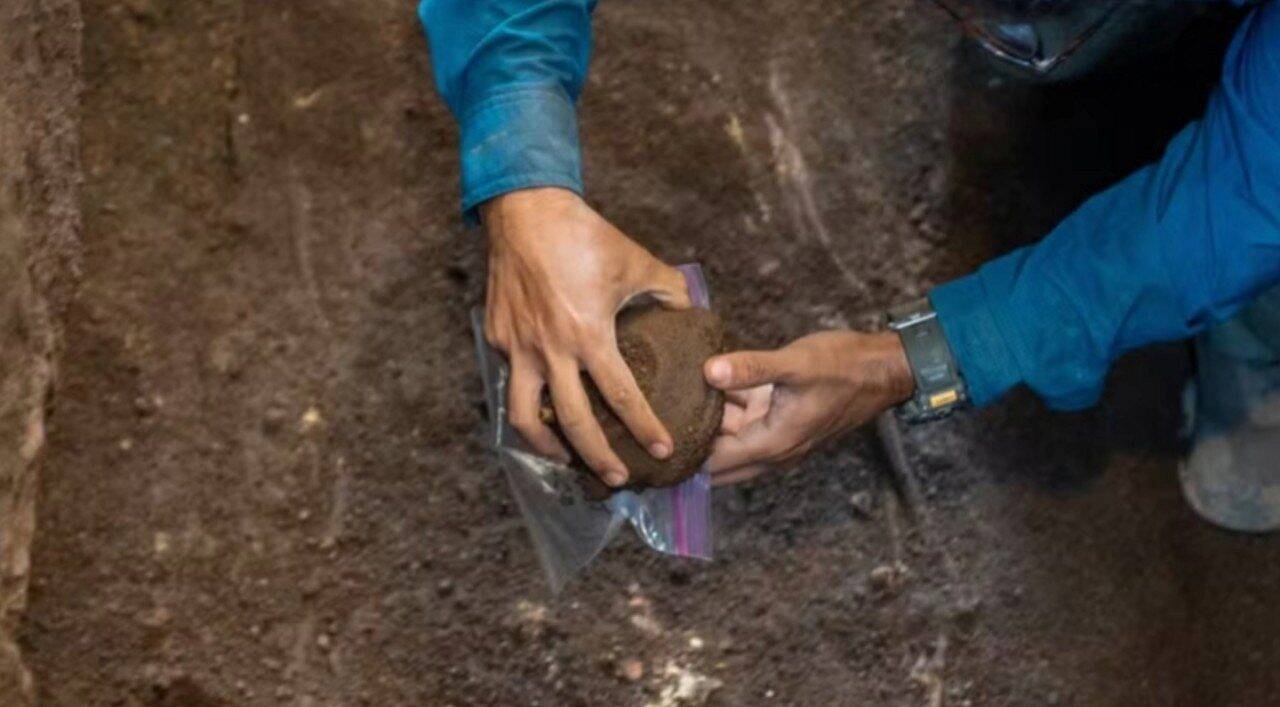
In addition to the bones, the excavation cavity revealed a small ceramic vessel, characteristic of the Usulután type, shaped like a sea turtle. Under multiple layers of ash resulting from past volcanic eruptions, fragments of cassava branches were also identified.
The position of the human remains was noted to be prone, and the materials will now be subjected to radiocarbon testing for accurate dating. A DNA test will be conducted in parallel to identify the individual’s sex.
Historical connections and the Mesoamerican context
The official report suggests the possibility of other similar discoveries in the region, referring to the important archaeological site of Chalchuapa, located in western Salvador. In Chalchuapa, in the 1970s, 33 individuals were discovered, considered the oldest evidence of human sacrifice in all of Mesoamerica, which gives great importance to this new excavation and its potential to reveal ancient practices.
The Chalchuapa finds included 26 complete skeletons, four partial skeletons, and three separate skulls. Many of these individuals were found in a prone position, with their hands and feet bound, and some displayed evidence of mutilation or decapitation, reinforcing the ritualistic nature of these ancient burials.