
Study reveals lakes in K’gari have been dry for millennia, despite intense rains


An intriguing discovery by researchers at the University of Adelaide has revealed that some of the largest lakes on K’gari, the world’s largest sand island, disappeared around 7,500 years ago. The drought, whose exact date is not given in the study but the statement was released on Tuesday, July 21, 2026, occurred during a period that, surprisingly, was marked by exceptionally heavy rains, reigniting concerns about the vulnerability of these sacred waters to future climate change.
The research, based on the analysis of ancient sediments from the lakes, indicates that changes in wind patterns and not just a lack of precipitation may have been the crucial factors in the disappearance of these water masses. This revelation points to a potential threat to the well-known “Eyes of K’gari”, which hold profound cultural and environmental value for the region.
K’gari Island’s Deepest Lakes May Disappear Under Certain Conditions
K’gari is widely recognized for its remarkable freshwater lakes. However, new research from the University of Adelaide suggests that even the largest and deepest of these lakes may be susceptible to disappearing under specific climate conditions.
By examining older lake sediment layers, scientists found evidence that several lakes dried up approximately 7,500 years ago. This period, identified as the Middle Holocene, occurred thousands of years after the last Ice Age and, in general, was wetter than the present.
Researchers are surprised by drying during the rainy season
“Our research demonstrates that around 7,500 years ago, at a time of increased rainfall and long after the end of the last Ice Age, some of K’gari’s deepest lakes dried up,” said Associate Professor John Tibby, lead researcher at the University of Adelaide.
Lake drying up is not a rare occurrence in Australia, where extended periods of little rain can result in drastic drops in water levels. The surprise for scientists was that the drought event at K’gari appears to have occurred during a relatively wet period, defying usual expectations.
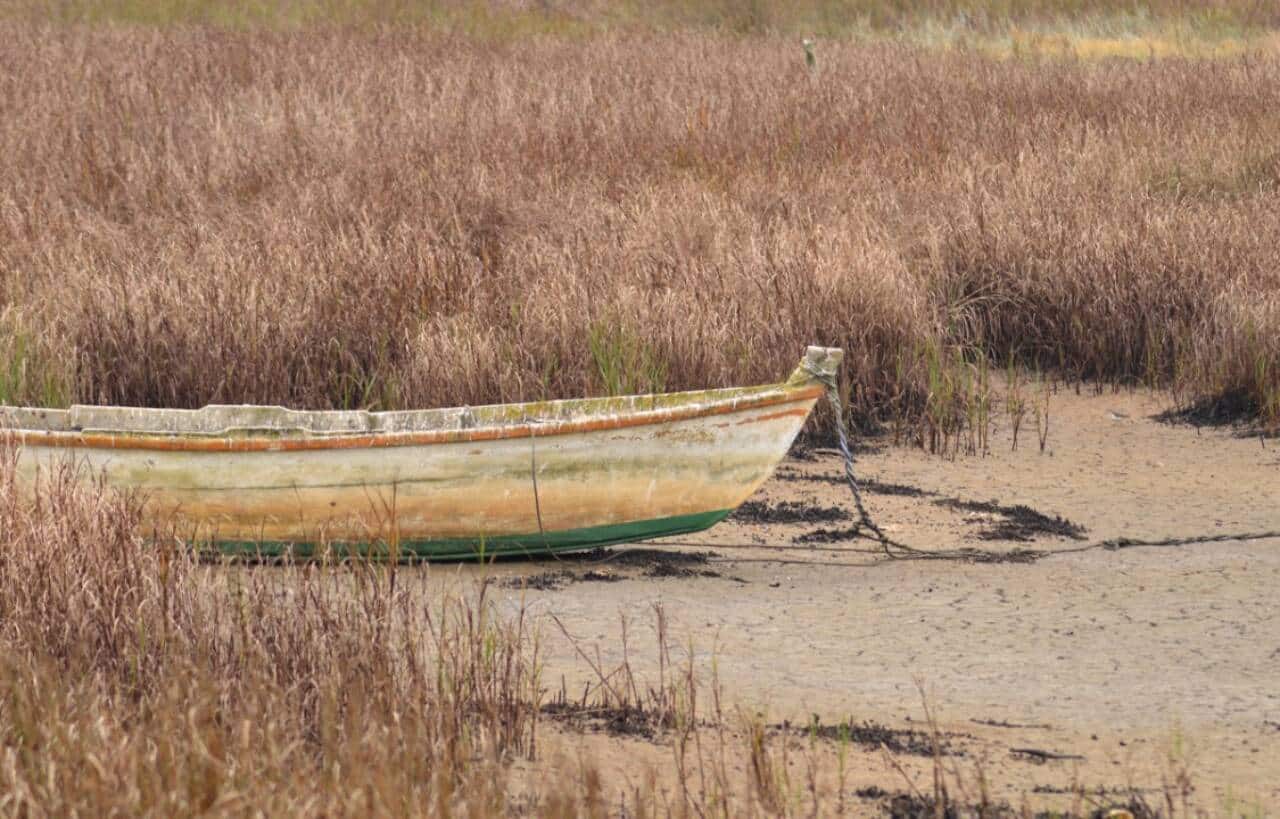
“Many Australian lakes dried up during the Millennium Drought when there was not enough rainfall to maintain them,” highlighted Associate Professor Tibby, whose work was published in the journal Quaternary Science. “The K’gari lakes we examined have existed for between 35,000 and 55,000 years, but the drought we identified occurred unexpectedly during a period of heavy rain.”
The findings suggest that the continuity of these lakes may depend on multiple factors, in addition to the simple total amount of rain that falls in the region. The origin of precipitation, the way winds transport moisture and the areas of the landscape that receive water can also be determining elements for the survival of these ecosystems.
Redirection of rainfall by old wind patterns may explain the phenomenon
Dr. Harald Hofmann, study co-author and member of the Commonwealth Scientific and Industrial Research Organization (CSIRO), explained that ancient wind patterns may be key to understanding why intense rainfall failed to replenish K’gari’s lakes.
The researchers conjecture that southeasterly trade winds may have directed the rain to the nearby town of Minjerribah, rather than K’gari. Trade winds are characterized by their persistence over vast areas and have a great potential to influence cloud formation and rainfall distribution.
“Previous studies reveal that Minjerribah also received heavy rainfall at this time, but due to the prevailing southeast trade winds, precipitation from the south supplied the lakes of Minjerribah rather than those of K’gari,” Hofmann detailed.
“This discovery highlights the urgency of deepening knowledge about the beautiful lakes of K’gari. With a climate that tends to be drier, but with heavier rains, it is not known whether these lakes are at risk of drying out again.”
This uncertainty is particularly relevant because a future with stronger storms does not necessarily guarantee that the lakes will receive more useful water. Intense rains can fall in inappropriate places, drain quickly or fail to recharge the water systems that support these lakes.
Sedimentation reveals absence of water for a period of 2 thousand years
The researchers confirmed the ancient drought event by examining sediment cores taken from some of K’gari’s oldest lakes. Over time, elements such as pollen, sand, plant residues and organic matter accumulate at the bottom of lakes, forming a stratified record of past environmental conditions.
“Lake sediment is like a diary, where everything that happens in and around the lake is documented,” said Associate Professor Tibby.
“Pollen from plants around lakes can tell us about local vegetation types, and a greater amount of sand can indicate that there has been more erosion of the lake bed.”
“Our study identified that there was a sediment gap in some of K’gari’s oldest lakes between 7,500 and 5,500 years ago, which suggests that these areas were not covered by water, i.e. the lakes did not exist in that interval.”
The absence of sediments throughout this period of approximately two millennia demonstrates that water stopped covering parts of the lake basins. Without standing water, the usual layers of sediment could not accumulate, resulting in no archaeological record.
The “Eyes of K’gari”: the sacred importance of the lakes to the Butchulla people
For the Butchulla people, the traditional custodians of K’gari, the lakes have a cultural and spiritual relevance that transcends their environmental value. They are affectionately known as the “Eyes of K’gari”.
Conway Burns, study co-author and member of the Butchulla community, emphasized that protecting the lakes is vital so that their beauty, meaning and connection to the land can be preserved for future generations.
“K’gari is the name of the dreaming spirit who created the island, and his eyes are not merely water — they are portals to eternity,” Burns declared.
“When we stand before the lakes of K’gari, we don’t just see reflections of sky and forest; we glimpse the soul of the Earth watching us. Its eyes hold ceremonies, memories, and the whispers of the Creator. They carry the voices of ancestors and departed loved ones, guiding us with permission, wisdom, and reflection.”




