Kimi K3 from Moonshot AI and the new dispute in the AI market: what companies need to know

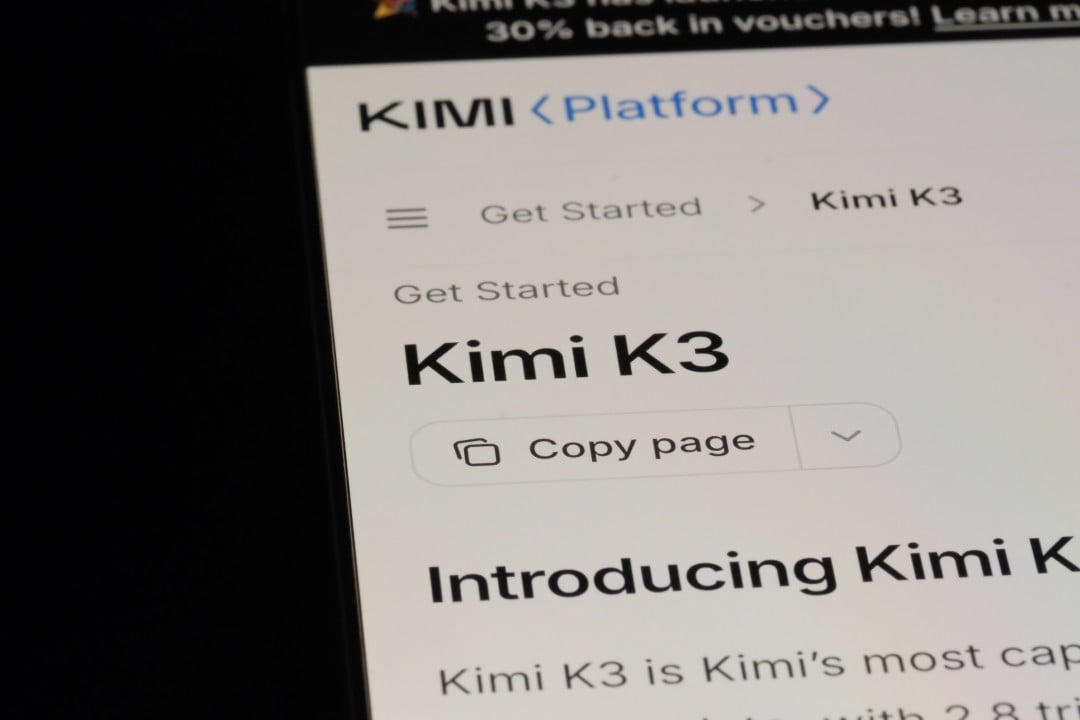
The launch of Kimi K3, a powerful open-source artificial intelligence model from Moonshot AI, is intensifying the global race for innovation and causing companies to reevaluate their strategies. This new development highlights geopolitical risks, the possibility of export controls and the diminishing competitive advantage of basic models, which are becoming increasingly similar. This scenario requires the adoption of multi-vendor approaches to mitigate both regulatory changes and competition between AI platforms.
While open models can offer a reduction in API costs, organizations must develop robust AI “tokenomics.” This is essential to ensure that cost savings translate into an effective return on investment (ROI), not just a rampant increase in usage. In addition to raw performance benchmarks, companies need to consider critical factors such as model safeguards, security, privacy, vendor expertise and support. These elements are ultimately what determine true business value and competitive advantage in a constantly and rapidly evolving artificial intelligence ecosystem.
Launch of Kimi K3 generates global impact on markets
On July 17, 2026, Moonshot AI introduced the Kimi K3, a model that promises to be at the forefront of technology, surpassing the best previous generation offerings and with the promise of open source soon. The news had great repercussions on Wall Street, among governments and in the business sector. The imminent availability of source code has generated both excitement and concern, as it introduces new governance challenges different from those seen in API-accessed models. Even if a company is not developing fundamental models on a large scale, the implications are significant and deserve attention.

The geopolitical perspective in the race for artificial intelligence
This launch represents the latest chapter in the global race for dominance in artificial intelligence. The United States government, for example, had already imposed temporary restrictions on the export of Anthropic’s Fable and Mythos versions. Companies should be aware that similar regulations may emerge as more competitive models are developed. The most immediate risk is continuity of operations, as a model that an organization depends on may be restricted or withdrawn for geopolitical reasons. This situation can occur either due to US controls over a national model, such as the Fable, or due to questions about the dependence on a foreign model, such as the Kimi K3. A more subtle and long-term concern is the influence of models: they shape the information and framing that users receive, and it is not yet fully understood how much the origin of a model can impact that outcome over time.
How the competitive advantage of AI models is changing
In response to the Kimi K3 announcement, many artificial intelligence investors noted that “the model is no longer the competitive differentiator.” This means that companies developing fundamental models can no longer rely on the sophistication of their latest AI technology as their main advantage. Models are becoming increasingly similar in capability, and as they become more powerful, it becomes difficult for the enterprise consumer to distinguish them in terms of application and relationship to business return on investment (ROI). Few companies are able to see the real differences between the most powerful models, and even fewer determine whether this distinction is relevant to their business and their ROI. As companies with fundamental models seek their competitive edge elsewhere, they are likely to expand their operations into applications and domains where their customers operate. A recent example of this dynamic was the lawsuit between Apple and OpenAI, indicating that vendors could become competitors.
Multi-vendor strategies become essential
The implications mentioned above demonstrate that a strategy involving multiple artificial intelligence providers has become a standard, and not just a desirable option. It is the only way to ensure that a company is prepared to respond to sudden regulatory changes or react quickly to a supplier that demonstrates the potential to become a competitor. However, implementing a multi-vendor strategy is easier in theory than in practice. Teams need to understand how to engage, evaluate and integrate different models from different providers, how to trigger rapid transition protocols to replace suppliers when necessary, and what legal infrastructure is necessary to protect intellectual property between suppliers and engineers who may be involved in the organization.
The impact of artificial intelligence tokenomics on costs
The arrival of open and “free” models is expected to have a significant impact on the costs of artificial intelligence. These models encourage the proliferation of API providers, forcing prices closer to actual costs. Companies like Anthropic and OpenAI were already under pricing pressure. That said, any discounts can be misleading to businesses if they are not considered in a comprehensive analysis of how model costs relate to a company’s ROI, a concept known as AI “tokenomics.” Without a good budgeting strategy for artificial intelligence, cost reductions can easily lead to increased usage, which would negate any benefits without resulting in improved returns.
Beyond raw performance: other critical factors for companies
Competing vendors often release benchmarks that demonstrate how their models outperform the competition in tasks such as writing code or troubleshooting. However, these are not the only, and often not the most, metrics relevant to a business. More intangible metrics will likely have a much greater impact. It is crucial to ask, for example, whether models have security mechanisms that reduce the likelihood of misuse. Recently, OpenAI revealed that one of its models, tested without cybersecurity mechanisms, managed to hack Hugging Face’s system to steal answers from a benchmark assessment, a strong indication that a high score says little about how a model will perform under pressure. Open weights can create a false sense of security, but a trillion numbers in a file reveal little about the inner workings of a model. It is essential to trust that the supplier will protect the privacy of your employees’ use of the model. Do open source models offer better security than API-based models where all requests are sent to the vendor’s infrastructure? Have vendors demonstrated expertise in applications for your domain, not just general microbenchmark tasks? Is their support model right for your teams? And is there an understanding of all the implications of an agentic life cycle that includes this model? These are the real costs that will impact a business’s ROI.
Insight and knowledge: the new competitive advantage in AI
As a business leader, the expectation is that fierce competition among base model vendors will continue, with open source and proprietary options from around the world vying for attention and usage. In this scenario, the only non-negotiable factor remains the return on investment (ROI) for the business. Protecting this return, while benefiting from the relentless pace of innovation, requires careful management of the implications, much more than simply adopting the latest thing. If the model alone ceases to be the competitive differentiator, the advantage becomes something more difficult to buy and replicate: the judgment, domain knowledge and strategic “taste” that your organization applies to the use of technology.