
Excavation in Israel discovers 400,000-year-old artifacts and changes views on pre-Neanderthals

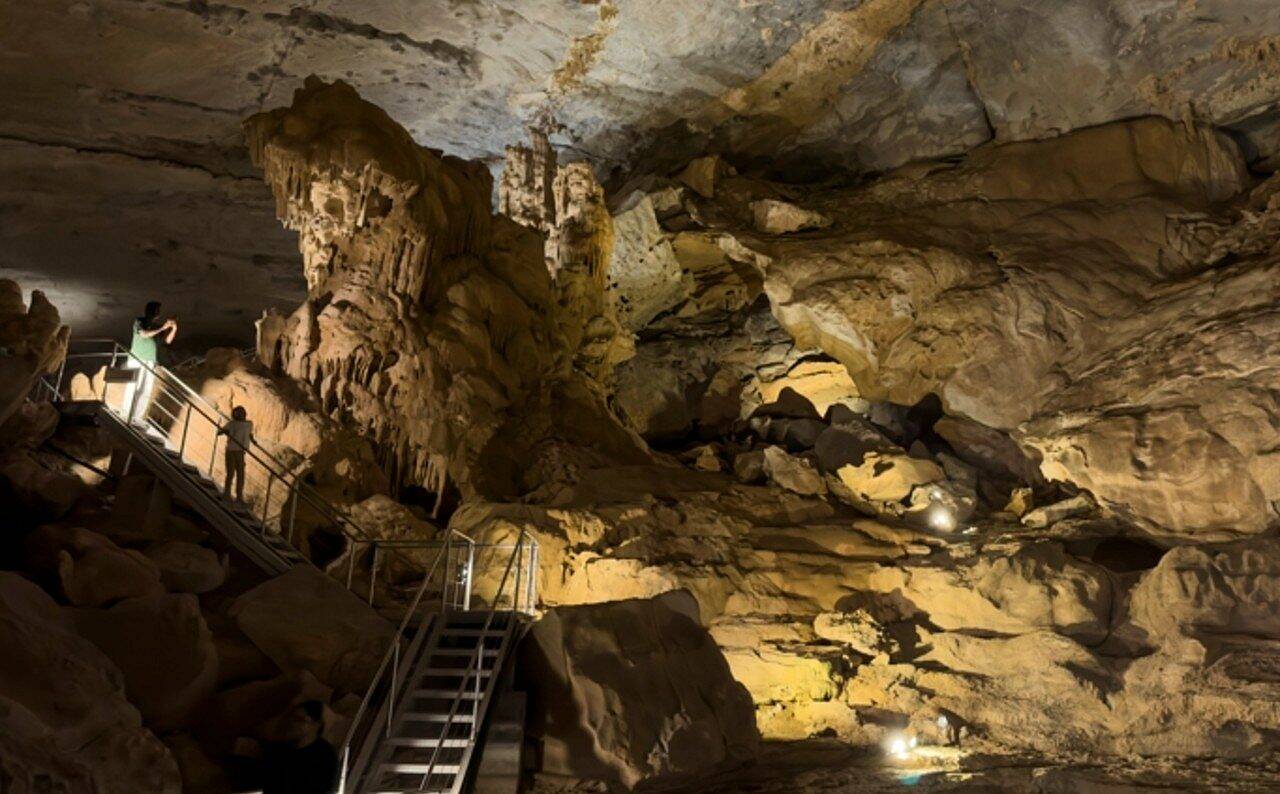
A recent scientific expedition into Israeli territory has uncovered traces of a prehistoric shelter occupied long before the emergence of Neanderthals. Officially released in the second week of June, the survey shows that the settlement is at least four hundred millennia old. The data collected offers an unprecedented window into understanding a still nebulous chapter in humanity’s evolutionary trajectory, providing answers about how the first groups organized themselves in the geographic corridor that connects Africa to Eurasia.
The Levant region has always served as a key route for hominid migrations, and each new artifact pulled from the ground helps piece together the complex puzzle of our ancestry. The detailed work of researchers at the site demonstrated that the populations of that era had technical mastery and a capacity to adapt to the environment that was much greater than what academia estimated until a few decades ago.
Urban infrastructure works motivated preventive exploration of the historic site
The investigation of the land, located near the municipality of Freydis, in the northern part of the country, took place under the modality of rescue archeology. With the advancement of real estate development and the approval of civil construction projects for the area, teams of experts needed to act quickly. The main objective was to map, catalog and extract any historical heritage before heavy machinery irreversibly altered the topography.
This type of early intervention is a common practice in nations with subsoil rich in traces of the past, ensuring that urban progress does not erase the records of the civilizations and species that inhabited the planet. Thanks to this race against time, scientists were able to access deep layers of sediment that held secrets untouched for thousands of generations.
New dating surprises experts and doubles the estimated age of the occupation
During preliminary assessments carried out in the 1970s, the academic community had established that the underground shelter had a history of use spanning approximately two hundred thousand years. This more conservative chronology remained the accepted consensus for a long time, a fact recalled by Kobi Bardi, a representative of the Israel Antiquities Authority, during a review of activities presented at the end of May.
However, the application of modern excavation methodologies and in-depth analysis of stratigraphic layers have completely changed this panorama. The joint effort led by Bardi and Ron Simermitz, a professor in the department of archeology at the University of Haifa, pushed the timeline back much further. The results proved that the space served as a continuous refuge for a period that reached the mark of four hundred thousand years.
Stone utensils detail hunting routine and survival strategies
The redefinition of the site’s age was only possible through the rigorous study of the lithic material recovered in the excavation trenches. Researchers have identified a set of tools that bears the unmistakable signature of Ashurro-Yabrudian culture. This specific group of hominids thrived in the Near East in a time window stretching from 400,000 to 250,000 years ago, marking an important technological transition phase in the Paleolithic.
The collection rescued by the scientific team illustrates the manual skill and daily needs of these ancient inhabitants. Among the items duly cataloged in the laboratories, the following stand out:
- Sturdy hand axes, carved to withstand heavy impacts when cutting wood and dismembering large prey.
- Stone scrapers with specific edges, used in the treatment, cleaning and preparation of animal skins to protect against the cold.
- Sharp blades of different sizes, demonstrating advanced control over the rock chipping technique.
- Bone fragments of local fauna, including species such as fallow deer and gazelles, which formed the basis of the group’s protein diet.
Evidence points to a highly developed and cooperative social organization
For specialist Kobi Bardi, the realization that the place was home to such an ancient community had a profound impact on the team. The volume of material and the diversity of tools indicate that these individuals were not just nomads passing through, but rather members of a social structure that chose the cave as a long-term strategic base.
Mastery over fire, combined with the ability to kill fast-moving mammals like gazelles, requires a level of communication and planning that transcends basic instinct. In an official document issued by the Israeli Ministry of Foreign Affairs on June 11, Simermitz highlighted that the material evidence reflects a rich and nuanced community dynamic.
Understanding the way these primitive groups divided tasks, cared for their members and passed on knowledge of tool making adds enormous weight to anthropological studies. The discovery helps fill a historical void regarding the steps that preceded the formation of modern societies, proving that complex cooperation is an ancient trait of our lineage.
The mystery of the absence of human fossils in the excavated layers
Despite the abundance of sharp objects and animal remains that paint a vivid picture of prehistoric daily life, a fundamental piece of this puzzle remains hidden. To date, the work fronts have not been able to locate any human bone remains that are statistically relevant within the cave complex investigated.
The lack of skeletons in sites of this age is a frequent obstacle in archeology, often explained by taphonomy, the science that studies the fossilization process. Factors such as soil acidity, exposure to the elements and the action of scavengers can disintegrate human organic matter quickly. Furthermore, there is a strong possibility that the Ashurro-Yabrudian culture adopted specific practices for disposing or burying their dead in external areas, far from living and eating spaces.
Field research is expected to continue in the coming months, with scientists focused on expanding the search perimeter. The expectation is that new soil surveys will eventually reveal the biological traces of the artisans who dominated that landscape hundreds of thousands of years before written history began.





