
Orbitals arrives on Nintendo Switch 2 with cooperative proposal and classic anime look


The library of Nintendo’s next console has just gained a boost focused on the experience shared between two players. Developed by Shapefarm and published by Kepler Interactive, the title Orbitals promises to attract fans of joint adventures with a very nostalgic visual proposal and refined mechanics. The release is scheduled for September 3rd, hitting the market as a major exclusive for the Nintendo Switch 2. The work seeks to fill an important gap in the current digital entertainment scenario, offering puzzles that require constant communication and perfect synchronization to solve complex problems.
The video games market has seen a significant increase in demand for collaborative couch experiences since duo-focused games began to dominate major global awards shows. Orbitals hits shelves and online stores priced at US$39.99 for the digital edition and US$49.99 for physical media. This pricing strategy places the product in a highly competitive position compared to other big-budget launches scheduled for the same period. Community expectations revolve around how the Japanese manufacturer’s new hardware will handle simultaneous rendering from two different points of view without compromising graphics performance.
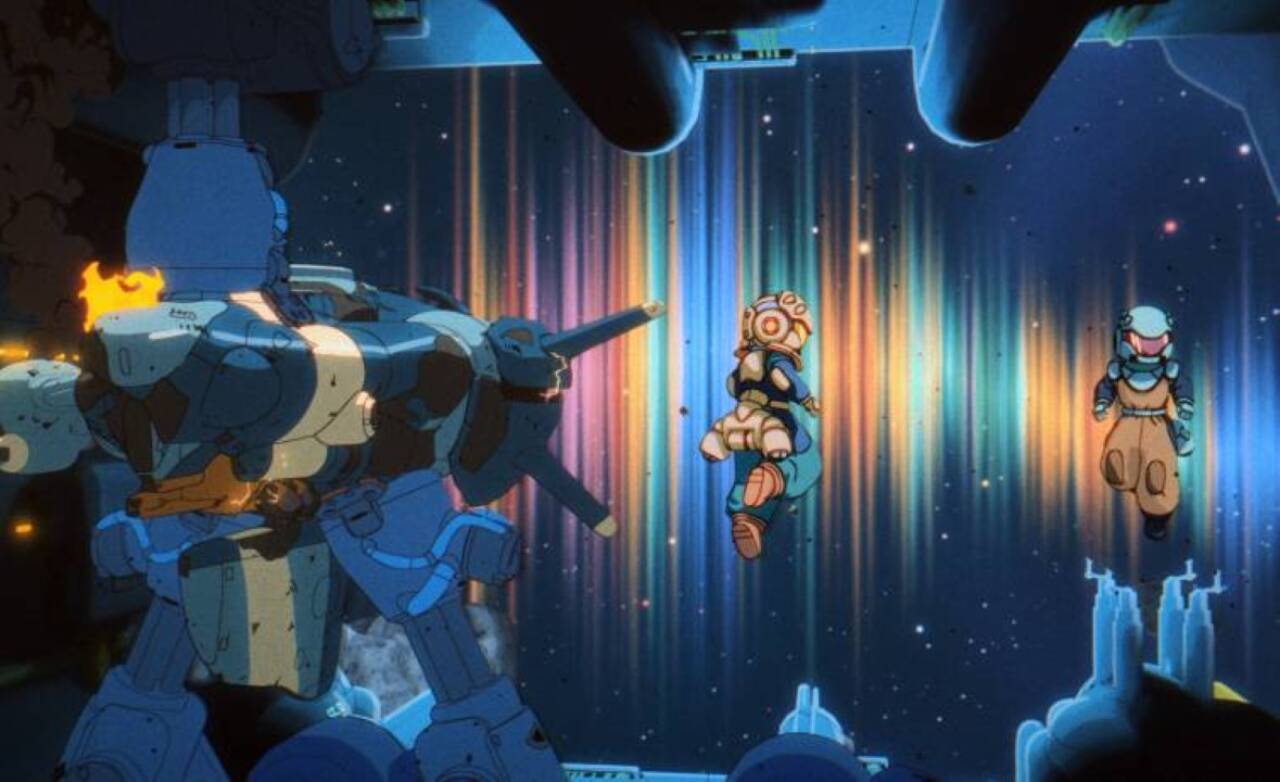
The influence of classic Japanese animation on art direction
To ensure a unique visual identity, the development team sought direct inspiration from the science fiction productions that dominated television in the 1980s. Shapefarm’s creative director, Marcos Ramos, guided the project to capture the essence of renowned works, such as Neon Genesis Evangelion and Dragon Ball. The result on screen presents characters with voluminous hair and exaggerated proportions, striking characteristics of that time. A subtle grain filter was applied to the image to simulate viewing on old tube televisions, delivering an extra layer of immersion.
The execution of this aesthetic concept counted on the partnership of a heavyweight in the oriental animation industry. Studio Massket, globally recognized for its work on Attack on Titan and Lycoris Recoil, actively collaborated in the construction of this visual universe. The union between a game studio and a high-caliber anime production company raises the quality standard of the animations seen during the campaign. This attention to visual detail sets the project apart from other attempts on the market to emulate Japanese style without the same level of technical fidelity.
Plot focused on the survival of a space colony
The central narrative follows the daily routine of two young explorers, Maki and Omura, who live isolated in an immense facility in deep space. They share a tragic past, having been rescued from the rubble of a completely destroyed colony during their early childhood years. Maki displays much more impulsive and spontaneous behavior in the face of danger, while Omura adopts a strictly restrained and analytical stance to resolve crises. This duality of personalities serves as a fundamental basis for the rich dialogues and for the way in which the duo interacts with the dangers of the surrounding environment.
Currently, the protagonists have taken on the heavy responsibility of keeping the station’s vital systems running and caring for the area’s elderly inhabitants. The peaceful routine is abruptly interrupted when radars detect the approach of a cosmic storm of devastating proportions. From this event onwards, players must explore the station’s corridors and outer space in search of tools and solutions to avoid total annihilation. The setting hides several secrets and cultural references, including a notebook called Life Note, a clear allusion to a famous investigative manga series.
Gameplay dynamics and the evolution of the cooperative genre
The gameplay structure carries the DNA of absolute successes in the genre, something expected due to the presence of Jakob Lundgren directing the project. The professional brings with him the invaluable experience of having worked on award-winning Hazelight Studios titles, such as It Takes Two, A Way Out and Split Fiction. Movement through the scenes occurs organically, with the screen only dividing when the characters move away and uniting perfectly when they get closer. This clever system guarantees freedom of exploration without punishing the player who wants to investigate a different corner of the map.
One of the main mechanical innovations solves a common problem in games made up of people with different levels of familiarity with the controls. Instead of definitively attaching specific roles to each character, the system allows players to change roles during challenges without having to restart the level or change avatars. During the test sessions, the duo needed to coordinate actions in memory minigames, put out fires in the ship’s engines and operate the defense system against space debris. One player takes control of the vessel while the partner controls the shooting towers to clear the path in synchronization.
Accessibility options and requirements for playing as a duo
As the experience requires the participation of two people from start to finish, the developers implemented several tools to facilitate access for new users. The title does not have a single-player mode, making voice or in-person communication a mandatory element for progressing through the campaign. To get around the financial barrier of requiring two copies sold, Kepler Interactive adopted a consumer-friendly license sharing system.
The available methods for starting a joint session offer flexibility for owners of different Nintendo hardware. Connection options include:
- Split screen locally on the same console, requiring both participants to be in the same physical environment looking at the same monitor.
- GameShare system, which allows you to transmit a copy of the Switch 2 game to previous models, such as the original Switch and the Lite version.
- Global Friends Pass, an online tool that authorizes the game owner to invite anyone on their friends list to play for free over the internet.
Despite the ease of connecting via the network, there is a strict technical requirement in relation to the peripherals used during the match. Unlike traditional platform games from the Japanese company, where a single Joy-Con is enough to control the character, the new space adventure requires a full set of buttons. Each participant must have a Nintendo Switch 2 Pro Controller or a complete pair of properly synchronized Joy-Cons on hand. This requirement is justified by the complexity of simultaneous actions, which involve free camera control and rapid trigger activation during intense space combat.
The union between an art direction signed by an extremely prestigious animation studio and mechanics refined by industry veterans creates a very solid technical basis for the title’s arrival in stores. Exclusivity to Nintendo’s new generation of hardware ensures that the software uses updated processing resources to keep the frame rate perfectly stable, even with split screen in moments of visual chaos. The launch scheduled for early September will serve as an accurate thermometer to measure the consumer public’s appetite for new intellectual properties focused entirely on mutual collaboration.




