
Sony’s hidden files indicate Kratos’ journey through the lands of the pharaohs

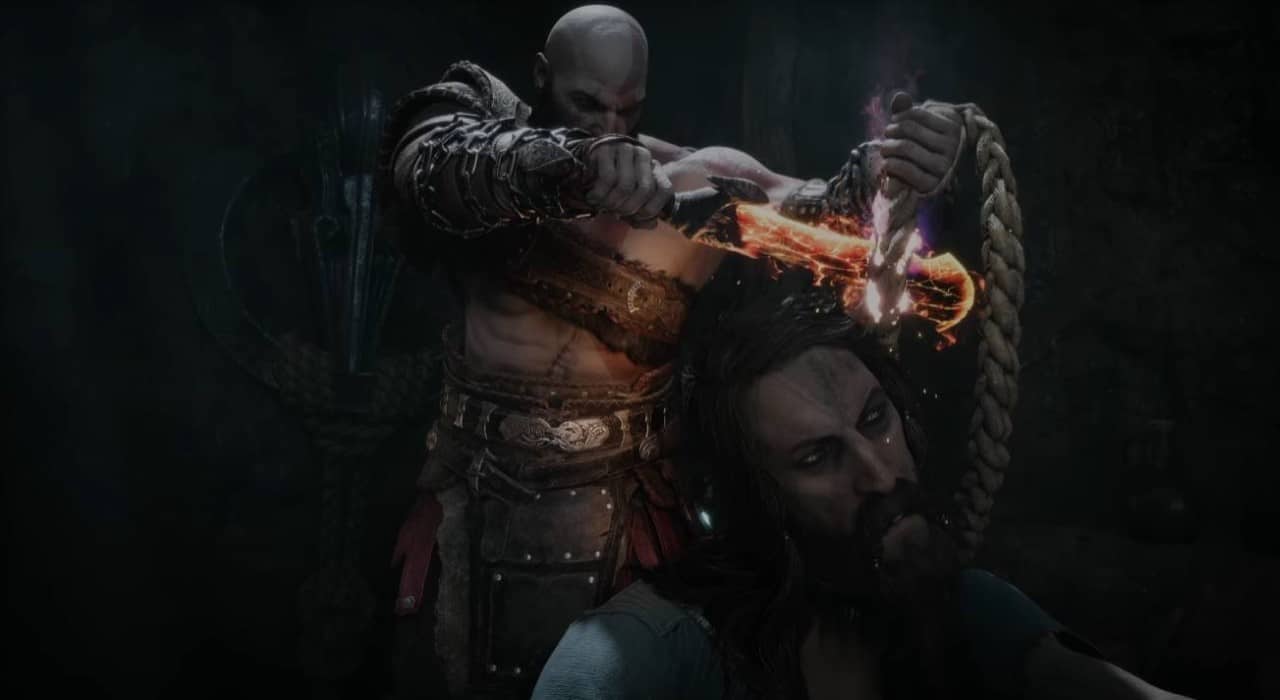
Data explorers recently found unpublished materials hidden in the code of God of War Ragnarok, a title released in 2022 by Santa Monica Studio. The thorough investigation brought to light a model of the Ghost of Sparta characterized by clothing and postures typical of Pharaonic culture. This unprecedented material reignites debates in the community about the fate of the franchise, strongly indicating that the next journey will abandon the Nordic cold to embrace the desert sands.
The virtual monument was forgotten among the project’s discarded directories, which proves that the development team actively tested the North African aesthetic. Sources linked to the industry say that this discovery adds weight to old buzz about a scenario transition. Although the official producer maintains absolute silence about the case, the image is already circulating widely among experts and digital entertainment enthusiasts.
What data miners found in the game’s code
Reverse engineering specialists dug into the software’s innards and rescued three-dimensional textures that show the protagonist with never-before-seen adornments. The digital model shows the Spartan wearing bracelets and a crown that directly refer to the iconography of gods such as Ra and Anubis, perfectly blended with his classic gray skin. The extraction of this data took place shortly after the application of recent patch packages, prompting a full scan by the most curious players.
With proportions that would reach three meters in the real world, the virtual piece has a base full of hieroglyphs that appear to narrate epic confrontations against divine entities. Regular players quickly associated these inscriptions with the prophetic murals seen at the end of the most recent adventure, where the main character envisions a path of worship. Even though the find doesn’t change the experience of the current title, it acts as a window into Sony Interactive Entertainment’s long-term planning.
Speculation about the weapons and plot of the future sequel
Journalists with behind-the-scenes access, including Tom Henderson from the Insider Gaming portal, reported in recent broadcasts that the warrior’s arsenal should include a khopesh sword, a curved bronze blade historically used in Ancient Egypt. Armament would be essential to face ruthless figures from the new pantheon, such as Seth and Osiris. It is worth remembering that the Californian team has had conceptual art for this setting since 2018, a time when the African territory almost won the dispute against Scandinavia to host the restart of the saga.
Market projections suggest that the new super production will hit shelves around 2027, developed to get the most out of the PlayStation 5 and its eventual successor. The semi-open map structure must be maintained, but now exchanging frozen lakes for navigation on the Nile River and internal exploration of pyramids full of environmental enigmas.
- Some versions of the three-dimensional model feature young Atreus positioned next to his father, indicating that family dynamics will remain central.
- Unused sound recordings mention journeys across extensive sand plains, a direct geographic reference to the new continent.
- Discarded sketches illustrate the protagonist dealing with ancient curses within underground tombs.
The trajectory of destruction of pantheons over the years
The brand debuted on PlayStation 2 in 2005, focusing on brutal revenge against the Olympian gods, culminating in the fall of Zeus. Thirteen years later, the franchise underwent a complete overhaul by migrating to the icy lands, placing Odin and Thor in the path of the protagonist and his son. This Nordic cycle ended at the end of 2022, reaching the impressive mark of more than 15 million copies sold globally.
The advance into the land of the pharaohs represents the natural next step for intellectual property, offering an unprecedented bestiary comprised of sphinxes, colossal scarabs and zoomorphic deities. The official documentary Raising Kratos, published by the developer itself, had already publicly confirmed that the Egyptian setting was the first concept presented for the return of the series, being temporarily discarded just to avoid an overload of information at the time.
Clues left at the end of the Nordic journey
The final moments of the last campaign feature a wooden shrine that depicts the Spartan walking through desert landscapes, something the community immediately interpreted as an African prelude. The newly discovered sculpture in the archives fits perfectly into this vision, designed to feature in a conceptual temple accessible after the credits. Furthermore, the free Valhalla expansion, released last year, had already introduced small collectibles shaped like desert relics.
These details cement the idea that the character is destined to wander between different cultures, ruling out any possibility of a return to Greece. On social media and discussion forums, the main debate revolves around Atreus’ presence, with fans divided over whether the boy will follow his own independent journey or whether he will accompany his father in this new venture.
The impact of the discovery among fans of the franchise
Public reception was immediate and explosive, generating tens of thousands of comments on the main gamer interaction platforms. Many users expressed relief at the change of scenery, arguing that the snow and ice aesthetic had already reached its creative limit. Content producers focused on the brand are already betting that Sony will reveal a conceptual teaser during an official presentation in 2026.
Computer game modifiers wasted no time and have already started to import the leaked 3D mesh into other titles, further increasing general expectations. Internally, the producer’s community management team closely monitors these organic reactions, using the networks’ thermometer to refine its creative decisions.
Gameplay innovations expected in the new scenario
Crossing the map should replace sleds with boats adapted for the currents of the Nile, where players would face riverside beasts and mythological creatures such as the giant serpent Apophis. The environmental puzzles promise to abandon the freezing of gears to focus on sunlight refraction mechanics, in allusion to the god Ra. Rumors also point to new abilities, allowing the protagonist to summon mummified warriors to help control crowds.
Battles against large bosses, such as the falcon god Horus, would require more complex aerial combat systems, evolving the verticality presented in recent games. There are also behind-the-scenes talks about implementing a cooperative mode, where a second player would take full control of Atreus’ arrows and spells.
The status of production at PlayStation studios
The task force responsible for the project has around three hundred professionals and, according to informants, began the full production phase at the beginning of 2025. The director’s chair returned to Cory Barlog, who resumed command to guide the next major narrative arc. Sony’s financial investment in the work would be in the region of two hundred million dollars, a budget that rivals the biggest productions in the entertainment industry.
Recent casting calls seeking actors of Middle Eastern and North African descent reinforce the commitment to vocal authenticity for the new characters. Internal testing of the new curved weaponry has yielded excellent results, ensuring that the series’ signature weight and brutality will remain intact in the next generation.





