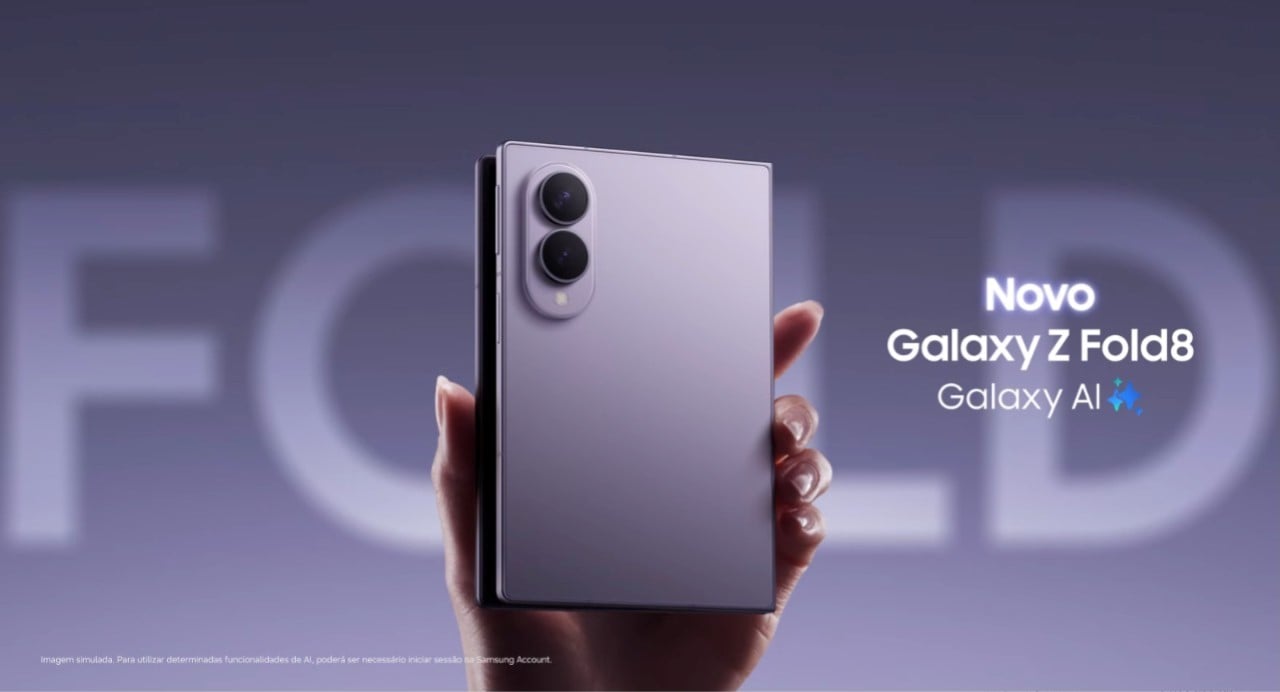
Asian manufacturer Samsung presented to the world, during a conference held in London on July 22, 2026, the latest update of its acclaimed line of cell phones with flexible screens. The renewed catalog features the long-awaited Galaxy Z Fold8 Ultra, Galaxy Z Fold8 and Galaxy Z Flip8, which are scheduled to arrive in Brazilian stores in early August, consolidating the brand’s dominance in a segment that generates billions of dollars annually in the technology sector.
New ergonomic shape of flexible devices transforms daily usability
The main highlight of the global exhibition was the geometric reformulation applied to the structure of the most robust equipment. When the smartphone is folded, the consumer immediately notices a wider and less elongated profile, remarkably resembling the size and proportion of a common passport, which makes it easier to hold with just one hand.
Information circulating in the corridors of Silicon Valley indicates that the apple giant, its main North American rival, is preparing a very similar design approach for its future foldable phone in 2026. At the same time, large Asian manufacturers, notably the Chinese Huawei, are already selling products with this same footprint in their country of origin, forcing global competition to review their designs so as not to lose space.
Adjustments to the dimensions of internal screens optimize reading and entertainment
When opening the device, the user of the conventional model is faced with a 7.6-inch display configured in a 4:3 aspect ratio, a clear difference in relation to the more elongated 8-inch panel that equips the most expensive version in the line. Representatives of the South Korean company detailed that this change in measurements was designed to improve the viewing of long texts and the playback of films, ensuring superior visual comfort during hours of continuous use.
The sales strategy for this generation clearly divided the target audience for each variant offered by the brand. The Ultra version was designed specifically to serve executives and professionals who need a high-performance portable office, while the compact model, which closes like a case, is aimed at younger consumers who value aesthetics, portability and personal expression.
Replacement of materials in the housing and chemical innovation in batteries
The two larger format smartphones received a deep structural improvement to resist accidents and sudden drops. The frame that protects the folding panels is now forged in titanium, a noble metal widely used in the aerospace industry, leaving behind the conventional aluminum alloys used in past generations.
The use of this new metallic component significantly increases the durability of the chassis against everyday wear and tear, guaranteeing a longer lifespan for the user’s investment. Added to this, the folding mechanism was completely redesigned to almost completely hide the central crease in the flexible glass, solving one of the most frequent criticisms from those who use this type of technology since the first launches.
On the other hand, the pocket version chose to maintain the construction formula that is already popular among its users. The body of the smaller device continues to be molded from aircraft-grade aluminum, a choice that ensures the product’s characteristic lightness and avoids a drastic increase in the final price passed on to the consumer.
The big internal difference of this 2026 harvest is the exchange of traditional lithium-ion batteries for energy accumulators based on silicon-carbon. This change in chemical composition directly attacks the dilemma of physical space inside foldable cell phones, as the old modules occupied a considerable area and prevented the creation of thinner devices.
With the implementation of this new energy matrix, which has a much higher density, users gain additional hours of autonomy even under severe use of heavy applications. At the same time, the engineering team managed to reduce the overall thickness of the equipment, delivering devices that do not create excessive bulk when stored in a pocket.
Sales schedule in the national market and visual customization options
The launch schedule for Brazil places the arrival of the trio of smartphones on August 6, 2026, the date on which the Galaxy Watch Ultra2 and Galaxy Watch9 connected watches also arrive in the country. To date, the manufacturer’s Brazilian division has not released the official values that will appear on national retail windows.
Thinking about pleasing a wide range of personal tastes, the company developed specific color palettes for each of the new devices in the flexible line:
- The most advanced model, designed for the corporate environment, will be sold in purple, white, black and dark green.
- The standard variant seeks a more sober and modern tone, offering lavender, white, black and pistachio green colors.
- The compact cell phone focuses on visual boldness, reaching the market with finishes in pink, white, black and mint green.
The current panorama of Brazilian digital retail shows that the competition for the consumer of foldable smartphones is increasingly fierce. Recent market research indicates that customers are already looking at options from different manufacturers with prices ranging from R$4,000 to R$15,000, proving that this premium niche continues to gain strength and attract heavy investment in the country.