Representatives of the Indian jewelry sector decided to comply with the request of Prime Minister Narendra Modi, who asked the population to pause the acquisition of gold. The measure seeks to contain the devaluation of the rupee and stop the outflow of dollars from the Asian country. The alignment highlights a direct articulation between the federal administration and local businesspeople to try to balance public accounts.
As India is among the largest global buyers of the precious metal, the volume of imports generates a very high cost in foreign exchange reserves. The local currency faces continuous depreciation against the dollar, making the payment of external debts more expensive and putting pressure on the trade balance. Given the seriousness of the financial scenario, traders agreed to act as intermediaries in raising customer awareness, promoting a temporary change in consumption habits.

Exchange rate impact and the weight of imports in the Indian market
The Indian territory has historically consolidated itself as the second largest consumer of physical gold on the planet, behind only China. Businessman Kumar Jain, one of the main traders in the sector, details that the country purchases between 800 and 900 tons of the product every year. This gigantic amount serves both the production of decorations and the reserve of value by investors. However, the extreme dependence on external supply leaves the local industry hostage to international exchange rate fluctuations.
In the coming months, the logistics of getting the material to Indian territory will become considerably more expensive. With the exchange rate of the American currency reaching the mark of 97 rupees, the final value passed on to the middle class skyrockets, while the profit margin of importers plummets. This disparity affects the population’s purchasing power and increases companies’ operating costs. The situation requires rapid adaptation in sales strategies to prevent bankruptcy for those working at the end of the chain.
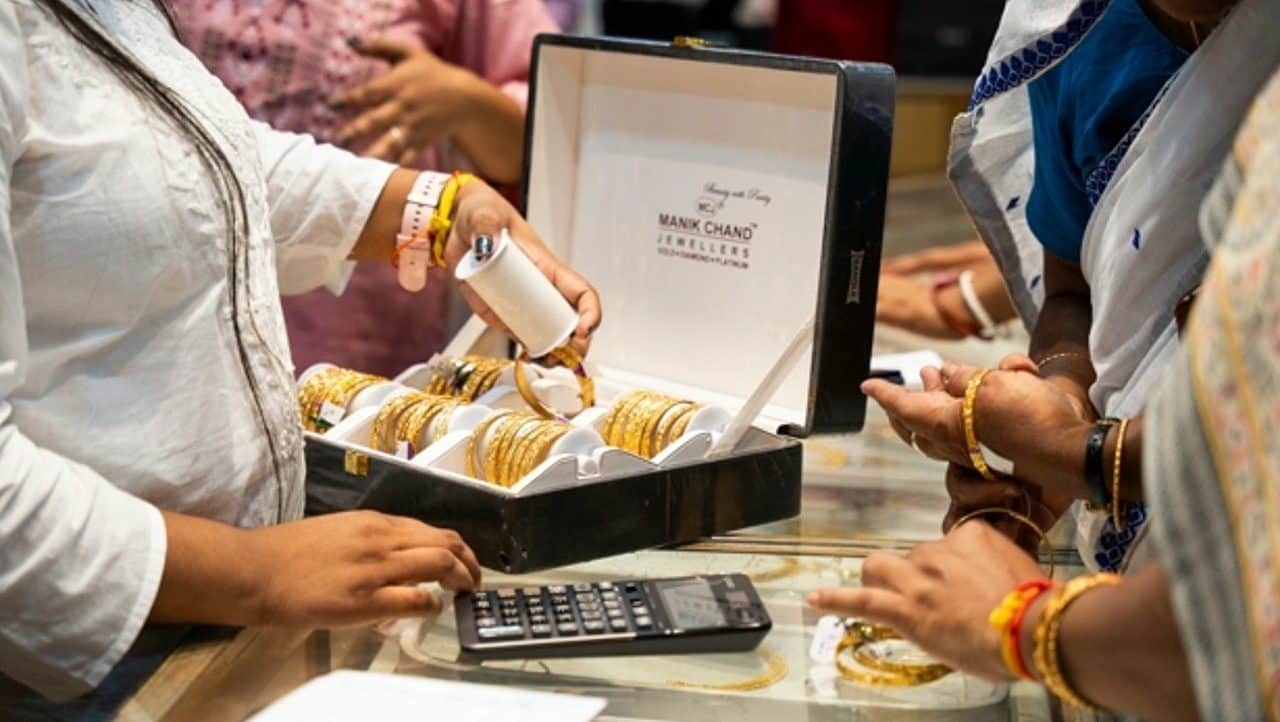
To alleviate the effects of the crisis, store owners began providing direct guidance at the counters. Kumar Jain reports that sellers started to recommend purchasing jewelry only for specific cultural dates, such as traditional Indian weddings. The objective of the informal campaign is to discourage impulse purchases or short-term financial speculation. The tactic tries to balance the preservation of ancient traditions with the economic responsibility required by the moment.
Businesspeople prioritize economic stability over profit
Adhering to the government’s appeal will cause immediate losses to companies’ cash registers. A trader from Mumbai reported that the Prime Minister’s directive represents a bitter but necessary step to tackle the current macroeconomic turmoil. He recognizes that the drop in sales will cause a loss in revenue and affect the goldsmiths’ income. The metal production chain employs millions of informal workers who depend on the constant inflow of orders to survive.
Even with the prospect of a decline in earnings, sector leaders say that the country’s financial health needs to be above corporate goals. India has recorded successive foreign exchange losses recently, making the current pace of purchases abroad unsustainable for public coffers. Support for the government also works as a movement by the private market to prevent the State from imposing harsher sanctions, such as the creation of quotas or the abrupt increase in taxes on imports.
This pragmatic stance found support in several provinces. Professionals from major trading hubs in Mumbai and northern regions reached similar conclusions about the scenario. They see the head of state’s request as an inevitable economic policy for the period. The consensus reached among retailers demonstrates an efficient articulation between different spheres of commerce, standardizing the discourse throughout the national territory.
Government guidelines try to curb capital flight
The pressure to reduce the search for precious metals is part of a broader project designed by Narendra Modi. The Indian leader presented a seven-point structured plan to control foreign exchange evasion and strengthen domestic industry. The application of these rules requires a profound change in the work routine and behavior of the population. The official package sets out the following main guidelines:
- Restrict travel to what is strictly necessary, prioritizing remote work to reduce daily traffic.
- Suspend international tourism or business travel for a period of one year.
- Replace foreign manufactured products with alternatives manufactured by national industry.
- Adopt natural agricultural techniques to reduce dependence on fertilizers purchased outside the country.
- Combat food waste in homes and businesses, paying special attention to cooking oil.
- Expand the use of public transport to force a drop in gasoline and diesel consumption.
- Postpone any non-essential gold purchases until at least December.
The set of actions makes up an austerity strategy formulated by the Executive Branch. Federal management tries to alleviate pressure on the trade balance without having to enact laws that would generate strong popular rejection. Modi classifies the recommendations as an indispensable collective effort to shield the Indian economy against external shocks. The success of the project directly depends on the engagement of citizens and the active collaboration of business leaders.
Political repercussions and the change in the profile of buyers
The dynamics of metals trade in India presents complex particularities when it comes to applying restrictive measures. A Mumbai-based shopkeeper clarified that the government’s call does not mean a complete ban, but rather a request for a strategic delay. Families with weddings scheduled will continue to purchase the pieces, as the material has an irreplaceable cultural weight in these ceremonies. However, recent statistics reveal that financial investors are purchasing larger volumes than the traditional female audience, changing the focus of containment campaigns.
In the political field, the prime minister’s speech provoked immediate reactions from the opposition. Parliamentarian Priyanka Chaturvedi published a video on social media criticizing the way the crisis has been handled, questioning the real effectiveness of these informal suggestions. The debate heated up when politician Devendra Fadnavis came out in defense of the government against attacks from opposition leader Rahul Gandhi. Fadnavis praised the current administration and classified Gandhi as a name rejected by the polls, highlighting the strong polarization that dominates macroeconomic discussions.
The contrast between the stance of the productive sector and the reaction of political opponents summarizes India’s current situation. While jewelry store owners accept absorbing losses in the name of exchange rate stability, government critics point out flaws in the execution of macroeconomic policy. This divergence illustrates the natural tension that arises whenever the public administration tries to implement cost containment plans. In the coming months, the financial market will continue to monitor import indicators to assess whether the head of state’s appeal had the desired effect on the country’s accounts.