
Rare phenomenon: solar eclipse coincides with the height of the Perseid meteor shower

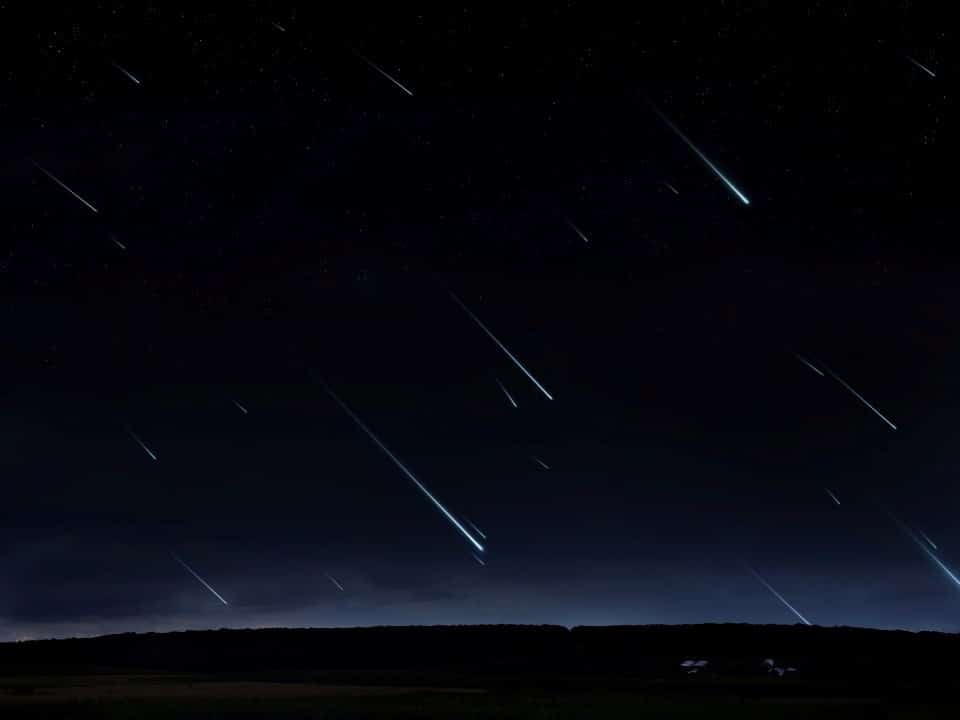
One of the most unique celestial occurrences in recent years is about to happen. On August 12, 2026, observers in Europe will have the chance to witness a total solar eclipse, while millions in other parts of Europe and North America will see a partial eclipse. After sunset, attention will turn to a second nocturnal phenomenon, when the Perseid meteor shower will reach its peak under a completely dark sky, without the presence of the moon. This optimized condition can provide the vision of up to 100 “shooting stars” per hour in low-light regions.
Key details about August’s celestial events
The Perseid meteor shower will have its most intense moment during the dawn of August 12th to 13th, a few hours after the total solar eclipse on August 12th.
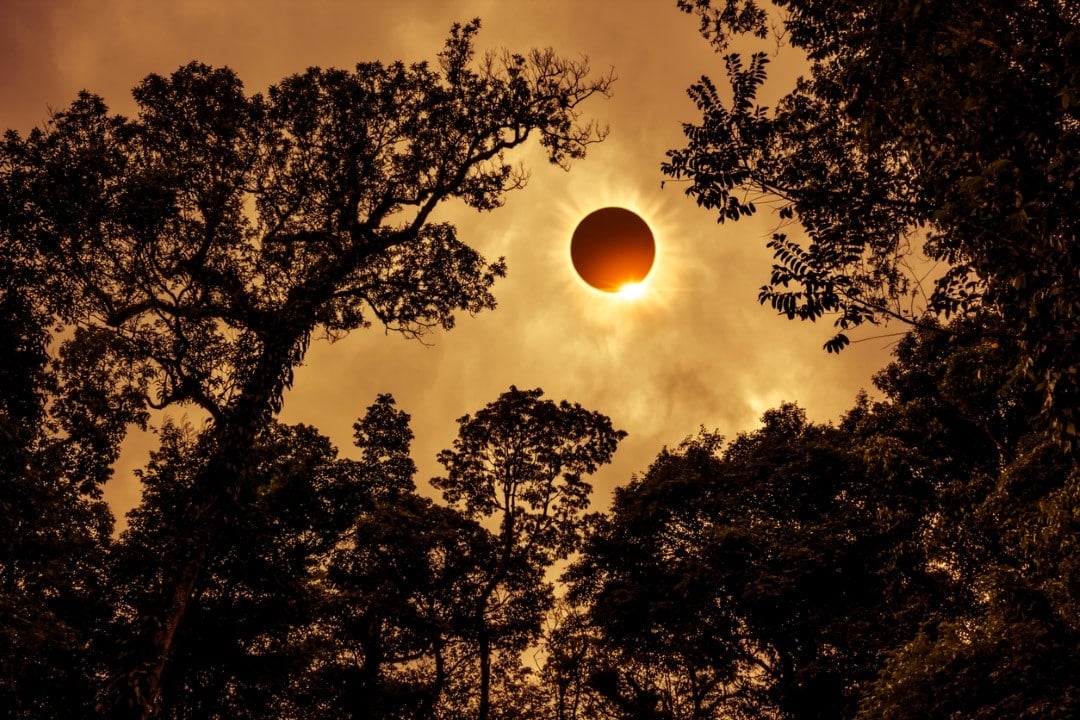
The total solar eclipse will be visible in a band of totality that will pass through areas of eastern Greenland, western Iceland and northern Spain. A partial eclipse, in turn, can be observed in much of Europe, Canada and the northeastern region of the United States. The Perseid meteor shower was active between July 17 and August 24.
With the new moon scheduled for August 12, astronomers are expecting this to be one of the best displays of the Perseids in recent years, with the possibility of up to 100 meteors per hour in very dark sky locations. Typically, the hourly rate observed in rural areas varies between 30 and 50 meteors. The ideal time for meteor observation will be after midnight and before dawn on August 13th.
The meteors are fragments released by comet 109P/Swift-Tuttle, which burn up when entering the Earth’s atmosphere at an approximate speed of 59 kilometers per second, according to the American Meteor Society.
The exceptional conjunction of phenomena on the same day
Solar eclipses and large meteor showers are notable events individually, but witnessing both on the same day is exceptionally rare. The eclipse will occur during the day in some parts of the Northern Hemisphere, and the new moon phase will make the sky as dark as possible for the peak of the Perseid meteor shower at night. As lunar light is usually the biggest obstacle to viewing fainter meteors, the timing could not be more favorable. For observers who can watch at least a partial eclipse during the day, the night holds a totally different spectacle, as the Earth passes through one of the densest concentrations of debris left by Comet Swift-Tuttle.
Understand why the Perseids are a long-awaited meteor shower
The Perseids have long been recognized as the most popular meteor shower in the Northern Hemisphere, even with the Geminids, in December, showing greater prolificacy. Active during hot summer nights, they regularly produce bright, fast-moving meteors, as well as occasional fireballs that can briefly outshine the brightest stars and leave visible trails in the sky. Although meteoric activity gradually increases between late July and early August, it peaks when Earth crosses the largest concentration of debris left behind by the Swift-Tuttle system during its 133-year orbit around the Sun.
Where to observe the eclipse and meteor shower
The total solar eclipse will involve the regions of eastern Greenland, western Iceland and northern Spain, but significantly more people will be able to observe a partial eclipse. In North America, the most intense eclipse will occur in eastern Canada, with smaller partial eclipses visible in parts of the northeastern United States.
The eclipse will be visible in 26 US states on August 12. Alaska will have the highest percentage of solar coverage in the US, with about 37% of the sun hidden in Fairbanks at 8:27 a.m. (Alaska time). Maine will experience the largest eclipse in the continental US, reaching about 28% partial coverage around 1:50 p.m. ET, while Boston will see 16% and New York 10%. The use of eclipse glasses will be essential throughout the observation period.
Once night falls, virtually everyone in North America and Europe under clear skies will be able to enjoy the Perseids. Unlike the eclipse, the meteor shower does not require the observer to be within a specific range, just be on the night side of planet Earth.
Recommendations for observing the solar eclipse and the Perseids
Anyone who wants to enjoy the biggest astronomical event of 2026 should start by observing the eclipse, using certified solar glasses or telescopes and cameras equipped with suitable filters. Looking directly at the partially eclipsed Sun without appropriate eye protection is never safe.
After sunset, look for a spot away from city lights that offers a wide, unobstructed view of the sky. It is advisable to choose a spot with a dark sky or one that appears dark on a light pollution map. Allow your eyes to adapt to the darkness for 20 to 30 minutes, avoid looking at bright smartphone screens, and don’t use binoculars or telescopes as they can restrict your view of the night sky. Meteor showers are best observed with the naked eye, as “shooting stars” can appear in any direction overhead.
Although meteors appear to radiate from the constellation Perseus, the longer, brighter trails are often seen far away from the radiant. The best observation usually occurs after midnight, when the Earth’s rotation positions observers in the path of the comet’s debris.
Other fascinating events to observe in the night sky
On August 12th, Venus will also be half illuminated as it approaches Earth, a beautiful spectacle to be seen with a small telescope. However, the real attraction in mid-August is the Milky Way, visible southward after dark across the world. For those residing in more northern latitudes, the northern lights season typically begins in mid-August. Finally, keep an eye out for T Coronae Borealis (T CrB), nicknamed the “Blazing Star,” which is expected to morph into a nova in 2026 and whose host constellation, Corona Borealis, will be in ideal position in August 2026. The crescent-shaped constellation can be found between the bright stars Vega and Arcturus.





